

What industries benefit the most from using black powder coated metal products?
Construction, manufacturing, metal fabrication and automotive businesses benefit most from black powder coated metal products because the finish combines a consistent appearance with durable protection for components exposed to handling, weather and industrial use. It is particularly suitable for brackets, frames, enclosures, vehicle parts and other metalwork produced in batches or requiring a hard-wearing finish.
The industries that benefit most from black powder coated metal products are those using metal components that must combine a consistent appearance with resistance to handling, moisture, dirt and routine industrial wear. This includes construction, engineering, manufacturing, fabrication and automotive applications, as well as electrical equipment, agricultural machinery, commercial interiors and public infrastructure.
Construction and architectural metalwork commonly use black powder coated steel and aluminium for items such as balustrades, railings, gates, brackets, frames, posts and external fittings. Black is widely specified where a restrained, uniform finish is required across multiple components. The coating also provides a practical surface for metalwork that may be handled during installation or exposed to changing outdoor conditions. Suitability still depends on the substrate, coating specification and the severity of the environment.
General manufacturing and engineering benefit when repeatable batches of components need a controlled finish rather than an inconsistent hand-applied coating. Machine guards, support frames, covers, housings, brackets and fabricated assemblies can be coated to match a production specification. Powder coating is particularly relevant where parts need a hard-wearing surface and a clean appearance after manufacture, provided their size, geometry and material are compatible with the coating process.
Electrical and control equipment often uses black powder coated enclosures, cabinets, panels and mounting structures. The finish can provide a neat external surface while helping protect the underlying metal from ordinary handling and environmental exposure. Coating requirements should be assessed alongside electrical design: powder coating does not replace earthing, insulation, sealing or ingress protection, and contact points that need electrical continuity may require masking or post-coating treatment.
Agricultural and industrial machinery can benefit from a finish selected for components exposed to dust, mud, oil residue and repeated handling. Suitable examples include guards, frames, covers, brackets and fabricated ancillary parts. The correct preparation is important because contamination, sharp edges, weld spatter and concealed joints can affect coating coverage. Components exposed to chemicals, animal waste or persistent moisture may need a coating system chosen specifically for those conditions rather than a standard decorative specification.
Automotive and transport-related businesses use black coated metal for selected brackets, frames, guards, mounts and non-critical fabricated parts. A uniform black finish can help maintain a consistent appearance across assemblies, while the coated surface is better suited to routine handling than untreated metal. Designers should distinguish between cosmetic or structural ancillary components and parts subject to high temperatures, fuel, brake fluid, abrasion or safety-critical loads. Those applications require confirmation that the coating system is appropriate for the operating conditions.
Commercial interiors, retail equipment and furniture can use black powder coated metal for shelving, display frames, table bases, storage systems, partitions and fittings. In these settings, the main benefit is often the combination of visual consistency and resistance to everyday contact. Black can also provide a neutral finish that works across different materials and interior schemes. Corners, edges and fastener interfaces should be reviewed because these areas are more likely to receive impact or show wear.
Public infrastructure and facilities management may specify black coated components for barriers, street furniture, service cabinets, protective guards and access equipment. These products can be exposed to weather, cleaning, vandalism or frequent public contact, so the coating specification should reflect the environment and expected maintenance regime. Surface preparation, edge coverage and repair provisions are especially important where replacement is difficult or components remain in service for long periods.
The strongest case for black powder coated metal is therefore not based on industry alone. It depends on the component’s material, dimensions, design, exposure, expected handling and required appearance. A coating provider will normally need to consider whether the part is steel, galvanised steel or aluminium; whether it has welds, recesses or masked areas; and whether a standard, protective or specialist coating is required.
For businesses producing metal parts in batches, the process can also support consistency between related components when preparation, pretreatment, colour specification and curing are controlled. Large items and unusual geometries may need separate assessment because access, oven capacity, hanging points and heat-sensitive inserts can affect the practical coating method. Nylon or other specialist coatings may be more suitable than a conventional powder system for particular requirements, such as added flexibility or resistance to specific forms of impact and wear.
Before specifying a black powder coated product, assess:
- the metal substrate and its condition before preparation;
- the indoor or outdoor exposure and likely contact with moisture, chemicals or contaminants;
- the required level of corrosion, abrasion and impact resistance;
- the component’s size, weight, geometry and need for masked or uncoated areas;
- the required gloss or texture, colour consistency and visual standard; and
- how damaged areas will be inspected, cleaned and repaired in service.
In practice, black powder coated products are most valuable where appearance, repeatability and protection must be considered together. Manufacturers, fabricators and other industrial users should match the coating system to the actual service environment rather than choosing black solely as a colour preference.
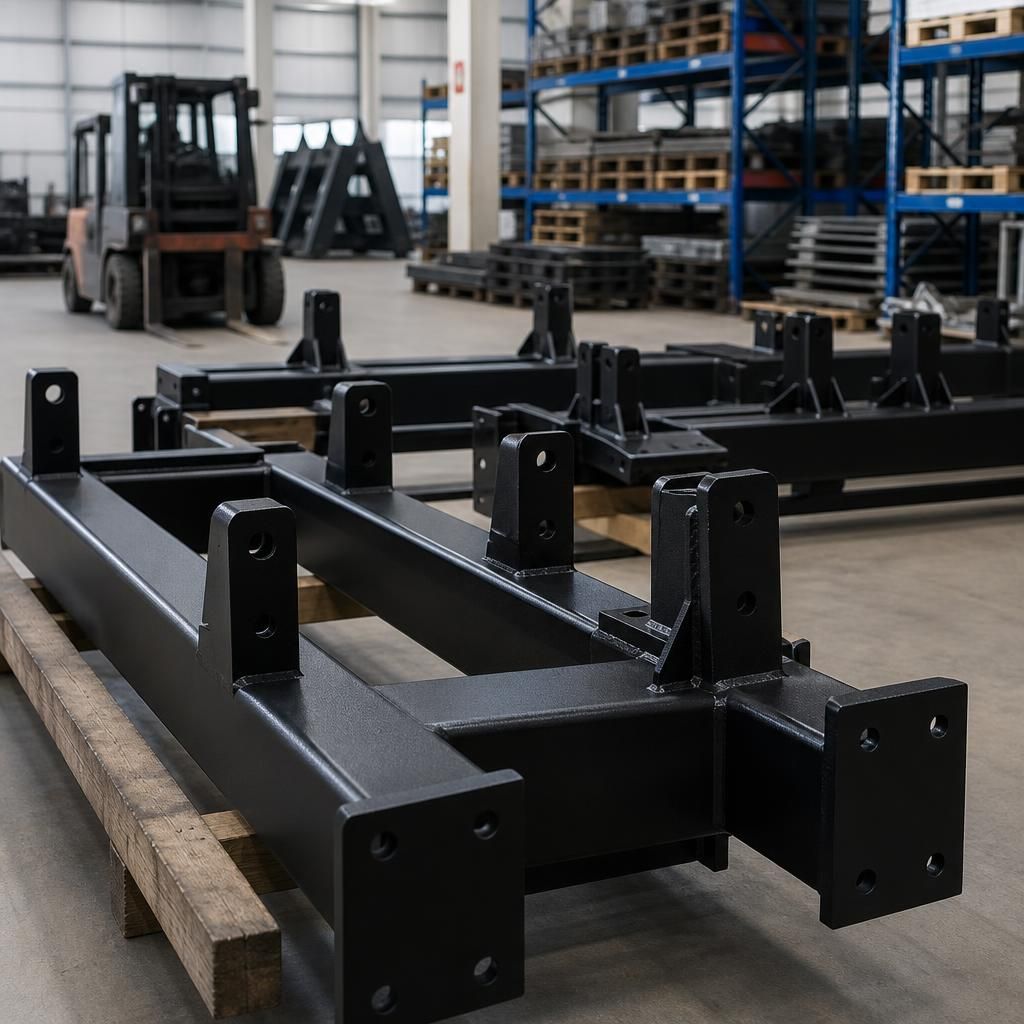
Industries that manufacture metalwork away from its final site can benefit from black powder coating because the finish is applied before storage, transport and installation. Construction fabricators, equipment manufacturers and commercial fit-out suppliers can specify coated components that are ready for assembly, reducing the need for painting after delivery and helping maintain a consistent appearance across a project.
This advantage depends on suitable handling and packaging. Coated parts should be protected from abrasion, impact and contact with incompatible materials during transit, while lifting points and installation interfaces should be checked for damage. Any areas affected during delivery or fitting should be assessed and repaired using a method compatible with the original coating system.
Discuss Your Black Powder Coated Metal Requirements
Discuss your black powder coated metal requirements with the coating team, including the component design, substrate, operating environment and finish specification. This information can help identify a coating approach suited to the product’s intended use.