

What are the maintenance requirements for black powder coated sheet metal in industrial environments?
Black powder coated sheet metal should be maintained through routine inspections, gentle cleaning, and prompt repair of chips, scratches or exposed metal before corrosion develops. Use a soft cloth or non-abrasive washing method with a mild detergent, avoid harsh chemicals and abrasive tools, and check areas exposed to moisture, chemicals, abrasion or trapped dirt more frequently.
Maintaining black powder coated sheet metal in an industrial environment requires a planned condition-monitoring and damage-control programme. The main objectives are to preserve the coating film, prevent corrosion at defects and edges, and identify changes caused by chemicals, moisture, ultraviolet exposure, heat, impact or abrasion before they affect the underlying metal.
Start with an exposure-based maintenance plan. Components installed indoors in a dry, clean area normally face less coating stress than items exposed to condensation, salt-contaminated air, process chemicals, high humidity, wash-down operations or outdoor weather. Maintenance frequency should therefore be set according to the actual service environment rather than applying one schedule to every part. Pay particular attention to lower edges, folded sections, joints, fixing points, recesses and areas where water or process residue can remain trapped.
- Record the coating system, substrate, installation location and the substances to which the component is exposed.
- Identify areas subject to impact from tools, forklifts, moving equipment or transported materials.
- Note locations exposed to continuous heat, temperature cycling, sunlight or condensation.
- Give additional attention to interfaces between coated sheet metal and other metals, fixings, seals or support structures.
Control the conditions around the coated component. Powder coating is not a substitute for good installation and site housekeeping. Prevent standing water by maintaining suitable drainage and avoiding arrangements that hold moisture against the sheet. Where practical, keep abrasive dust, metal swarf and process deposits from accumulating on horizontal surfaces, ledges and joints. Check that protective pads, clamps, packaging remnants and temporary coverings have not trapped moisture or chemicals against the finish.
Where sheet metal is used near chemical processes, confirm that the coating is suitable for the substances involved. Solvents, strong acids, alkalis, concentrated cleaners and some industrial vapours can soften, stain, embrittle or otherwise attack a finish, even when the coating appears intact. Any proposed cleaning agent, disinfectant or process chemical should be checked for compatibility and tested on an inconspicuous area before wider use. Chemical spills should be dealt with under the site’s spill-control procedure rather than being left to dry on the coating.
Inspect the finish for changes in appearance and texture. Black surfaces can make certain defects easy to see, including pale marks from abrasion, loss of gloss, uneven colour, staining and localised chalking caused by weathering or ultraviolet exposure. These changes do not all indicate the same failure mechanism. A surface may show cosmetic fading while retaining adhesion, whereas blistering, lifting, cracking or exposed metal indicates a more urgent loss of protection.
- Look for chips, cuts, dents, blisters, bubbles, flaking and cracks, particularly at edges and fixing holes.
- Check for rust staining, orange or brown corrosion products and dark deposits emerging from seams or joints.
- Assess whether wear is concentrated in one location, which may indicate repeated contact, vibration or an installation problem.
- Check seals, gaskets and adjacent materials for deterioration that could allow water or contaminants behind the coating.
Deal with damage using a compatible repair method. A small coating defect should not simply be covered with an unverified paint or marker. The repair area needs to be clean, dry and free from loose coating and corrosion, and the repair material must be suitable for the original powder coating, substrate and exposure conditions. Preparation should be controlled so that the surrounding sound coating is not unnecessarily damaged. For extensive flaking, corrosion, loss of adhesion or repeated damage, assess whether the component requires professional refurbishment or recoating rather than repeated local touch-ups.
Edges, drilled holes, cut-outs and areas altered after coating deserve particular attention because they may have less protection than the main coated face. If modifications are made on site, remove swarf promptly, protect the exposed substrate using an appropriate system and prevent untreated edges from remaining in a wet or chemically aggressive environment. Any repair should be recorded, including the location, cause of damage and materials used.
Use records to identify recurring failure. A maintenance log should link inspection findings to the component and its operating conditions. Record changes in colour or gloss, corrosion locations, chemical incidents, impact damage, repairs and any change in the surrounding process. Repeated defects in the same area may point to poor drainage, incompatible contact materials, excessive friction, vibration or an unsuitable coating specification. Correcting that cause is more effective than continually repairing the visible symptom.
When the finish reaches the end of its useful service condition, replacement or recoating should be based on substrate condition as well as appearance. If corrosion has spread beneath the coating, the metal may require more extensive preparation before a new finish is applied. For critical industrial components, maintenance decisions should also consider the part’s structural role, contamination requirements, operating temperature and the consequences of coating failure.
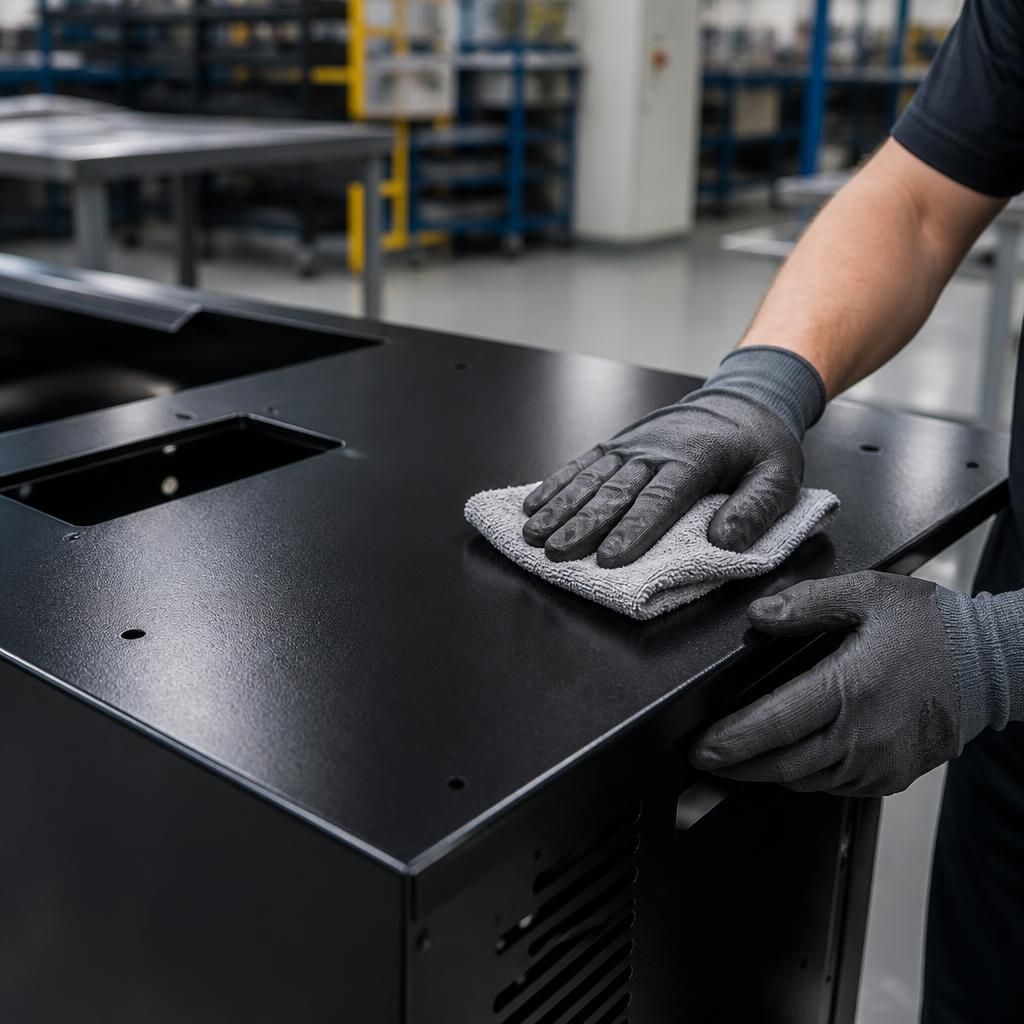
Routine cleaning of black powder coated sheet metal should remove surface contamination without introducing new scratches or chemical damage. Begin by removing loose dust and grit with clean water, then wash with a soft cloth or non-abrasive sponge using a mild, coating-compatible detergent. Work in manageable sections rather than allowing dirty water to dry on the finish.
- Rinse away loose particles before wiping the surface.
- Clean gently, paying attention to ledges, seams, folds and fixing areas where residue can collect.
- Rinse thoroughly so detergent and loosened contaminants are not left behind.
- Dry the component with a clean, soft cloth, particularly around joints and edges.
Do not use abrasive pads, wire brushes, strong solvents or unapproved concentrated cleaners. For equipment exposed to oils, process dust or other persistent deposits, confirm the cleaning method against the coating specification and trial it on a discreet area before applying it across the component.