

Can textured black powder coating be applied to all metal types?
No. Textured black powder coating can be applied to many conductive metal substrates, including steel, aluminium and some galvanised components, but suitability depends on the alloy, surface condition, required curing temperature and preparation method. A coating specialist should assess the metal and any existing treatment before confirming the specification.
Textured black powder coating is not suitable for every metal without modification. It is most practical on sound, heat-stable substrates that can be electrically grounded and properly prepared, while porous, highly reactive, contaminated or heat-sensitive metals require additional controls or may be unsuitable for the proposed coating system.
Common substrate considerations include:
- Carbon and mild steel: These are generally straightforward to coat when mill scale, rust, oil and fabrication residues have been removed. The pretreatment must provide corrosion resistance as well as adhesion, particularly where components will be used outdoors or in damp conditions.
- Stainless steel: Stainless surfaces are relatively smooth and chemically resistant, so degreasing and controlled abrasion or specialist pretreatment may be needed to create a suitable key. Welded areas also require careful cleaning because heat-affected contamination can compromise the finish.
- Aluminium: Aluminium can be powder coated, but its natural oxide layer and susceptibility to surface contamination make cleaning and conversion treatment important. Cast aluminium may also contain pores or release trapped gases during curing, which can cause pinholes or blistering.
- Galvanised steel: Zinc-coated steel needs preparation that removes passivation residues and contaminants without unnecessarily damaging the protective zinc layer. Vents, drainage and controlled heating may be needed where the component has enclosed sections or a porous surface.
- Cast iron and other cast metals: These materials can contain pores, machining residues and absorbed oils. Heating or outgassing treatment may be required before coating, although this does not guarantee that every casting will produce an acceptable decorative finish.
- Copper, brass and other non-ferrous alloys: These may be coatable, but their oxide formation, surface chemistry and heat response differ from steel and aluminium. A compatible pretreatment and powder system should be selected rather than treating them as standard steelwork.
The metal’s shape is as important as its composition. Recesses, narrow gaps and internal corners can create Faraday-cage effects, where the electrostatic powder field does not deposit evenly. Deep cavities may need different gun settings, access for spraying or design changes. Holes, bearing faces, earth points and threaded areas also commonly need masking so that coating build does not affect assembly or electrical contact.
Existing finishes must be assessed separately. Powder coating over an unidentified paint, plating, oil film or conversion layer can lead to poor adhesion, bubbling or an uneven texture. In many cases, the old coating needs to be removed; where it is retained, its adhesion, heat resistance and compatibility with the new system must be established first. Weld spatter, sharp edges and heavy grinding marks can remain visible through a textured finish, even though the texture may disguise minor surface variations.
Cure conditions must match both the powder and the component. The relevant consideration is the metal’s temperature throughout the curing cycle, not simply the oven’s air temperature. Thin sections may heat rapidly, while heavy fabrications take longer to reach the required condition. Assemblies containing seals, bearings, adhesives or heat-sensitive inserts may need to be dismantled or masked before coating.
For unfamiliar alloys, mixed-metal assemblies or demanding service conditions, a coating specialist should review a representative component or test panel. Assessment can include cleaning and pretreatment trials, visual inspection, adhesion testing and checks for outgassing or edge coverage. This establishes whether the chosen textured black system is appropriate before a full batch is processed and helps identify areas where the design or preparation needs changing.
Therefore, the correct decision is based on the specific alloy, component design, prior treatment, intended environment and curing requirements—not on the colour or texture alone. A Midlands powder coating specialist can assess these variables and advise whether the part needs a particular pretreatment, masking arrangement or alternative coating approach.
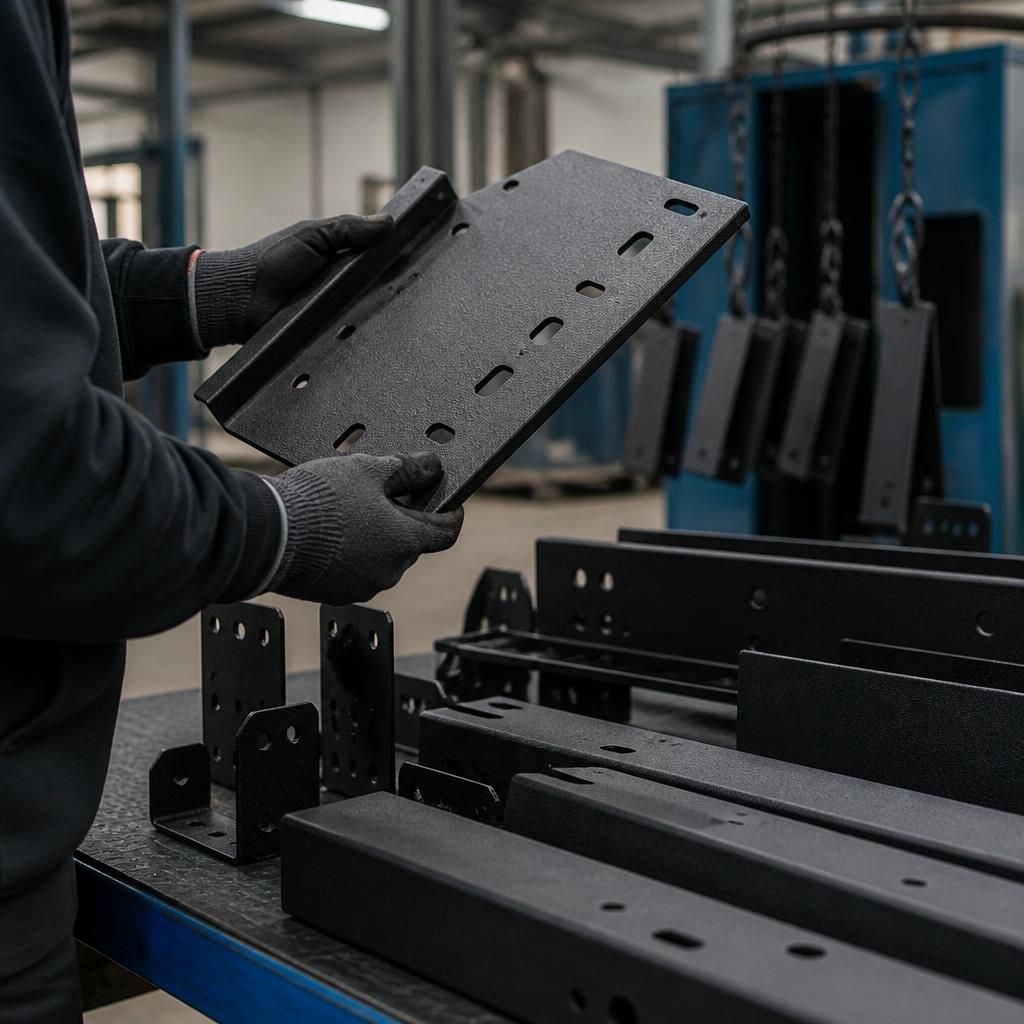
Textured black describes the appearance of the finish, not a single powder formulation that suits every metal. The coating system may need to be selected according to the substrate’s surface chemistry and the conditions the finished component will face. For example, a specification for exterior metalwork may require different performance characteristics from one intended for an indoor component, even when both use a textured black appearance.
This distinction is important when comparing steel, aluminium, stainless steel and non-ferrous alloys. The correct combination of powder and pretreatment must provide reliable adhesion without compromising the required texture or appearance. A coating specialist can therefore confirm the finish specification for the particular metal rather than treating textured black as a universal product.