

What are the differences between standard and specialist electrostatic powder coatings?
Standard electrostatic powder coatings are general-purpose finishes selected for routine protection and appearance, while specialist coatings are formulated for particular performance requirements or operating conditions. Specialist options can include nylon and protective coatings, offering properties suited to demanding industrial components, environments or applications where a standard finish may be insufficient.
Standard and specialist electrostatic powder coatings differ mainly in the performance requirements they are formulated to meet. A standard coating is generally selected for routine protection and appearance on components used in relatively predictable conditions. A specialist coating is specified when the part must withstand a particular combination of exposure, wear, chemicals, temperature, flexibility, electrical requirements or hygiene controls.
The application method can be similar in both cases. Powder is charged electrically and sprayed towards an appropriately prepared, earthed metal component, allowing the particles to adhere before curing. The important difference lies in the powder chemistry, the preparation required, the curing conditions and the properties of the finished film. Electrostatic application does not automatically make a coating specialist; the specification of the powder and the demands of the end use determine that distinction.
Standard coatings are suited to established, repeatable requirements. Common formulations may be selected where the component needs a consistent colour, a uniform surface and general resistance to everyday handling and environmental exposure. They are often appropriate for fabricated frames, brackets, enclosures, housings and other metal parts that will not face unusually aggressive chemicals, severe abrasion or exceptional temperature conditions.
Standard does not mean unsuitable or low quality. It means that the coating is designed around widely encountered service conditions rather than an unusual operating requirement. For many components, a standard specification provides the right balance of appearance, protection, availability and processing practicality. Problems arise when a routine coating is used without considering the actual environment in which the finished part will operate.
Specialist coatings are selected for a defined technical challenge. Their formulation may be designed to improve one or more specific characteristics, such as:
- resistance to abrasion, impact or repeated handling;
- greater resistance to oils, solvents, cleaning agents or other chemicals;
- improved performance in humid, corrosive or contaminated environments;
- enhanced flexibility where the component may be bent, formed or subject to movement;
- controlled electrical insulation or conductivity;
- performance across a wider or more demanding temperature range;
- low-friction or release properties for moving or contacting parts; and
- surface characteristics required for hygiene, cleanability or specialist industrial use.
These properties are not interchangeable. A coating that offers strong chemical resistance may not provide the best flexibility, while a highly hard-wearing finish may not be the most suitable choice where a component is repeatedly flexed. Selecting a specialist coating therefore involves identifying the dominant failure risk rather than choosing the most advanced-sounding option.
Outdoor exposure is another important point of comparison. Some standard powder systems are suitable for external use, but the correct choice depends on factors including sunlight, moisture, pollutants, coastal conditions, temperature changes and the design of the component. Interior applications may place greater emphasis on chemical resistance, abrasion or appearance than on long-term weathering. Specialist exterior systems can be considered where colour retention, corrosion protection or exposure severity exceeds the capability of a routine specification.
The substrate and component design also influence the choice. Steel, galvanised steel, aluminium and other conductive metals can present different preparation and adhesion requirements. Welds, sharp edges, recesses, threaded areas and assembled components may affect how evenly powder can be deposited and how well the finished film protects vulnerable points. A specialist specification may involve a particular pretreatment, primer, film build or multi-stage system rather than simply a different colour of powder.
Curing requirements must be checked before production. Powder coatings require a controlled curing cycle so that the film develops its intended properties. The correct cycle depends on the powder formulation and the temperature reached by the component, not simply the air temperature inside the oven. Large, thick or thermally different parts may heat unevenly, while thin sections can reach curing temperature sooner. A specialist powder may therefore require tighter process control and confirmation that the component can tolerate the necessary heat.
There can also be practical differences in finish and appearance. Standard systems are commonly available in established colours and surface effects, whereas specialist systems may be specified for a particular texture, gloss level, slip characteristic or visual consistency. Colour matching, batch repeatability and the visibility of repairs should be considered where coated parts are assembled together or supplied in repeated production runs.
The correct comparison is therefore not standard versus specialist in isolation, but the coating specification against the component’s complete service conditions. A useful assessment should record the substrate, indoor or outdoor location, expected contact with water and chemicals, abrasion or impact, operating temperature, flexibility, appearance requirements, cleaning regime and expected service life. It should also identify whether the part is already treated, assembled or dimensionally sensitive.
For straightforward metal components in controlled conditions, a standard electrostatic powder coating may be technically appropriate. Where failure would result from corrosion, chemical attack, wear, heat, flexing or a specialised surface requirement, a specialist formulation or coating system is more likely to be justified. Powder coating providers can use these details to assess preparation, application and curing requirements rather than selecting a finish based only on colour or initial appearance.
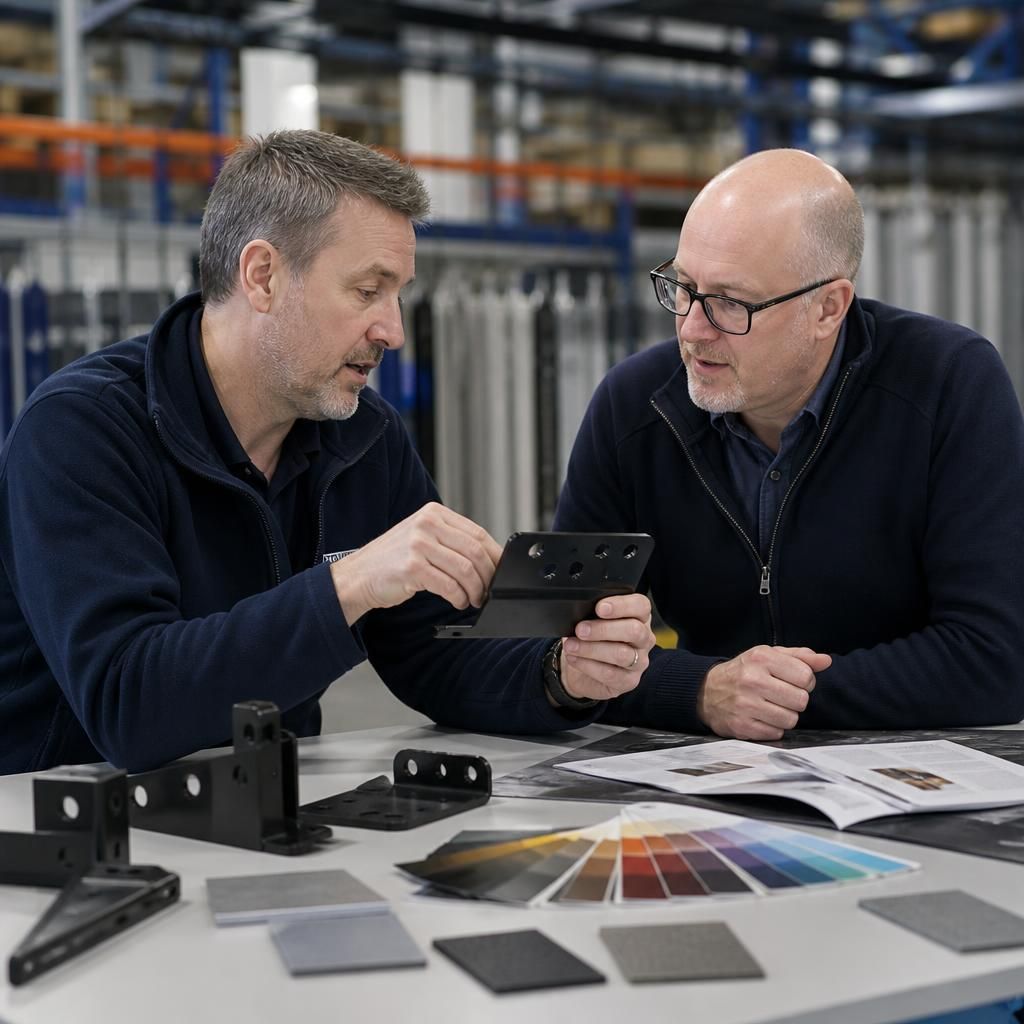
A further difference is the level of specification needed before coating begins. Standard powder coatings can often be defined by a recognised product type, colour, gloss and intended environment. Specialist electrostatic powder coatings usually require a more detailed performance brief, including the relevant exposure, contact materials, cleaning methods and failure criteria.
Where the requirement is specialised, coating selection should be supported by technical data and, where appropriate, a trial panel or sample component. This helps confirm that the proposed finish is compatible with the substrate, dimensions and end use before a full batch is processed. It also gives manufacturers and fabricators a clearer basis for checking that the finished coating meets the intended requirement rather than judging it by appearance alone.
Discuss your standard or specialist coating requirements
Share your component details and service conditions with the coating team to discuss whether a standard or specialist electrostatic powder coating is appropriate. A technical review can help define the preparation, finish and processing requirements before production.