

What steps are involved in the surface preparation of steel panels before powder coating?
Surface preparation of steel panels involves inspecting the metal, removing oil, grease, dirt, rust and mill scale, then creating a clean, suitably keyed surface for powder adhesion. The panels are typically degreased, abrasive blasted or otherwise treated as appropriate, cleaned of remaining residues, dried thoroughly and checked before powder coating.
Surface preparation is a controlled sequence tailored to the steel grade, existing surface condition, panel design and intended service environment. After the initial preparation, the key stages are choosing a compatible pre-treatment, protecting areas that must remain uncoated, managing edges and apertures, and confirming that the surface is suitable for the specified powder system.
1. Define the preparation requirements
The required preparation is influenced by whether the panels are new, previously coated, galvanised or affected by corrosion. The expected exposure also matters: panels used indoors may require a different pre-treatment approach from those exposed to moisture, chemicals, road salt or changing temperatures. The powder type, coating specification and required appearance should therefore be considered before preparation begins.
Panel drawings are also reviewed for features that affect coating quality. These can include folded returns, sharp corners, slots, drain holes, welded areas, threaded holes and concealed faces. Such details influence how abrasive media, rinsing solutions and powder reach the surface, as well as how the finished coating drains and cures.
2. Address welds, edges and fabrication marks
Weld spatter, sharp burrs, laminations and rough grinding marks can remain visible through the finished coating or create weak points at the edge. Fabrication defects are corrected where appropriate, and edges are softened sufficiently to give the powder a continuous surface to cover. Welded sections may need particular attention because heat-affected areas can have a different surface condition from the surrounding sheet.
Enclosed sections and hollow details require careful design consideration. If liquids or abrasive material can become trapped, they may later cause staining, corrosion or contamination during curing. Suitable drainage, ventilation and access points help the preparation process work consistently across the whole panel.
3. Select the appropriate pre-treatment
Pre-treatment may involve a chemical conversion layer, a mechanical key, or a combination of methods. Chemical systems can improve the surface’s resistance to corrosion and provide a receptive base for powder. Mechanical preparation is useful where the substrate requires a more pronounced profile or where localised imperfections and previous surface treatments need to be removed.
The method must be compatible with the steel and any remaining surface treatment. For example, a process suitable for untreated mild steel may not be appropriate for galvanised material or a panel carrying an existing coating. Using an unsuitable chemical or an overly aggressive mechanical process can leave residues, alter the profile or damage the panel, so the preparation method is selected according to the actual substrate rather than applied as a fixed routine.
4. Control masking and contact points
Areas that must remain free from powder are masked before coating. Typical examples include threads, precision bores, electrical contact points, mating faces and drainage openings. Masking materials need to withstand the curing stage without transferring residue or allowing powder to creep beneath the protected area.
Hanging or handling points are planned at this stage as well. The contact position should be chosen so that the panel is securely supported while leaving the required faces accessible. Any contact mark can then be kept to a specified area or removed during finishing where the design allows.
5. Prevent recontamination before coating
A prepared steel surface can be compromised by fingerprints, workshop dust, moisture, condensation or contact with contaminated equipment. Panels are therefore handled using suitable practices and kept separate from untreated work. The interval between preparation and powder application is controlled according to the substrate and surrounding conditions, particularly where flash corrosion could develop.
Moisture control is especially important. Steel must be properly dry before powder is applied, and cavities should not retain rinse water or preparation residues. If the surface changes after preparation, it may need to be treated again rather than coated over.
6. Carry out final checks before powder application
The final review is not limited to appearance. It considers whether the panel has the correct preparation for the specified coating system, whether masked areas are secure, whether apertures remain clear, and whether handling has introduced contamination or damage. The surface profile and condition should be consistent enough to support an even powder film across broad faces, edges, folds and fabricated sections.
Common causes of poor results include residual oil, trapped moisture, incompatible previous coatings, inadequate attention to welds, excessive roughness and salts left on the surface. These problems can lead to blistering, flaking, pinholes, uneven appearance or premature corrosion beneath the coating. Good preparation reduces those risks by treating the panel as a complete fabricated component rather than preparing only its most visible face.
For B2B projects involving batches of steel panels, the preparation sequence is normally agreed against the component drawings, substrate condition and coating specification before production. This helps ensure that panels with the same requirements receive a consistent process, while unusual materials, complex fabrications or heavily contaminated parts can be assessed separately.
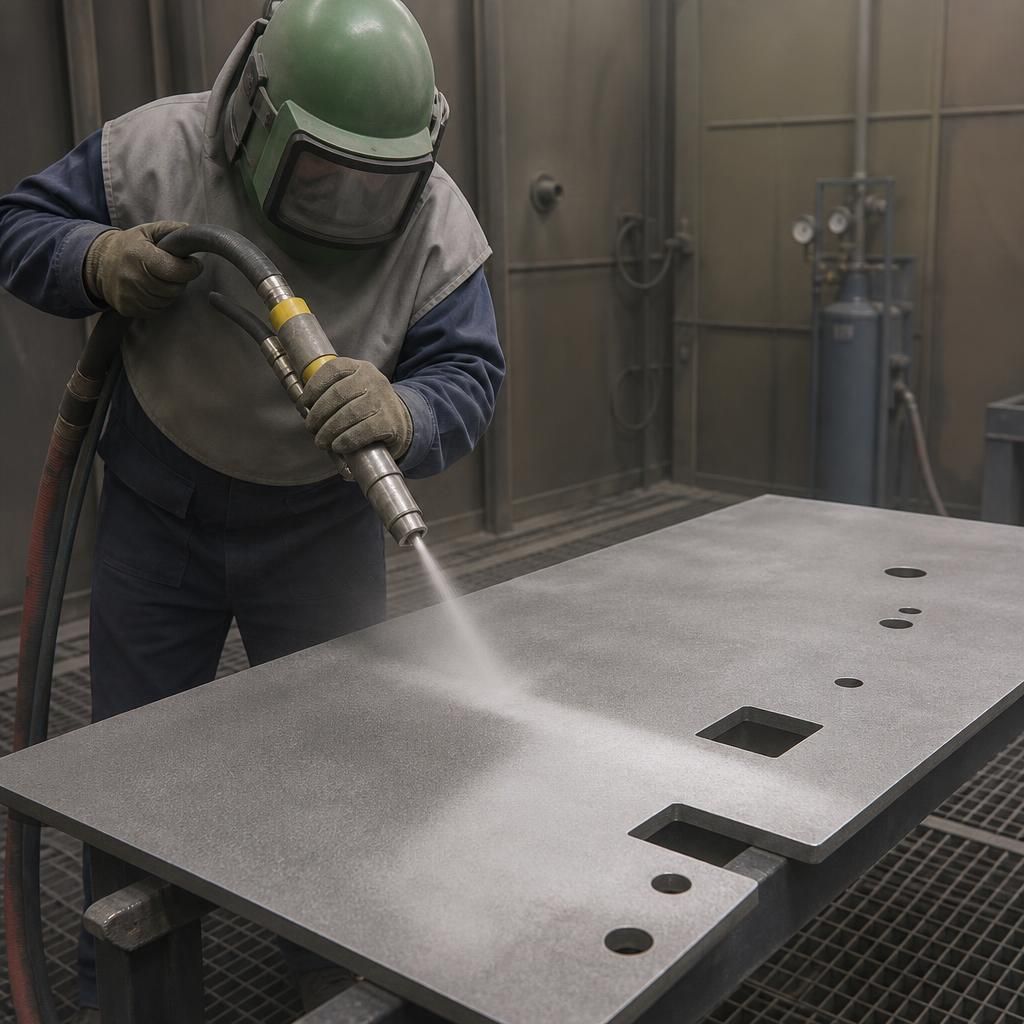
Abrasive preparation does more than remove visible rust and mill scale: it creates a controlled surface profile for the powder coating to grip. The profile should be consistent across the steel panel and appropriate to the specified coating system. A surface that is too smooth may provide insufficient mechanical key, while excessive roughness can remain visible through the finish, increase powder consumption and make coverage at edges more difficult.
For this reason, preparation is assessed across the whole component rather than judged by the appearance of one area. Broad faces, folded edges, weld zones and recessed features should have a compatible condition before coating begins. Any loose media or dust must also be removed so that the prepared profile remains clean and available for the powder film to bond with.
Discuss Your Steel Panel Preparation Requirements
Share your steel panel drawings, substrate details and coating specification with our team so the preparation requirements can be assessed accurately. We can discuss a suitable approach for your project and collection or delivery across the Midlands and surrounding areas.