

What is the typical timeline for the powder coating process on chassis and frames?
The powder coating timeline for a chassis or frame depends on its size, condition, preparation requirements, coating specification and curing schedule. It generally covers inspection and preparation, powder application, oven curing and final quality checks, with the overall programme confirmed once the component and finish requirements have been assessed.
The typical timeline for powder coating a chassis or frame is not fixed to a set number of days. It is determined by the condition and dimensions of the component, the amount of preparation required, the coating system, the number of parts in the batch and the curing requirements. A straightforward, clean frame may pass through the process with limited preparation, while a used chassis with corrosion, existing coatings, weld residue or contamination will require additional work before coating can begin.
1. Specification and initial assessment
The process begins with confirming the component’s material, dimensions, intended use and required finish. The coater also needs to identify areas that must remain uncoated, such as threaded holes, bearing seats, electrical contact points, machined faces and close-tolerance interfaces. These details affect masking, racking and the choice of powder coating system.
Large or unusually shaped chassis and frames may require particular consideration because they must fit safely within the preparation and curing equipment. Their construction can also affect how they are supported, how coating reaches enclosed sections and how heat moves through the metal during curing.
2. Preparation of the metal
Preparation is often the part of the programme most affected by the component’s condition. Dirt, grease, oil, rust, mill scale, old paint and other contaminants must be removed. Depending on the substrate and existing surface, this can involve degreasing, abrasive blasting, mechanical cleaning or the removal of previous coatings.
Weld spatter, sharp edges and rough areas may need attention because powder follows the underlying profile rather than concealing poor preparation. Drainage and vent holes may also be needed in hollow or fabricated sections. Without suitable venting, trapped air, moisture or process residues can interfere with coating quality and may create safety issues during heating.
After cleaning, the chassis or frame must be dry and suitable for coating. Any repair work, fabrication or modification should normally be completed before final preparation. If further contamination or damage is found at this stage, the programme may extend because the part cannot proceed until the surface is acceptable.
3. Masking, racking and powder application
Once prepared, areas that should not receive powder are masked, and the component is positioned so that it can be handled and coated effectively. The racking method must provide secure support and a suitable electrical earth for electrostatic application. Complex frames may need more than one position or controlled handling to achieve consistent coverage across faces, corners and recesses.
The powder is then applied to the prepared metal. The specification may involve a single coating layer or a multi-layer system, such as a primer followed by a topcoat. Additional layers increase the process stages because each coat has its own application and curing requirements. The selected finish, film thickness and performance requirements should therefore be agreed before the work is scheduled.
4. Oven curing
Powder does not become a finished coating simply because it has been sprayed. The coated chassis or frame must be heated so the powder melts, flows and chemically cures into a continuous film. The important factor is the temperature reached by the metal itself, rather than only the temperature shown by the oven controls.
Heavy sections, boxed members and assemblies with different material thicknesses can heat at different rates. The curing schedule must therefore suit the actual component and the powder manufacturer’s technical requirements. Large or thermally substantial frames may take longer to reach the required metal temperature than lighter parts, which can affect the overall sequence even when the application itself is relatively quick.
5. Cooling and quality inspection
After curing, the component is allowed to cool sufficiently for safe handling and inspection. Quality checks can include coverage, colour, gloss, film consistency, adhesion, visible defects and the condition of masked areas. Particular attention is usually given to corners, welds, recesses, edges and areas that are difficult to see during application.
If inspection identifies contamination, incomplete coverage, damage or another defect, corrective work may be required. This can involve local preparation and recoating, or removal of the finish and a return through the relevant stages. Such remedial work is why the final timeline should be treated as a planned programme rather than an automatic turnaround based only on the spraying time.
What affects the overall programme?
- The chassis or frame’s size, weight, construction and ability to fit preparation and curing equipment.
- The extent of corrosion, contamination, previous coating and repair required.
- The number of components and whether they can be processed together as a batch.
- The number of coating layers, specified colour, finish and film thickness.
- The quantity and complexity of masking, racking and handling.
- Whether inspection identifies preparation defects or requires remedial coating work.
For an accurate timeline, provide drawings or photographs where relevant, the component dimensions, substrate information, desired finish and details of areas that must remain uncoated. The coating programme can then be based on the actual chassis or frame rather than on a generic estimate.
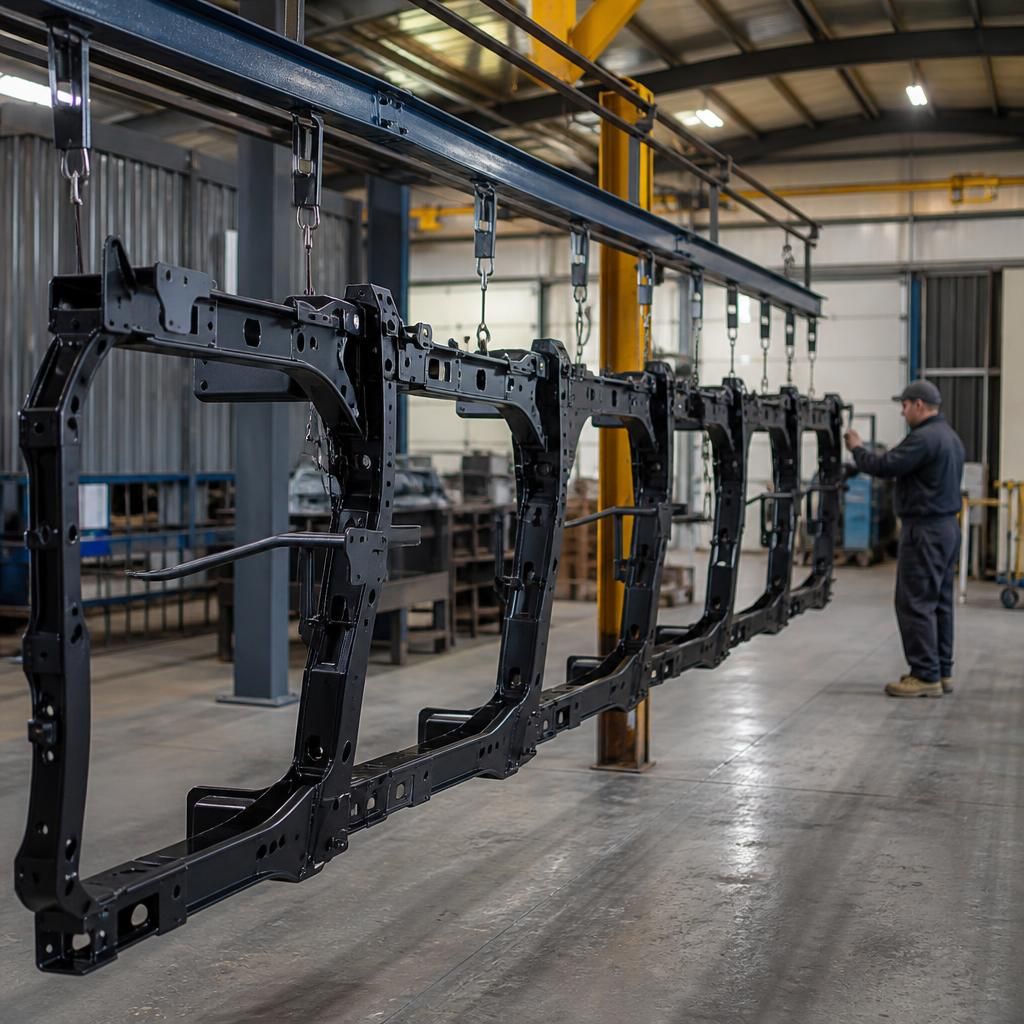
For repeat work, the timeline is often easier to plan when compatible chassis or frame components are grouped into a batch. Parts with similar preparation needs, coating specifications and curing requirements may be processed within the same planned sequence, while components requiring different finishes or additional repair may need to follow a separate route. Confirming the batch arrangement in advance helps establish a more realistic programme than estimating each item in isolation.