

What are the environmental benefits of choosing powder coating on galvanised steel?
Powder coating galvanised steel can reduce environmental impact through very low volatile organic compound (VOC) emissions, efficient powder use and minimal coating waste. Its durable finish can also help extend component service life, reducing the need for frequent recoating and the associated use of materials and energy.
The environmental case for powder coating galvanised steel is strongest when the complete coating process is considered: material selection, preparation, application, curing, maintenance and end-of-life handling. A well-controlled powder coating system can reduce reliance on solvent-based consumables, limit hazardous coating residues and support responsible use of the galvanised steel substrate.
Powder coating is applied as a dry material rather than as a liquid coating carried in a solvent. This can reduce the need to store, use and dispose of solvent-containing products during routine application. It may also reduce associated packaging and cleaning requirements, although the exact benefit depends on the powder chemistry, application equipment and the preparation system specified for the job.
Galvanised steel presents particular environmental considerations because its zinc coating must be prepared without unnecessarily damaging the protective layer. Suitable preparation can preserve the value of the existing substrate and avoid processes that remove and replace sound galvanising. The chosen treatment should be matched to the steel condition, the intended service environment and the powder system, rather than applying a generic preparation method to every component.
Environmental performance also depends on how the coating line is operated. Important controls include:
- using the correct powder grade and application settings for the component;
- controlling film thickness so that the specified protection is achieved without unnecessary material use;
- maintaining spray equipment and extraction systems to prevent uncontrolled releases;
- managing pretreatment chemicals, rinse water and residues in accordance with applicable waste requirements; and
- setting the curing oven accurately so that parts receive the required cure without avoidable energy use.
Curing is the main energy demand specific to the powder application stage. The environmental balance therefore depends partly on oven efficiency, loading, airflow, insulation and cure settings. Over-curing wastes energy and can affect the coating, while under-curing may compromise performance and lead to additional remedial work. Correct specification and process control are consequently environmental issues as well as quality considerations.
The substrate and coating should also be considered together at the end of a component’s working life. Where the steel part can be recovered through established metal recycling routes, retaining a sound metal component beneath a functional coating can support material recovery. Any stripping, repair or disposal operation should still be assessed for the particular coating and pretreatment materials involved, since these may require separate handling.
Powder coating is not automatically the lowest-impact option in every situation. Pretreatment, curing energy, transport, coating formulation and waste management all influence the result. For galvanised steel components, the most credible environmental assessment is therefore based on the whole process and on documented control of preparation, application and curing, rather than on the coating material alone.
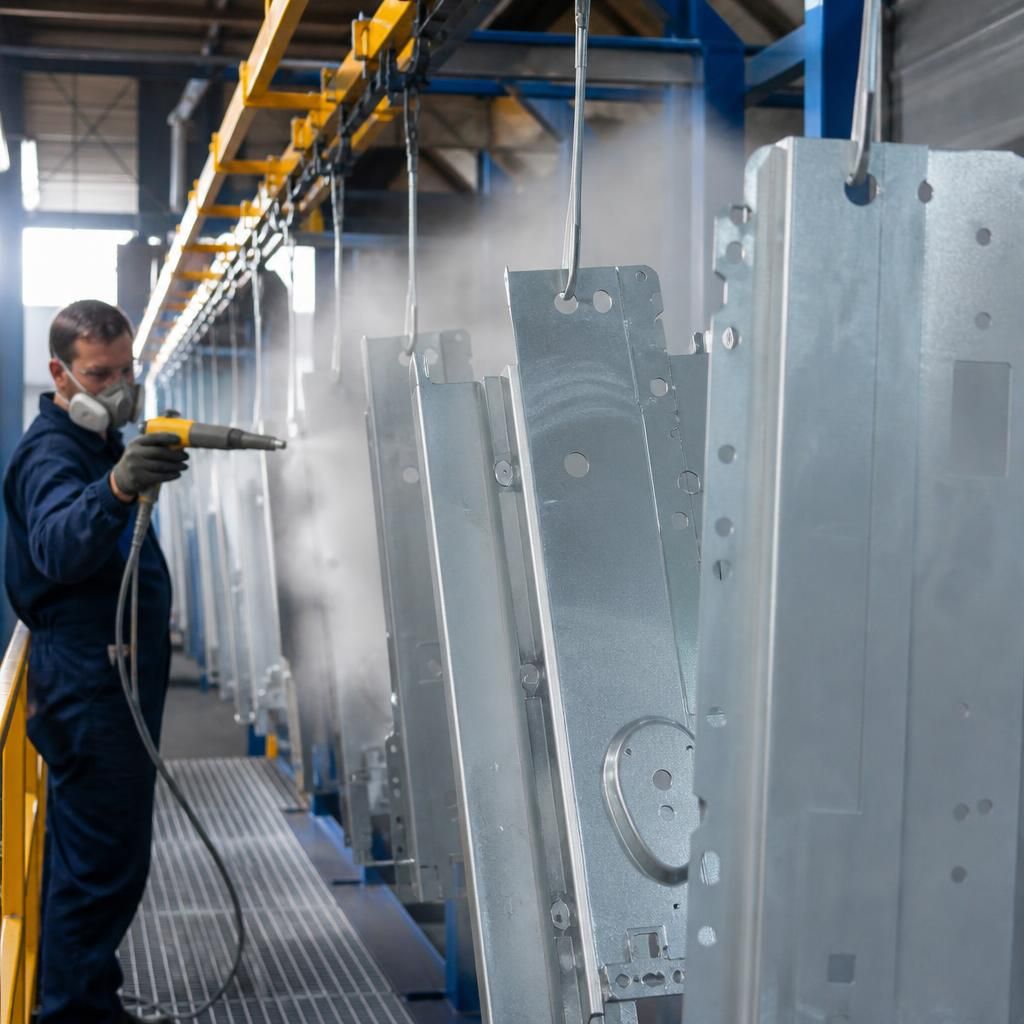
Powder coating on galvanised steel can support resource conservation by making use of an existing protective zinc layer rather than treating the steel as a new, unprotected surface. The powder coating adds a separate barrier and decorative finish, while the galvanising continues to provide corrosion protection beneath it. This combined approach can be particularly suitable where components need both long-term protection and a specified appearance.
The environmental benefit depends on preserving that underlying galvanising during preparation and application. Removing sound zinc unnecessarily creates additional processing and material requirements, so preparation should be limited to what is needed for adhesion and coating performance. Assessing the condition of each component before treatment helps avoid replacing or extensively reprocessing galvanised steel that remains suitable for service.