

What industries benefit most from electrostatic powder coating in the UK?
Electrostatic powder coating is particularly beneficial to UK manufacturing, fabrication, construction and automotive businesses that need durable, consistent finishes on metal components. It suits production parts, structural items and vehicle components where resistance to wear, corrosion and handling is important.
The industries that benefit most from electrostatic powder coating are those producing metal parts in repeatable volumes or requiring a hard-wearing, visually consistent finish. Manufacturing, metal fabrication, construction and automotive businesses are the main users because the process can be applied to many suitably prepared steel, aluminium and other conductive metal components before they are assembled or put into service.
Manufacturing benefits from the process when components need a repeatable finish across batches. Enclosures, brackets, frames, machine parts, housings and manufactured assemblies can be coated to provide a defined colour and surface appearance while helping the metal withstand routine handling, abrasion and exposure. Powder coating is particularly practical where a manufacturer has standardised part designs and can specify the same preparation, powder type and curing requirements for successive production runs.
For metal fabricators, powder coating provides a finishing route for items made to order, including gates, railings, frames, furniture, guards and fabricated assemblies. It can be selected where the appearance of the finished metalwork matters as well as its resistance to everyday use. The specification should account for welds, edges, recesses and areas that may be difficult to clean or prepare, since the quality of the finished coating depends on the condition and cleanliness of the substrate.
Construction businesses commonly use coated metalwork in building products, architectural components, structural accessories and external fixtures. The appropriate coating system depends on whether the component is used internally or exposed to moisture, pollutants, sunlight and frequent contact. A project specification should therefore identify the service environment, required appearance, likely handling during installation and any compatibility requirements with adjoining materials.
In the automotive sector, powder coating is used for suitable metal components such as brackets, frames, guards, wheels, equipment parts and other non-bodywork items. The finish needs to be selected according to exposure to road debris, moisture, cleaning products, heat and mechanical contact. Components that operate at elevated temperatures or flex in service may require a more specific assessment rather than a standard decorative powder coating.
Other industrial users can benefit where their parts are metal, can tolerate the curing conditions and are suitable for electrostatic application. This can include equipment manufacturers, agricultural machinery suppliers, storage and handling businesses, and producers of commercial fixtures. The process is less suitable for components that cannot withstand curing temperatures, contain heat-sensitive materials or have complex surfaces that cannot be adequately prepared and coated.
The strongest candidates are usually identified by assessing five practical factors:
- Material: the component must provide a suitable conductive surface, with preparation matched to the metal and its existing condition.
- Operating environment: exposure to water, chemicals, sunlight, impact, abrasion or heat affects the powder and preparation system required.
- Part geometry: deep recesses, sharp edges, threaded sections and enclosed areas may influence coverage and masking requirements.
- Production pattern: batch sizes, colour changes, dimensional tolerances and repeat orders affect how the coating process should be planned.
- End-use requirements: appearance, cleanability, electrical properties, friction, corrosion resistance and contact with other components may all influence the specification.
Electrostatic powder coating is therefore not chosen solely by industry label. Two businesses in the same sector may need different coating systems because their parts face different levels of weathering, heat, chemical contact or mechanical stress. A clear coating specification should link the selected powder and pretreatment to the component’s actual service conditions, rather than relying only on a colour or general-purpose finish.
For B2B projects involving large, specialist or repeat batches, the coating provider will typically need information about drawings, quantities, substrate, required finish, masking points, performance conditions and handling arrangements. This allows the process to be assessed before production and helps establish whether electrostatic powder coating is appropriate for the parts and the industry application.
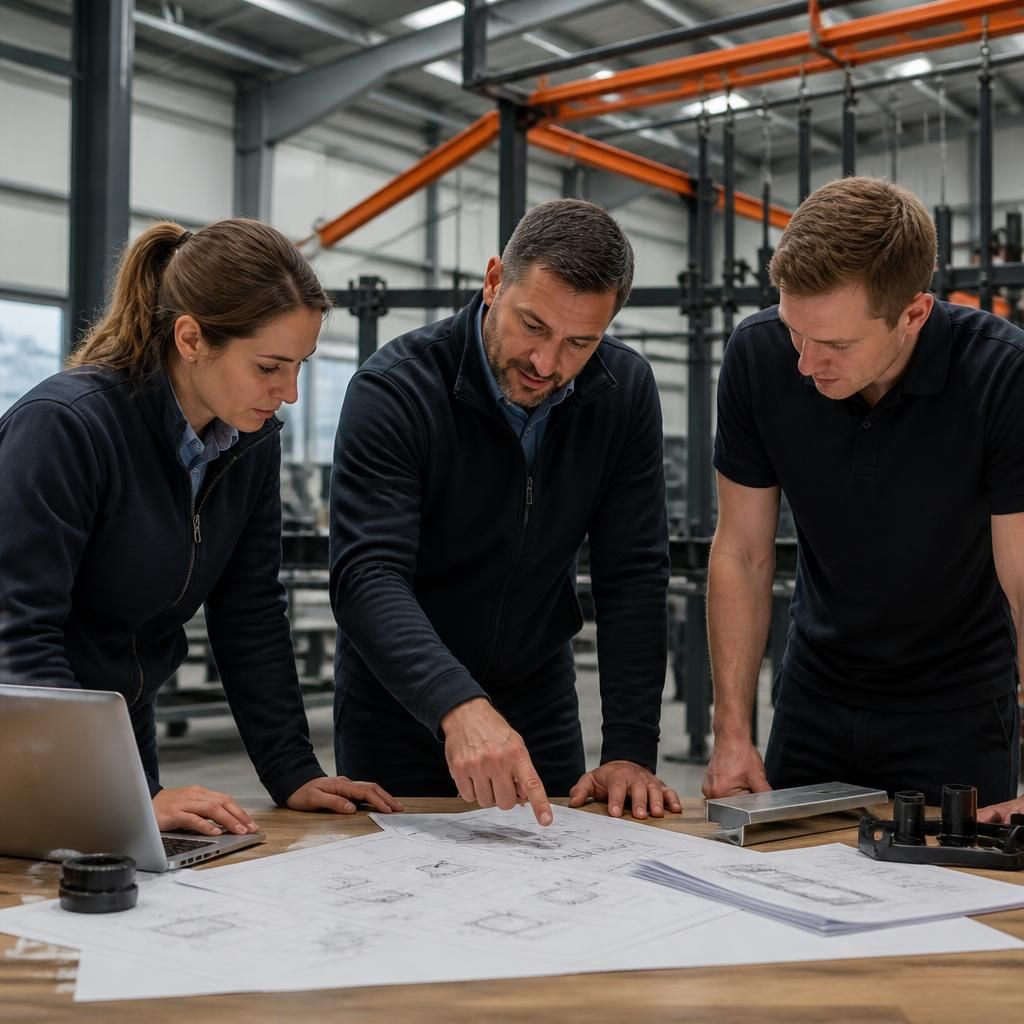
The greatest benefits arise when powder coating is considered at the design stage rather than added after a component has been manufactured. Product and engineering teams can allow for coating thickness, masking zones, hanging points, drainage, earthing contacts and access for cleaning during fabrication. This is particularly valuable for manufacturers producing repeat components, because design details can be standardised before a batch reaches the coating process.
Early specification also helps avoid practical issues during assembly. Threaded holes, bearing seats, joint faces and close-fitting interfaces may need protection from powder, while exposed edges and drainage points require suitable preparation. By coordinating these details between the designer, fabricator and coater, industries can obtain finished components that are easier to assemble and less likely to require rework after coating.
Discuss your electrostatic powder coating requirements
If you are assessing electrostatic powder coating for an industrial application, discuss your component drawings, substrate, quantities and service conditions with the coating team. This information helps determine whether the process and proposed coating system are suitable for your parts.