

What are the benefits of using sandblasting for preparing wrought iron compared to traditional methods?
Sandblasting prepares wrought iron more thoroughly than many traditional methods by removing rust, mill scale, old coatings and embedded contaminants across the whole surface. It also creates a consistent profile that helps powder coating adhere securely, including around intricate shapes and difficult-to-reach areas, supporting a more durable finish.
Sandblasting offers a more controlled and comprehensive method of preparing wrought iron than many traditional techniques, particularly where the metal has corrosion, layered paint or an uneven surface. Instead of relying mainly on manual abrasion or chemical stripping, it uses pressurised abrasive media to work across the metal and prepare it for the next coating stage.
One important benefit is consistency. Hand scraping, wire brushing and sanding depend heavily on access, pressure and operator technique. They may prepare broad, exposed areas effectively but leave differences between sections, especially on ornate wrought iron with scrolls, joints, recesses and textured details. Sandblasting can provide a more uniform level of preparation across the component when the abrasive, pressure and blasting distance are selected appropriately.
- More effective mechanical preparation: The abrasive action breaks away firmly bonded surface material rather than simply polishing the uppermost layer. This is useful on wrought iron that has been repainted several times or has corrosion concentrated around joints and fixings.
- Better access to complex profiles: Wrought iron often includes decorative features that are difficult to prepare with flat hand tools. Blasting equipment can direct abrasive into contours and around three-dimensional details, reducing the need to dismantle or manually work each feature.
- Less dependence on chemical strippers: Chemical methods can soften coatings but may require careful removal and neutralisation. Residue left in seams, pits or joints can interfere with subsequent coating work. Abrasive preparation avoids introducing a stripping chemical, although the blasted component must still be properly cleaned and kept free from contamination.
- Useful control over the preparation level: Sandblasting is not a single fixed treatment. The operator can select a suitable abrasive and adjust the working conditions according to the coating, corrosion level, thickness and condition of the wrought iron. This allows heavier preparation where corrosion is established and more restrained treatment where the substrate is sound.
- Clearer inspection of the substrate: Once loose corrosion and failing coatings have been removed, defects such as pitting, cracked weld areas or weakened sections are easier to identify. This helps determine whether repair, replacement or additional preparation is needed before a new finish is applied.
- Suitable for repeatable batch work: Where several wrought iron components require the same treatment, a defined blasting specification can make preparation more repeatable than individually hand-working each part. Consistency is particularly relevant when components will receive the same coating system.
Compared with wire brushing or sanding, blasting is also less restricted by the shape of the tool. Traditional hand methods normally work best on accessible faces and edges, while the abrasive stream can be directed at changing angles. This does not remove the need for skilled work: excessive pressure or an unsuitable abrasive can damage thin sections, round sharp edges or leave an inappropriate surface profile.
Sandblasting should therefore be judged against the condition and design of the wrought iron, not treated as an automatic replacement for every other method. Lightly soiled or delicate items may need a gentler approach, while heavily coated or corroded components can benefit substantially from controlled abrasive preparation. The operator should assess the metal before work, select media appropriate to the substrate and protect areas that must not be blasted.
After blasting, the prepared wrought iron should be handled and stored so that it does not become contaminated or begin to corrode before coating. Any remaining dust or abrasive residue must be removed, and the component should be checked for exposed defects. These steps are essential because the advantages of blasting depend not only on the abrasive treatment itself, but also on the condition of the surface immediately before the protective finish is applied.
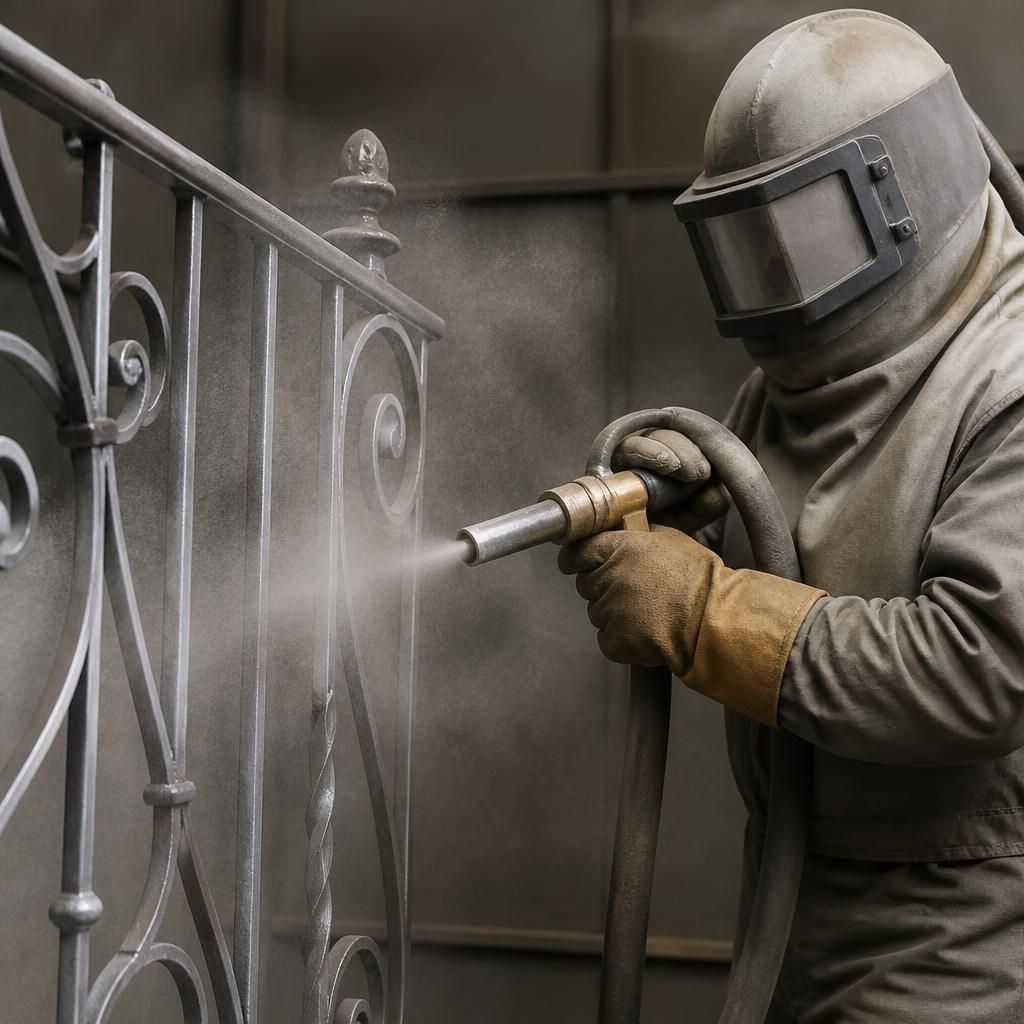
Because sandblasting is a non-contact preparation method, it can reduce the direct mechanical force applied to wrought iron compared with aggressive scraping, chiselling or grinding. This is useful for decorative sections, thin features and areas where a hand tool could catch an edge or place pressure on the metal. The abrasive stream removes unwanted material without requiring a tool to follow every contour physically.
This benefit depends on correct technique. Blasting pressure, abrasive selection and nozzle distance must be matched to the condition and thickness of the wrought iron. Used appropriately, the process can clean intricate metalwork while helping preserve its intended shape; used too aggressively, it can still erode edges or damage weaker sections. A condition assessment should therefore take place before preparation begins.
Find Out Whether Sandblasting Suits Your Wrought Iron
If you are assessing wrought iron for coating, discuss its condition, design and existing finish with a specialist to establish whether controlled sandblasting is appropriate. This will help determine the right preparation approach before powder coating or another protective finish is specified.