

What industries can benefit most from the metal shot blasting process, and why is it especially suited to them?
Metal shot blasting is particularly useful for manufacturing, fabrication, construction and automotive businesses that need to prepare metal components before coating or finishing. It is well suited to these industries because it removes rust, old coatings, scale and surface contamination while creating a consistent profile that helps subsequent finishes adhere effectively.
Metal shot blasting is especially suited to industries that process robust metal components in repeatable quantities and require a reliable surface for subsequent coating, assembly or service. Its main industrial value lies in handling varied component sizes and shapes while producing a controlled, repeatable preparation standard across batches.
Manufacturing and engineering businesses benefit when components need a consistent finish before powder coating, painting or other treatments. Brackets, frames, housings, machine parts and fabricated assemblies can have different profiles, welds and recesses that are difficult to prepare uniformly by hand. Shot blasting provides a practical process for treating multiple parts as part of a defined production sequence, helping manufacturers maintain consistency between batches.
It is also useful where components pass through several manufacturing stages. Welded areas, handling marks and manufacturing residue can affect the appearance or adhesion of a later finish. Preparing the whole component as one stage can make the finishing process more predictable than treating individual areas manually.
Metal fabrication is a natural application because fabricators often produce one-off items, short runs and larger welded structures. Steelwork, frames, supports, panels and bespoke assemblies may contain weld seams, edges and areas of differing surface condition. Shot blasting can treat these features as part of the same preparation process, which is valuable when the finished item must have an even appearance rather than visibly differing areas around fabricated joints.
For fabricators, the process can also fit projects where components move directly from preparation to a protective or decorative coating. This is particularly relevant when the specification calls for a clean, uniform basis for a finish and the parts are too large, numerous or complex for efficient manual preparation.
Construction and structural metalwork businesses use metal preparation for items such as supports, access components, architectural metalwork and fabricated building products. These parts may be exposed to handling, transport and demanding service conditions, so the coating system needs a properly prepared base. Shot blasting is well suited to substantial steel and iron components because it can accommodate heavy sections and fabricated forms that require thorough treatment before finishing.
The process is also relevant where appearance and protection are both important. Architectural or visible metalwork may need an even final appearance, while structural or external components require a finish selected for the conditions in which they will be used. Preparation is therefore not simply cosmetic: it forms part of the overall coating specification and should be considered alongside the intended environment, component design and chosen finish.
Automotive businesses can benefit when metal parts need preparation before refinishing, restoration or protective coating. Wheels, brackets, chassis-related components, housings and other fabricated parts often include corners, joints and irregular profiles. A mechanical preparation process can be more suitable than hand treatment for components with detailed geometry or accumulated surface deterioration.
Automotive work also places importance on visual uniformity and careful handling. Parts should be assessed for thin sections, delicate edges, close-fitting areas and dimensional tolerances before processing. Shot blasting is most appropriate where the component can withstand the selected process and where masking, inspection or post-blast finishing requirements have been properly defined.
Industrial equipment and component suppliers may find the process useful when supplying parts into several downstream applications. Preparing components to an agreed standard can simplify later coating work and reduce variation caused by different preparation methods. This is particularly relevant for repeat orders, subcontracted finishing and assemblies that must meet a documented production specification.
Across these sectors, suitability depends on more than the industry name. Important factors include the parent metal, component thickness, geometry, quantity, condition, required finish and dimensional tolerances. Heavy fabricated components are generally more straightforward candidates than thin sheet, precision-machined surfaces or parts containing vulnerable fittings. Threads, bearing seats, sealing faces and machined interfaces may need protection or a separate finishing plan.
Shot blasting should therefore be selected as part of the complete finishing route rather than treated as an isolated operation. The intended coating, service environment, handling method and inspection requirements all influence whether it is the right preparation method. For businesses across the Midlands and surrounding areas, a regional powder-coating specialist can support this route with collection and delivery options for suitable metal components.
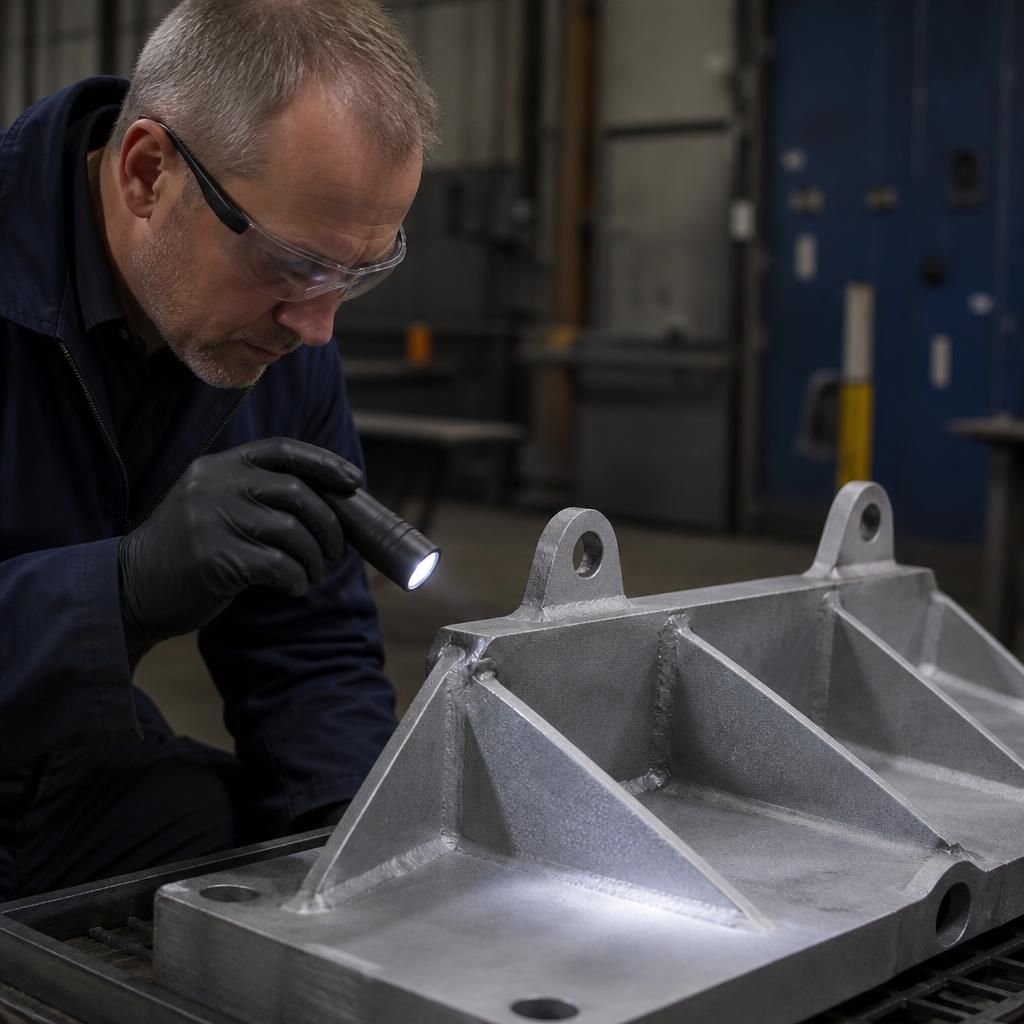
One important reason metal shot blasting suits industrial sectors is that it can make the underlying metal easier to inspect before a coating is applied. Removing rust, scale, residues and loose previous finishes exposes the working surface, allowing defects such as weld irregularities, pitting or contamination to be assessed before they are covered.
This is particularly relevant to structural fabricators, engineering manufacturers and automotive businesses, where a visible problem may require repair, rework or a different finishing route. Inspection should still follow the relevant technical specification, as shot blasting is a preparation process rather than a substitute for dimensional checks, non-destructive testing or engineering assessment. Used within a controlled workflow, it helps separate surface preparation from final coating and supports better-informed decisions about each component.
Discuss Metal Shot Blasting for Your Industry
Discuss your component requirements with a metal shot blasting specialist to establish whether the process suits the material, geometry and intended coating route. Powder-coatings.co.uk can advise on suitable preparation for industrial components across the Midlands and surrounding areas, with collection and delivery options available.