

What safety precautions should I take when using blasting media for rust removal?
When using blasting media for rust removal, control dust and flying debris, wear suitable personal protective equipment (PPE), and follow the media and equipment manufacturer’s instructions. Use appropriate respiratory protection, eye and hearing protection, gloves and protective clothing, secure the work area, and check ventilation, hoses and connections before starting.
Safe use of blasting media for rust removal depends on controlling the hazards created by the abrasive, the coating being removed, the compressed-air equipment and the waste produced. Before starting, identify the materials involved, assess the work area and select a blasting method that is suitable for both the metal and the contamination.
Check the rusted component before blasting. Rust may conceal cracks, thin sections, sharp edges, weld defects or weakened areas. Blasting can remove more material from already-thin metal and may distort light-gauge components. Confirm that the part can withstand the selected pressure and abrasive, and protect threaded holes, machined faces, seals, bearings and other areas that must not be damaged.
Identify hazardous coatings and residues. Paint, plating, oil, chemical residue and old industrial coatings can create a greater health risk than the rust itself. Coatings may contain lead or other hazardous substances, while oils can contaminate the abrasive and increase fire risk. If the coating composition is unknown, obtain suitable information or arrange testing before work begins. Do not disturb suspect materials without an appropriate control plan.
Choose a non-hazardous, task-appropriate media. Avoid abrasive materials that can generate respirable crystalline silica. In particular, sand containing silica should not be used for blasting where it could create this exposure. Consider the media’s hardness, particle size, recyclability, contamination risk and effect on the substrate. A more aggressive abrasive is not automatically safer or better: excessive impact can remove sound metal, create a rough profile that is unsuitable for the next coating, or embed abrasive particles in the surface.
Review the abrasive’s safety information before use. It should identify relevant hazards, handling requirements, disposal considerations and any restrictions on use. Keep different media types separate, label containers clearly and prevent used abrasive from being mistaken for clean material.
Control the compressed-air system. Use equipment rated for the operating pressure and inspect the blast pot, valves, deadman control, nozzle, couplings and air lines before pressurising the system. Make sure couplings have suitable safety pins or restraints and that the control system stops abrasive flow when the operator releases the control. Never point a live nozzle at a person, even if it appears to be unloaded, and never bypass a deadman control.
Depressurise the equipment before clearing a blockage, changing a nozzle, disconnecting a hose or carrying out maintenance. Isolate the air supply and release stored pressure from the system rather than relying on a closed valve alone. Do not use damaged hoses, worn nozzles or improvised connectors, as failures can release abrasive at high velocity.
Prevent ignition and electrical hazards. Keep combustible liquids, gas cylinders and unnecessary packaging away from the blasting area. Fine dust from some materials can contribute to a combustible atmosphere, while compressed-air equipment can create static electricity. Use suitable bonding and earthing arrangements where required by the equipment and risk assessment, and keep electrical equipment appropriate for the conditions.
Separate the blasting zone from other work. Use a physical enclosure or clearly controlled exclusion area so that other workers cannot enter unexpectedly or be exposed to abrasive, contaminated dust, noise or ricochet. Display suitable warning signs and control access during blasting. Do not allow unprotected people to work nearby, and account for the possibility that particles may escape through doors, gaps or damaged enclosure materials.
Manage visibility and communication. Abrasive blasting can obscure the operator’s view and make verbal communication difficult. Arrange reliable communication with anyone assisting with the work, establish a stop signal and ensure the operator can stop the air and abrasive supply without delay. Good lighting inside an enclosure helps reveal missed corrosion, surface damage and unsafe hose positions.
Keep the work area orderly. Used abrasive can accumulate on floors and create slip or trip hazards, while loose hoses can be damaged by vehicles, sharp edges or hot surfaces. Remove debris using a method that does not unnecessarily disperse contaminated dust; dry sweeping and compressed-air cleaning can spread fine particles. Collect spent media and removed coating in suitable containers and dispose of it according to its contamination, rather than treating it as ordinary waste.
Do not eat, drink or smoke in the blasting or waste-handling area. Wash hands and exposed skin before breaks and after the task, and prevent contaminated workwear or equipment from being taken into clean areas. Where hazardous coatings or media are involved, follow the relevant workplace substance-control procedures, including suitable arrangements for cleaning and laundering clothing.
Use a written risk assessment for regular or commercial work. It should cover the abrasive, surface contaminants, air pressure, equipment condition, enclosure, waste route, emergency arrangements and the people who may be exposed. Operators should be trained in the particular blasting equipment and media, not merely shown how to point and operate the nozzle. Additional controls may be needed where blasting is carried out in an enclosed or confined space, at height, near other trades or on components contaminated with chemicals.
Before restarting after an interruption, check that the nozzle is directed safely, the exclusion area is still clear, hoses and couplings remain secure and the workpiece has not shifted. After blasting, inspect the metal for gouging, embedded abrasive, remaining corrosion and sharp edges, then remove residue using a controlled cleaning method before applying any protective coating. A safe process protects people throughout preparation, blasting, clean-up and waste disposal—not just while the nozzle is operating.
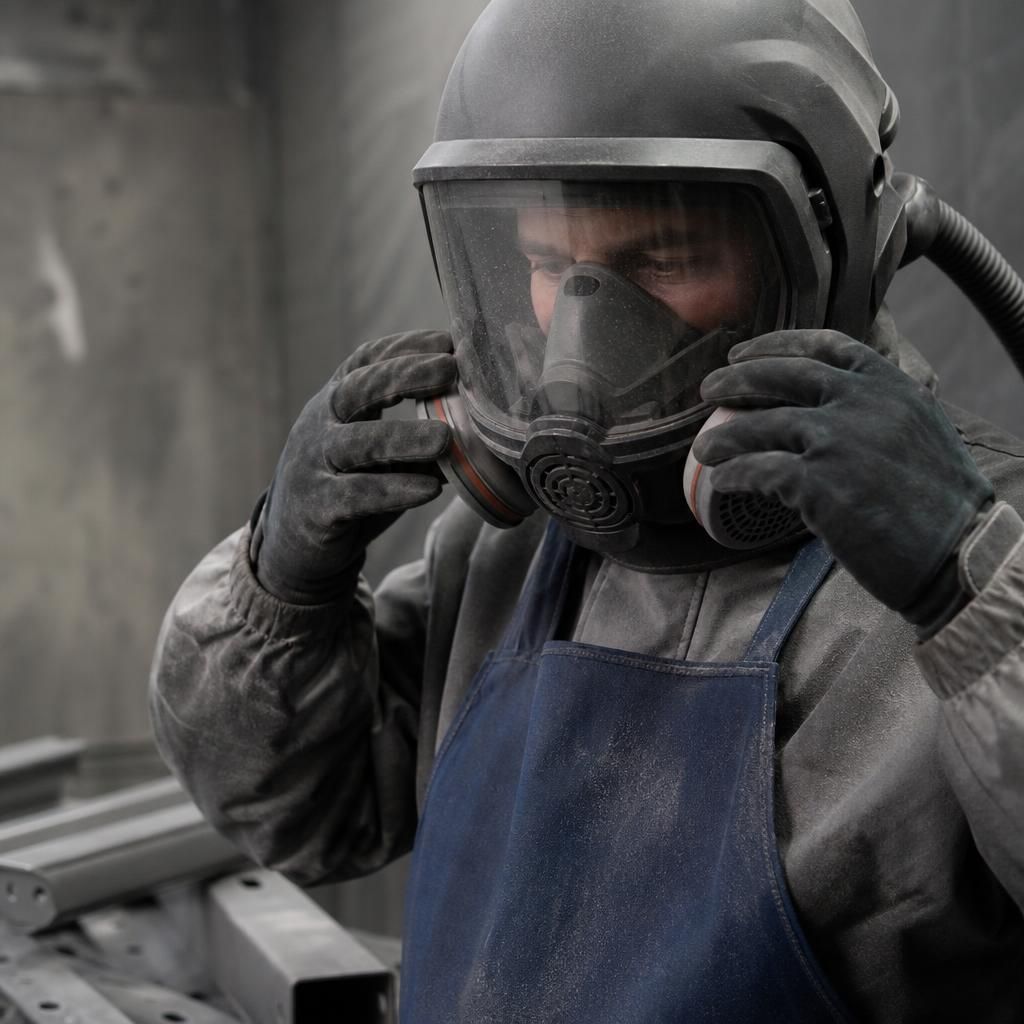
Respiratory protection is a critical precaution when using blasting media because the operator may inhale abrasive dust, rust particles and residues released from old coatings. Select respiratory protective equipment (RPE) through a suitable workplace risk assessment rather than relying on a basic disposable dust mask.
- Use RPE designed for abrasive blasting and appropriate to the contaminants identified.
- Ensure tight-fitting masks are correctly fitted and fit-tested for each wearer; facial hair or poor adjustment can prevent an effective seal.
- Inspect the equipment before use and replace filters, seals or damaged components in line with the manufacturer’s instructions.
- Keep the inside of the helmet or mask clean, and store RPE away from spent abrasive and contaminated work clothing.
- Do not remove respiratory protection until you have left the contaminated area and airborne dust has cleared sufficiently.
Where the removed coating or residue may contain hazardous substances, the RPE selection should form part of the wider control arrangements for that material. If suitable protection cannot be confirmed, stop the work and obtain competent advice before blasting.