

What safety measures are implemented during the abrasive blast cleaning process?
Abrasive blast cleaning safety measures include suitable personal protective equipment, enclosed blasting areas, effective ventilation and dust extraction, and controlled operating procedures. Equipment checks, secure workpieces and thorough cleanup help protect operators while preventing contamination or damage to the metal components being prepared.
Safe abrasive blast cleaning depends on controlling the risks created by high-pressure air, abrasive particles, noise, equipment movement and the condition of the metal being treated. In practice, this requires a documented risk assessment, competent operators, restricted access, properly maintained blasting equipment, suitable emergency arrangements and checks that continue throughout the task rather than only before it begins.
Before work starts, the operator should assess the component, the selected abrasive media and the proposed blasting method. The assessment should consider the coating or contamination being removed, the possibility of hazardous residues, sharp edges, unstable items and any concealed cavities that could retain abrasive. Where coatings may contain hazardous substances, the material should be identified and managed under the relevant control-of-substances procedures. The assessment should also identify who could be affected, including other employees, contractors and visitors.
Only trained and authorised personnel should operate blast-cleaning equipment. Training should cover the operating instructions, the limits of the equipment, safe nozzle handling, recognition of hose or coupling defects, abrasive-media handling and the correct response to a loss of air pressure or equipment fault. Operators should understand that a blast nozzle must never be directed at a person, even when it appears inactive, because stored pressure or an unexpected control failure can create a serious injury risk.
The blasting area should be separated from unrelated work by physical barriers, warning signs and controlled entry. People not involved in the operation should remain outside the designated zone, and anyone who must enter should follow the site’s access arrangements. The operator should also consider ricochet from the component, falling scale, sharp metal edges and trip hazards from hoses or other equipment. Good housekeeping around the work area reduces the risk of slips, entanglement and contact with contaminated debris.
Pressure-related safeguards are particularly important. Hoses, couplings, nozzles and dead-man controls should be appropriate for the operating pressure and inspected for wear, damage or insecure connections. The controls should be positioned so that releasing the operator’s grip stops blasting without delay. The air supply should be isolated and pressure released before adjustments, clearing blockages or disconnecting any part of the system. Improvised repairs, damaged hoses and unsecured couplings should not be used.
Noise is another significant hazard, especially where blasting takes place for extended periods or in reverberant surroundings. Noise exposure should be assessed and reduced through suitable equipment selection, separation of people from the source and sensible task organisation. Hearing protection should be selected as part of the site’s overall protective-equipment arrangements, with consideration given to communication and warning signals. Where exposure could be regular or significant, the business should consider appropriate hearing protection zones and health surveillance.
The abrasive media itself needs to be handled safely. It should be stored in a way that prevents bags, containers or bulk material from falling, and lifting arrangements should account for the weight and awkward shape of the load. Media should be checked for contamination or unexpected substances before use. Reclaimed abrasive should only be reused where its condition and suitability are known; otherwise, spent media and removed coatings should be treated as controlled waste in line with their contents.
Electrical and mechanical risks should also be considered. Electrical equipment used near the process must be suitable for the environment, with cables protected from abrasion, moisture and vehicle movement. Components should be stable and supported so that blasting cannot make them shift, topple or rotate unexpectedly. Where the item is connected to machinery, powered equipment or services, it should be isolated before cleaning begins. Manual handling controls may be needed for loading, turning or unloading heavy metal parts.
Emergency arrangements should be understood before the operation starts. These should cover injuries, loss of control, hose failure, eye contamination, suspected exposure to hazardous residues and a fire or other site emergency. Suitable first-aid provisions, communication methods and clear access for emergency assistance should be available. Following an incident or near miss, the equipment and work method should be reviewed before blasting resumes.
After the task, the operator should confirm that the system has been depressurised and that the work area is safe for other people to enter. Residual abrasive, removed coating and damaged material should be dealt with according to the risk assessment rather than being swept into general waste. A record of defects, incidents and maintenance findings helps identify recurring problems and supports continuous improvement in the blasting process.
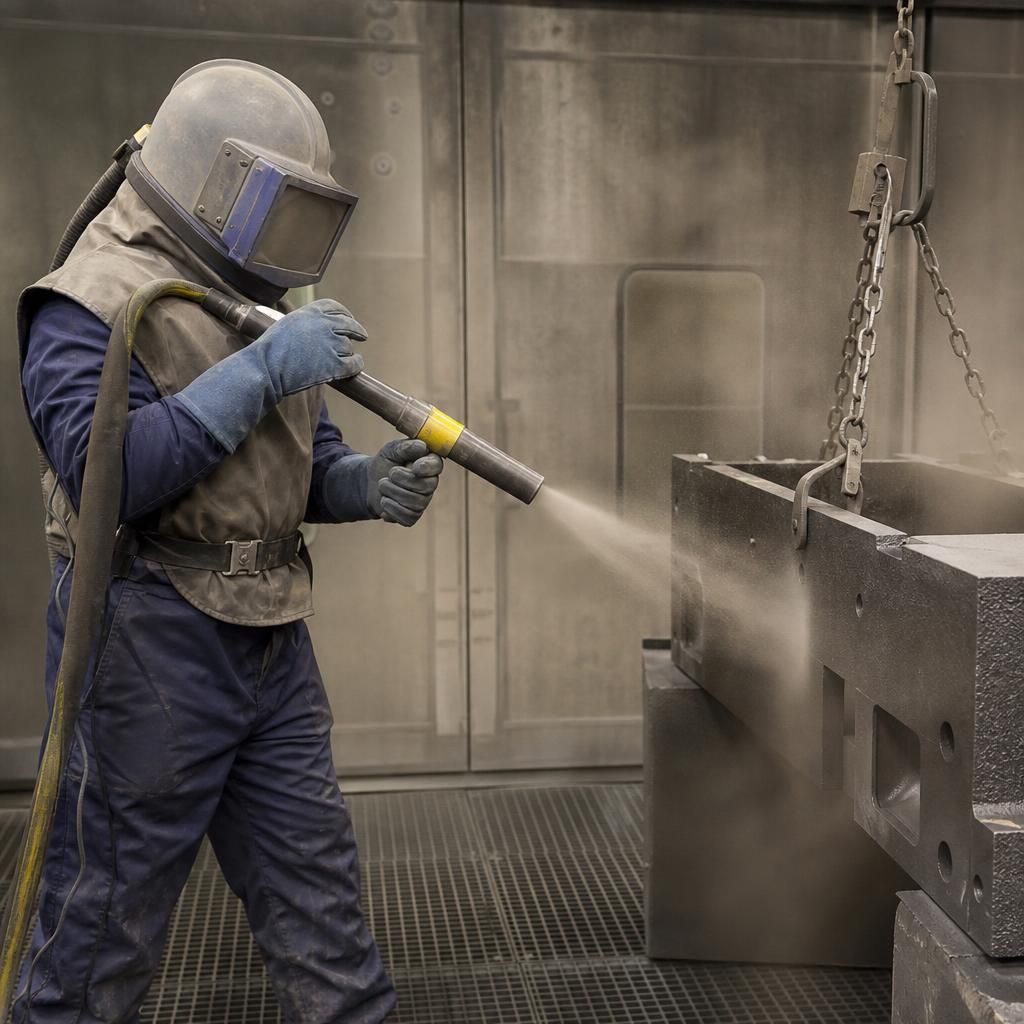
Respiratory protection for abrasive blast cleaning must be selected for the dust and residues produced by the specific job. An ordinary disposable dust mask is not automatically suitable for high-pressure blasting. Where an assessment identifies a respiratory risk, the operator may require an approved supplied-air blasting helmet or another suitable respirator, correctly fitted and maintained in accordance with the manufacturer’s instructions.
Protective clothing should prevent abrasive particles and removed coatings from contacting the skin. Blast helmets, visors, gloves, gauntlets and protective footwear should be checked for wear before use, with damaged items removed from service. Reusable equipment also needs appropriate cleaning and storage so that contamination is not carried into clean areas or transferred to other components.