

What maintenance procedures are recommended to ensure the longevity of anti-corrosion coatings on steel?
Recommended maintenance includes regular visual inspections, gentle cleaning to remove dirt and contaminants, and prompt repair of chips, scratches or areas where steel is exposed. Use cleaning methods and products compatible with the coating, prevent standing water or trapped moisture, and investigate any blistering, flaking or rust staining before corrosion spreads beneath the finish.
The longevity of an anti-corrosion coating on steel depends on a planned maintenance regime that controls contamination, mechanical damage, moisture retention and chemical exposure. The regime should combine manufacturer guidance, the conditions surrounding the steelwork and the consequences of coating failure, with records showing what has been checked and which remedial work has been completed.
Establish the coating baseline
Keep a record of the coating system, application date, colour or finish, preparation method where known, and any areas that received additional protection. This provides a reference when assessing later changes and helps ensure that repair materials are compatible with the original system. The coating supplier or specialist applicator should be consulted before using a touch-up product, sealant or chemical cleaner, particularly where the steel is exposed to industrial fumes, salts, solvents or frequent washing.
Set the maintenance frequency according to exposure
Steel in a dry internal location normally has different maintenance needs from steel exposed to rain, condensation, road salt, chemical vapour, abrasive dust or high temperatures. Give particular attention to components located near process areas, loading points, coastally influenced air, vehicle traffic or sources of repeated wetting. Maintenance should also be brought forward after an event that could affect the coating, such as impact, flooding, chemical spillage, fire or nearby construction work.
Check coating performance, not just appearance
Where the steelwork is safety-critical, costly to replace or exposed to a demanding environment, periodic assessment by a competent coating professional may be appropriate. Depending on the coating system and access available, this can include dry-film thickness checks, adhesion assessment, examination of coating continuity and investigation of corrosion at edges, welds, fixings and joints. These checks can identify deterioration that is not yet obvious across the main coated surface.
Pay close attention to design features that concentrate risk. Coating breakdown often develops at sharp edges, corners, cut-outs, bolt heads, welds, seams and contact points where water or contaminants can remain. Drainage paths should remain clear, and deposits should not be allowed to build up behind brackets, beneath shelves or inside partially enclosed sections.
Control mechanical and chemical exposure
Prevent coated steel from being used as an unintended contact surface for pallets, chains, lifting equipment or abrasive tools. Where components are handled regularly, use suitable protection at contact points and review the handling method if repeated scuffing occurs. Do not drag metal parts across a coated surface or stack them in a way that traps damp material between them.
Remove chemical residues in accordance with the coating supplier’s instructions. Acids, alkalis, solvents, oils, fertilisers, cleaning agents and process chemicals can soften, stain or permeate some finishes even when the coating appears intact. If a spill occurs, contain it promptly, identify the substance and use a cleaning method confirmed as suitable for that coating. A stronger cleaner is not necessarily more effective and may accelerate degradation.
Manage repair work correctly
Repairs should address the cause as well as the visible defect. For example, a damaged area may need protection from recurring abrasion, improved drainage or a change to the surrounding fixing arrangement. Before recoating, the affected surface must be suitably prepared by removing corrosion, loose material, contamination and weak coating. The repair edge should be blended into sound coating, and the replacement material should be applied at the specified thickness and under suitable environmental conditions.
Small local repairs may be suitable for minor damage, but widespread loss of adhesion, repeated corrosion at several locations or extensive fading and embrittlement can indicate that a larger refurbishment is required. Applying a new layer over an unstable existing coating can conceal the problem and lead to premature failure. A coating specialist can determine whether local preparation, partial recoating or complete removal and reapplication is the appropriate approach.
Keep records and review recurring defects
Record the date, location, defect type, likely cause, preparation method and repair material for each intervention. Photographs and coating measurements can make changes easier to compare over time. Repeated defects in the same position should trigger a review of drainage, fixings, handling, process contamination or the surrounding environment rather than repeated cosmetic touch-up alone.
For steel components protected with powder coating, these procedures help preserve the integrity of the cured finish and identify when specialist intervention is needed. A maintenance plan based on the actual exposure conditions is more reliable than treating every coated item in the same way.
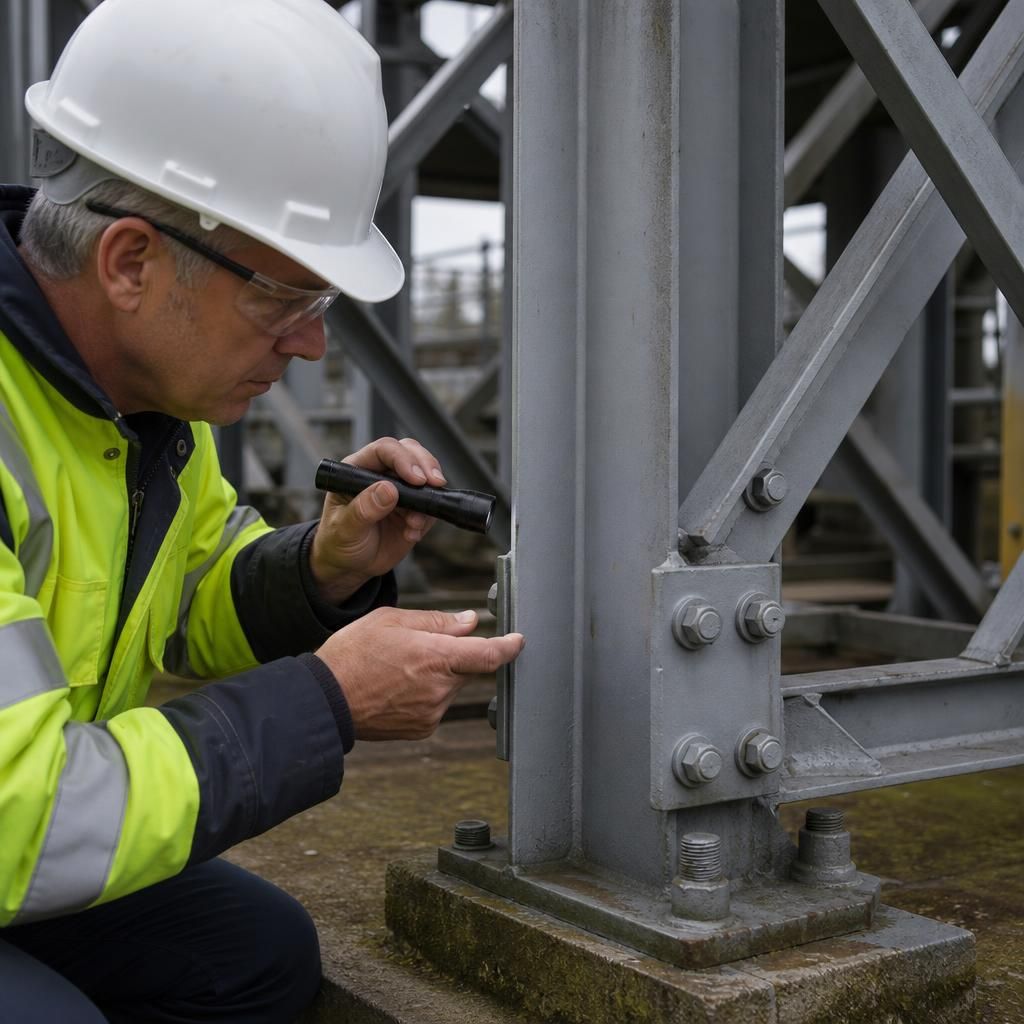
An often-overlooked maintenance procedure is checking the interfaces around coated steel, where fasteners, seals, brackets and adjoining materials can allow moisture to reach the substrate. Examine these junctions for failed sealant, loose fixings, damaged washers or gaps that could hold water against the coating.
- Replace deteriorated seals and gaskets with materials compatible with the coating and the operating environment.
- Keep bolt heads, brackets and connection points free from trapped moisture and corrosion deposits.
- Avoid drilling, cutting or welding the coated steel in service; where modification is unavoidable, the exposed area should be properly prepared and recoated.
- Check contact between dissimilar metals, as galvanic corrosion at an unprotected interface can undermine nearby steel.
Maintaining these junctions prevents localised coating failure from becoming an entry point for corrosion beneath otherwise sound finish.
Discuss Your Steel Coating Maintenance Requirements
Discuss your steel coating maintenance requirements with a powder-coating specialist to review the existing finish, exposure conditions and any repair needs. This can help establish whether local remedial work or a wider recoating assessment is appropriate.