

What are the environmental benefits of using RAL 1018 powder coated aluminium in industrial projects?
RAL 1018 powder coated aluminium can reduce environmental impact by providing a durable finish that extends component service life, limits recoating and reduces material waste. Powder coating also avoids the solvent emissions associated with many liquid coating systems, while aluminium remains recyclable at the end of its useful life.
The environmental benefits of RAL 1018 powder coated aluminium come mainly from the powder-coating process and the aluminium substrate, rather than from the yellow colour itself. For industrial projects, the principal advantages are efficient dry-powder application, the absence of liquid coating solvents, controlled use of process materials and compatibility with aluminium recovery at the end of a component’s service life.
Powder coating is applied as a dry material and cured to form the specified finish. Because it does not require a liquid solvent carrier, the process avoids the solvent evaporation associated with many conventional wet-paint systems. This can reduce the release of volatile organic compounds during application, although the overall environmental profile still depends on the powder formulation, pretreatment chemicals, oven design and site controls.
The application method can also support efficient material management. Electrostatic spraying helps powder adhere to the prepared aluminium surface, while suitable recovery equipment may collect overspray for controlled reuse or disposal. Recovery is not always possible: powder can become contaminated, and different colours or formulations may need to be kept separate. Good batch planning, accurate coating specifications and appropriate collection systems are therefore important when seeking to minimise process losses.
Curing requires heat, so powder coating is not automatically lower-impact in every situation. The energy demand is influenced by component size, metal thickness, line loading, cure temperature, oven insulation and the way the equipment is operated. An environmental assessment should consider the complete process rather than focusing only on the absence of solvent. Correct curing is also essential because under-cured or over-cured finishes may fail to meet the required specification and require additional processing.
RAL 1018 can be useful where a clearly defined, standardised colour is required across multiple aluminium components. A precise colour specification helps reduce ambiguity during production and makes it easier to control powder selection, batch preparation and quality checks. The environmental value comes from this process control rather than from RAL 1018 being inherently more sustainable than another RAL colour; the formulation, finish type and application conditions remain the decisive factors.
Aluminium is well suited to circular material management because it can be recovered and reprocessed after use. At the design stage, manufacturers should consider how coated parts will be separated from other materials, whether fixings can be removed and whether additional treatments could complicate recycling. Clear material records and avoidance of unnecessary composite construction can help recyclers identify the aluminium stream more effectively.
Other factors that should be reviewed for an industrial project include:
- Pretreatment: cleaning and conversion stages may generate chemical residues or wastewater, so the chosen system should have suitable containment, treatment and disposal procedures.
- Powder selection: the formulation should be matched to the required application and specified without additives that are unsuitable for the project’s environmental or end-of-life requirements.
- Energy use: curing and associated extraction should be assessed alongside application efficiency when comparing coating options.
- Packaging and logistics: consolidated production, reusable handling materials and suitable collection or delivery planning can reduce impacts associated with moving components between sites.
- Specification accuracy: the coating system should be selected for the component’s exposure and operating conditions, avoiding unnecessary stripping, reprocessing or replacement caused by an unsuitable specification.
For a UK industrial project, the most reliable approach is to assess RAL 1018 powder coated aluminium as a complete lifecycle system: substrate, pretreatment, powder formulation, application, curing, maintenance requirements and end-of-life route. A specialist powder coater can help review these factors for batch, fabricated or custom aluminium components before the finish is specified.
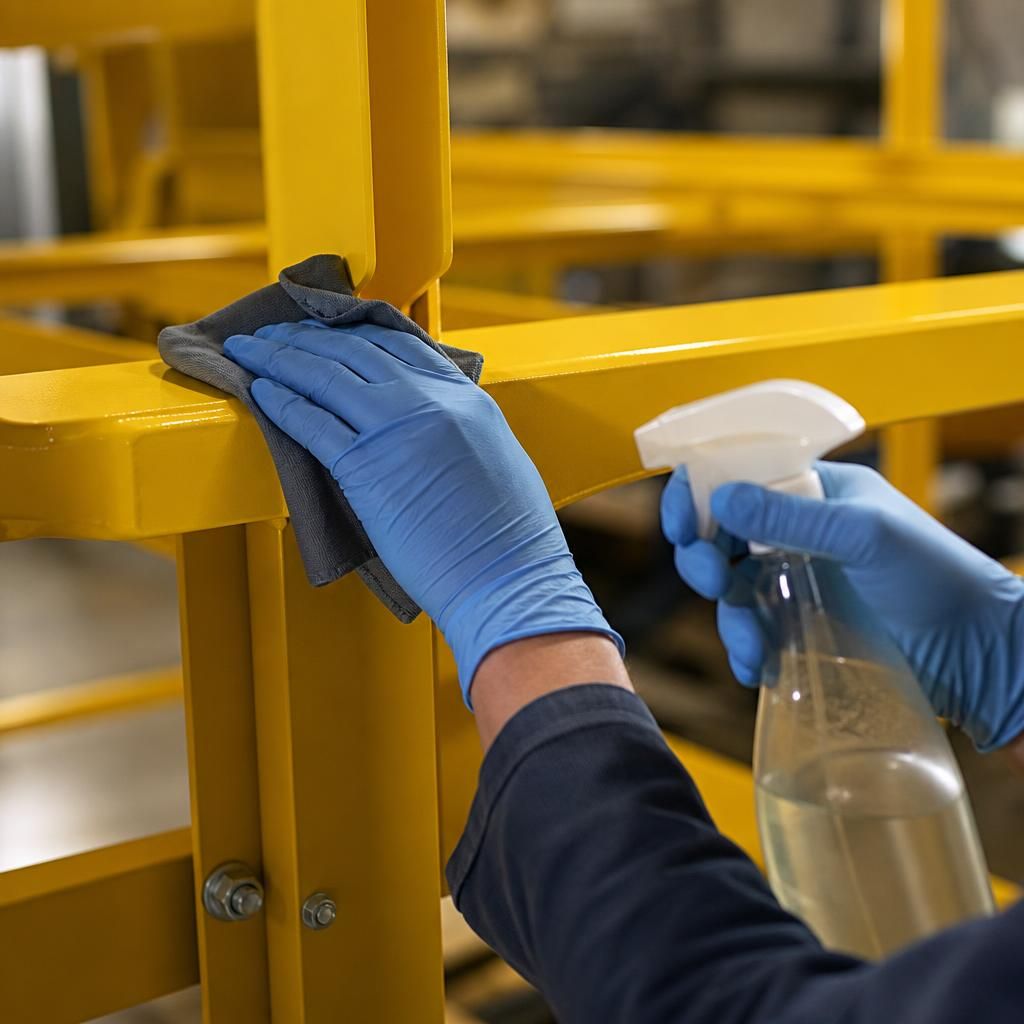
One environmental benefit of RAL 1018 powder coated aluminium is that routine cleaning can often be carried out using mild detergent, water and a soft cloth or brush, rather than aggressive chemical treatments. This helps limit the use and disposal of harsh cleaning products during the component’s service life.
The cleaning method must still suit the coating specification and the operating environment. Abrasive tools, unsuitable solvents and strongly alkaline or acidic cleaners can damage the finish, creating avoidable repair or replacement requirements. Industrial maintenance procedures should therefore identify approved cleaning materials and include appropriate collection and disposal of contaminated wash water.
Discuss your RAL 1018 powder coated aluminium project
Discuss your RAL 1018 powder coated aluminium project with a specialist to review the substrate, exposure conditions, coating specification and end-of-life requirements. This can help establish a practical powder-coating approach for your industrial components.