

What are the environmental benefits of using RAL 9007 powder coating on aluminium?
Using RAL 9007 powder coating on aluminium can reduce environmental impact because the dry powder application process produces negligible volatile organic compound emissions and can minimise material waste compared with liquid coatings. Its durable finish can also extend the service life of aluminium components, reducing the frequency of recoating, replacement and associated resource use.
RAL 9007 powder coating can support a lower-impact aluminium finishing strategy by combining a solvent-free application method with efficient material use and compatibility with aluminium’s established recycling route. The environmental benefit comes from the complete finishing system and its lifecycle management, not from the RAL 9007 colour designation itself.
Powder coating is applied as a dry, electrically charged powder. This avoids the solvent carriers used in many liquid coating systems, which can require additional controls for storage, handling and air treatment. The powder is melted and cured onto the prepared aluminium surface, leaving a solid coating rather than releasing solvent components as the film forms. Any unused powder may also be collected and, where the coating system and equipment allow, reclaimed for controlled reuse. This can reduce the quantity of coating material sent for disposal, although recovery rates depend on the application set-up and powder manufacturer’s requirements.
Aluminium is valued for its recyclability because it can be reprocessed into new products rather than treated as a single-use material. A powder-coated aluminium component can therefore remain part of a material recovery cycle at the end of its service. The coating does not make recycling impossible, but recyclers may need to remove, separate or manage the organic coating during processing. For this reason, responsible specification includes checking the intended end-of-life route and avoiding unnecessary combinations of materials that are difficult to separate.
The preparation stage also affects the environmental profile. Aluminium normally requires cleaning and a suitable conversion or pretreatment process so that the powder coating can bond correctly. Selecting a modern, controlled pretreatment system can help limit chemical consumption and reduce contaminated rinse water. Application controls are equally important: correct part racking, coating thickness, curing conditions and equipment settings help prevent rejects and repeat processing, all of which consume additional powder, energy, water and transport resources.
Energy use should be considered alongside emissions from the coating materials. The curing oven requires heat, so the overall impact depends on oven design, loading efficiency, cure schedule, insulation and the source of the electricity or fuel used. Processing compatible batches together can make better use of the oven than curing isolated small loads. A coating specification should therefore consider the required cure conditions as well as colour and appearance, particularly for large aluminium parts or repeat production runs.
Powder coating can also reduce the need for supporting solvent-related activities. Equipment cleaning and changeovers can often be managed without the same volume of liquid solvent associated with wet-paint systems, although the exact cleaning procedure depends on the powder, spray equipment and production environment. Suitable extraction, powder handling and waste controls remain necessary; powder coating is not impact-free and should not be described as having no environmental footprint.
For a B2B project, the main environmental checks are:
- confirm whether the powder system permits overspray recovery and reuse;
- ask how rejected or contaminated powder is segregated and disposed of;
- review the pretreatment chemicals, rinse-water controls and wastewater arrangements;
- consider curing temperature, oven efficiency and production batch size;
- specify a coating thickness that meets the technical requirement without unnecessary material use; and
- record the substrate and coating details to support future repair, refurbishment or recycling decisions.
RAL 9007 is a visual and technical colour specification, so its environmental performance should be assessed through the chosen powder formulation, pretreatment, application controls and curing process. For aluminium components, the strongest approach is a documented lifecycle assessment that considers material sourcing, preparation, coating, transport, maintenance and end-of-life recovery together rather than judging the colour in isolation.
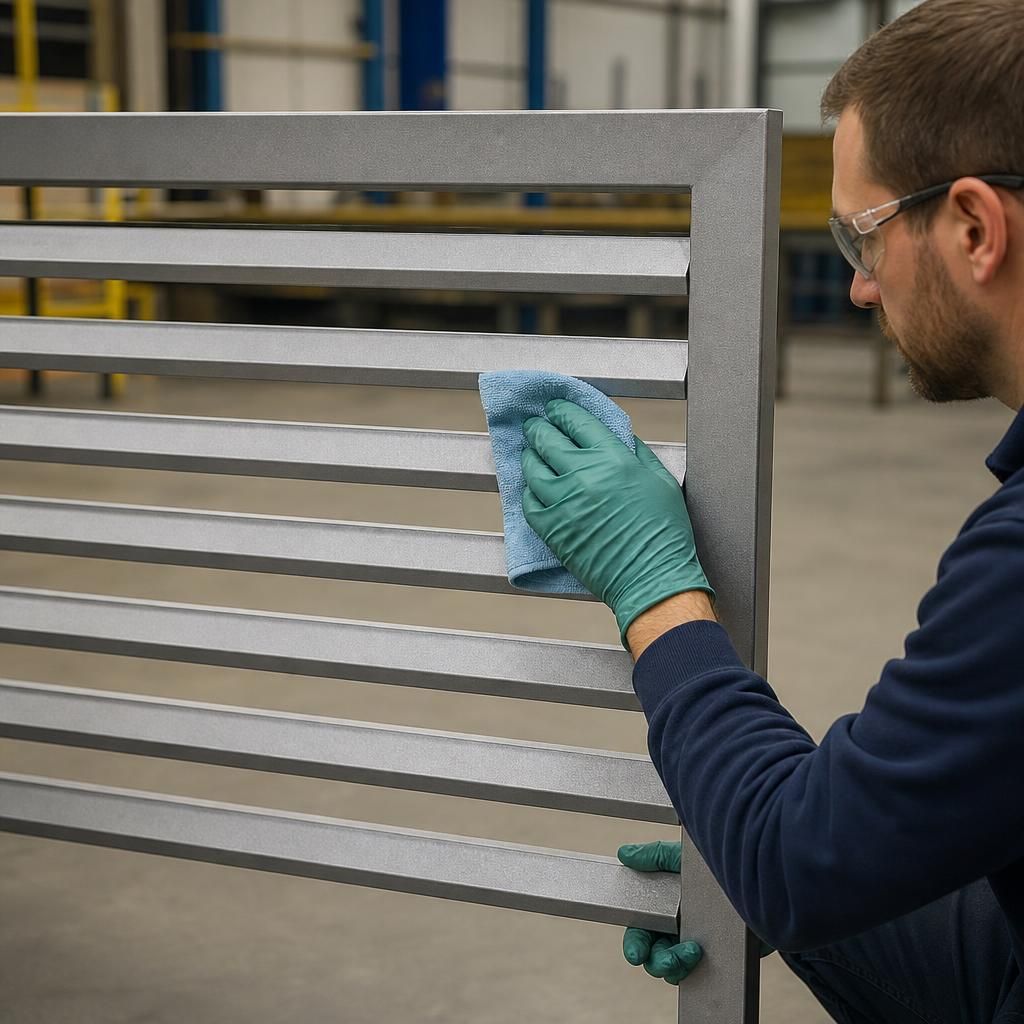
One further environmental benefit of a durable RAL 9007 powder-coated aluminium finish is that routine cleaning can often be carried out using mild methods rather than aggressive solvents or abrasive treatments. Keeping the surface free from dirt and deposits helps preserve its appearance and reduces the risk of premature refurbishment.
For industrial components, specify cleaning procedures that match the coating system and the conditions of use. Neutral detergent, clean water and non-abrasive equipment are generally preferable, while harsh chemicals and unsuitable pressure-washing practices can damage the finish. This approach limits unnecessary chemical use and helps retain the environmental benefits of the original coating.
Discuss the environmental considerations for RAL 9007 aluminium coating
Contact the powder-coating team to discuss your aluminium components, end-use conditions and environmental requirements before specifying a RAL 9007 finish. Providing details such as component dimensions, production volumes and intended service life will support a more suitable coating assessment.