

What maintenance is required for RAL 9023 powder-coated aluminium surfaces?
RAL 9023 powder-coated aluminium generally requires routine cleaning with clean water and a mild, non-abrasive detergent to remove dirt and deposits. Inspect the surface for chips, scratches, staining or coating breakdown, avoid abrasive cleaners and harsh chemicals, and address any exposed aluminium or damage promptly to help preserve the finish.
Maintenance for RAL 9023 powder-coated aluminium is primarily preventive: keep the finish free from persistent deposits, control conditions that can damage the coating, and deal with defects before moisture or contaminants reach the aluminium beneath. The colour designation itself does not determine a maintenance schedule, so the required frequency depends on the component’s exposure, location, design and use.
Establish a maintenance plan based on the surrounding environment. Aluminium installed in coastal locations, areas exposed to industrial emissions, traffic pollution, high humidity or airborne salts generally needs closer attention than sheltered components in a clean inland environment. Pay particular attention to horizontal ledges, recesses, joints and enclosed sections where water or debris can remain. A sound powder coating can be undermined by contamination that is allowed to remain concentrated at these points.
- Check that water can drain away from the coated component and that dirt is not collecting around joints, edges or fixings.
- Remove leaves, grit and other trapped debris from ledges, channels and contact points.
- Look for changes in gloss, colour, texture or adhesion, as these can indicate weathering, chemical exposure or local coating failure.
- Check adjacent sealants, gaskets and drainage details, since failed components can retain moisture against the coating.
- Record notable defects and their location so that recurring problems can be identified and corrected at source.
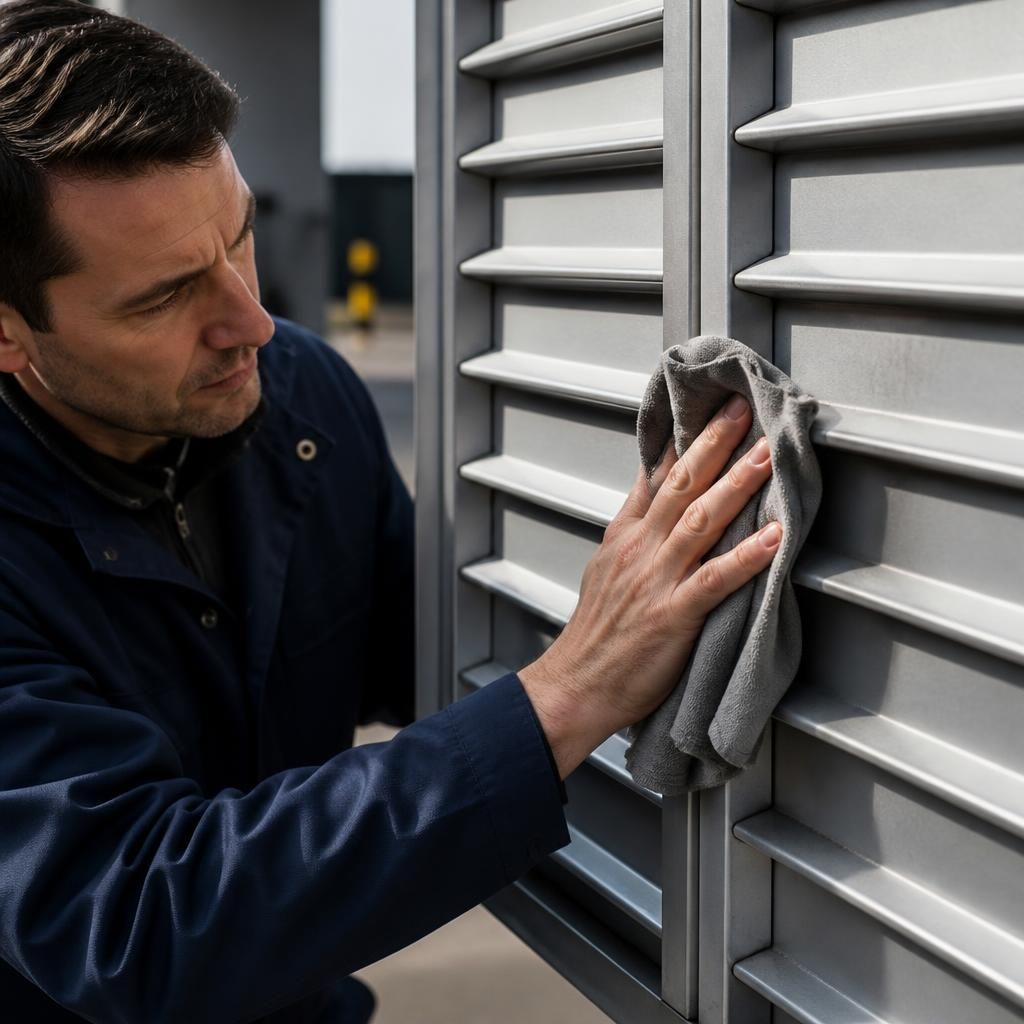
Cleaning should be carried out using equipment that will not mark the finish. Use clean, soft cloths, sponges or suitable soft-bristled brushes rather than tools that can score the coating. Work from cleaner areas towards more contaminated areas, and rinse away loosened material so that it is not dragged across the surface. Allowing the surface to dry naturally or drying it with a clean, non-abrasive cloth helps prevent water marks, particularly on darker or low-gloss finishes.
Do not apply a treatment simply because it is marketed for metal, aluminium or painted surfaces. Solvents, strong alkaline or acidic products, abrasive polishes, scouring pads and concentrated detergents may alter the appearance or weaken the coating. If a specialist cleaner, graffiti remover, sealant or degreaser is needed, check its compatibility with powder-coated aluminium first and test it on an inconspicuous area. Follow the coating supplier’s instructions where they are more specific than general maintenance guidance.
Mechanical damage requires a different response from ordinary surface dirt. Small chips or scratches should be assessed to establish whether the aluminium or an underlying treatment is exposed. A compatible repair coating may be suitable for limited local damage, but it should be selected for adhesion, colour compatibility and exposure resistance rather than matched by colour alone. Touch-up products can differ visibly from the original baked finish, especially where the surrounding coating has weathered, so repairs should be agreed with the coating specialist when appearance is important.
More extensive breakdown, flaking, corrosion staining or loss of adhesion may require removal of the affected coating, preparation of the aluminium and a properly specified recoating system. Painting directly over a contaminated, loose or poorly prepared area usually provides only a temporary cosmetic result. The repair specification should consider the original pretreatment, the service environment, edge condition, access and the compatibility of any existing coating layers.
Take care when nearby work is carried out. Cutting, welding, grinding, drilling, cement, plaster, mortar, bitumen and construction dust can mark or chemically attack a finished surface. Protect coated components from sparks, wet cementitious materials and abrasive dust during installation or refurbishment. Any accidental contamination should be removed using a method approved for the coating rather than scraped away after it has hardened.
Fasteners, brackets and dissimilar metals also deserve attention. Where another metal is in direct contact with aluminium in a damp environment, galvanic corrosion can occur at the interface. Inspect around fixings and isolated contact points, and maintain suitable separation, sealing and drainage details specified for the assembly. This is particularly important where the powder coating has been drilled, cut or damaged, because exposed edges provide a route for moisture to reach the substrate.
Maintenance records should note the date, areas treated, products used and any defects found. They provide useful evidence when investigating repeated staining or coating failure and help ensure that cleaning methods remain consistent across a site. If the component is part of a safety-critical, architectural or highly exposed installation, the maintenance plan should also follow the asset owner’s specification and the powder-coating applicator’s care instructions.
RAL 9023 powder-coated aluminium should not be polished or waxed as though it were bare metal. Polishing can create uneven patches, alter the surface sheen and make a weathered area more noticeable. A clean, uniform finish is normally better maintained through gentle washing and thorough rinsing rather than products intended to restore shine.
If a surface appears dull after cleaning, treat this as a condition change rather than an indication that a stronger cleaner is needed. Compare the affected area with a sheltered section of the component and check for chalking, colour change or localised coating deterioration. These signs may require assessment by a coating specialist instead of further cleaning.