

What are the best practices for applying filler primers in powder coating?
The best practice is to apply filler primer to a correctly prepared, clean and dry substrate in a controlled, even coat, then allow the specified flash-off and cure before applying the powder topcoat. Follow the primer manufacturer’s technical datasheet for film thickness, application settings and curing conditions, and inspect the primed surface for defects before proceeding.
Best practice when applying a filler primer for powder coating is to treat it as part of a complete coating system rather than as a standalone repair layer. The primer should be suitable for the substrate and the intended powder topcoat, applied consistently across the component, and checked for film defects, adhesion and surface profile before the next coating stage.
Confirm system compatibility first. Check that the filler primer is designed for use beneath powder coatings and is compatible with the metal substrate, the planned topcoat chemistry and the required service conditions. Compatibility affects intercoat adhesion, appearance, corrosion protection and resistance to heat, chemicals and mechanical damage. If the component combines different metals, confirm that the primer system is appropriate for each exposed substrate or obtain technical guidance before production.
Assess the component before application. Filler primer is intended to level minor surface irregularities and provide a suitable base for the powder coating. It should not be relied upon to conceal deep dents, sharp burrs, weld spatter, severe pitting or movement in a joint. Correct significant defects using an appropriate fabrication or repair process first. Check areas such as welds, edges, recesses, drilled holes and folded sections, as these often require different spray angles or additional attention.
Use a controlled application technique. Apply the primer with equipment that can produce a stable, repeatable deposit. Keep the gun, spray pattern and component movement consistent, using overlapping passes without concentrating material at edges, corners or changes in profile. Recesses may need a different approach from broad flat surfaces, while excessive application into corners can create runs, pooling or uneven build. Avoid applying material merely to achieve a visual wet appearance; the required result is a uniform, technically suitable primer layer.
Control the surrounding conditions. Temperature, humidity, ventilation and airborne contamination can affect atomisation, flow, drying and the final surface. Keep the application area suitable for the product and prevent dust, fibres, oil mist or other contaminants from settling on the coated component. Environmental conditions should be recorded where process control or traceability is important, particularly for repeat production.
Pay particular attention to edges and geometry. Sharp edges can receive less consistent coverage, while recessed areas can collect excess primer. Where the design permits, soften excessively sharp edges during fabrication and use a spray path that reaches faces, returns and internal sections evenly. Masking may be necessary on threads, precision fits, contact points and surfaces that must remain free from coating. Masks must be secure and made from materials suitable for the process.
Allow the primer to form the correct surface before topcoating. The primer should be free from runs, pinholes, craters, dry spray, fisheyes, blistering, excessive texture and visible contamination. Do not try to bury a defect beneath the powder coat. Remove or repair unacceptable areas in accordance with the coating system instructions, then reassess the affected region before continuing.
Verify the applied layer rather than relying only on appearance. Use the inspection method specified for the product and application, which may include visual checks, wet or dry film measurement, adhesion testing or a test panel. Measurements should be taken at representative locations, including difficult geometries, rather than only on the easiest flat face. Record batch identification, equipment settings and inspection results where consistent production quality is required.
Manage transfer between coating stages. Handle primed components carefully so that lifting equipment, racks, gloves and contact points do not mark or contaminate the surface. Arrange components to prevent contact between faces and to maintain access for the powder application. If the primer is damaged, contaminated or held beyond the stated recoat conditions, follow the product instructions before applying the topcoat rather than proceeding on assumption.
Use test pieces for new or changed work. A test panel or representative component can reveal problems caused by substrate type, geometry, spray equipment, primer build or interaction with the powder coating. Evaluate the complete system, not just the primer in isolation. This is particularly important when introducing a new metal, changing the powder topcoat, altering application equipment or coating parts with demanding appearance or corrosion requirements.
Maintain process discipline and safety. Operators should follow the primer’s safety data sheet, technical data sheet and site procedures, including the specified personal protective equipment, ventilation and equipment-cleaning requirements. Keep containers identified, avoid cross-contamination between products and document any deviation from the approved process. Consistent records make it easier to trace defects to application, materials or component design.
For industrial metal components, the most reliable approach is therefore a documented sequence: confirm compatibility, assess and correct the component, apply the primer with controlled equipment, inspect the resulting film, protect the primed surface during handling and verify the complete coating system on representative work. These controls help ensure that the filler primer supports the powder coating instead of introducing defects beneath it.
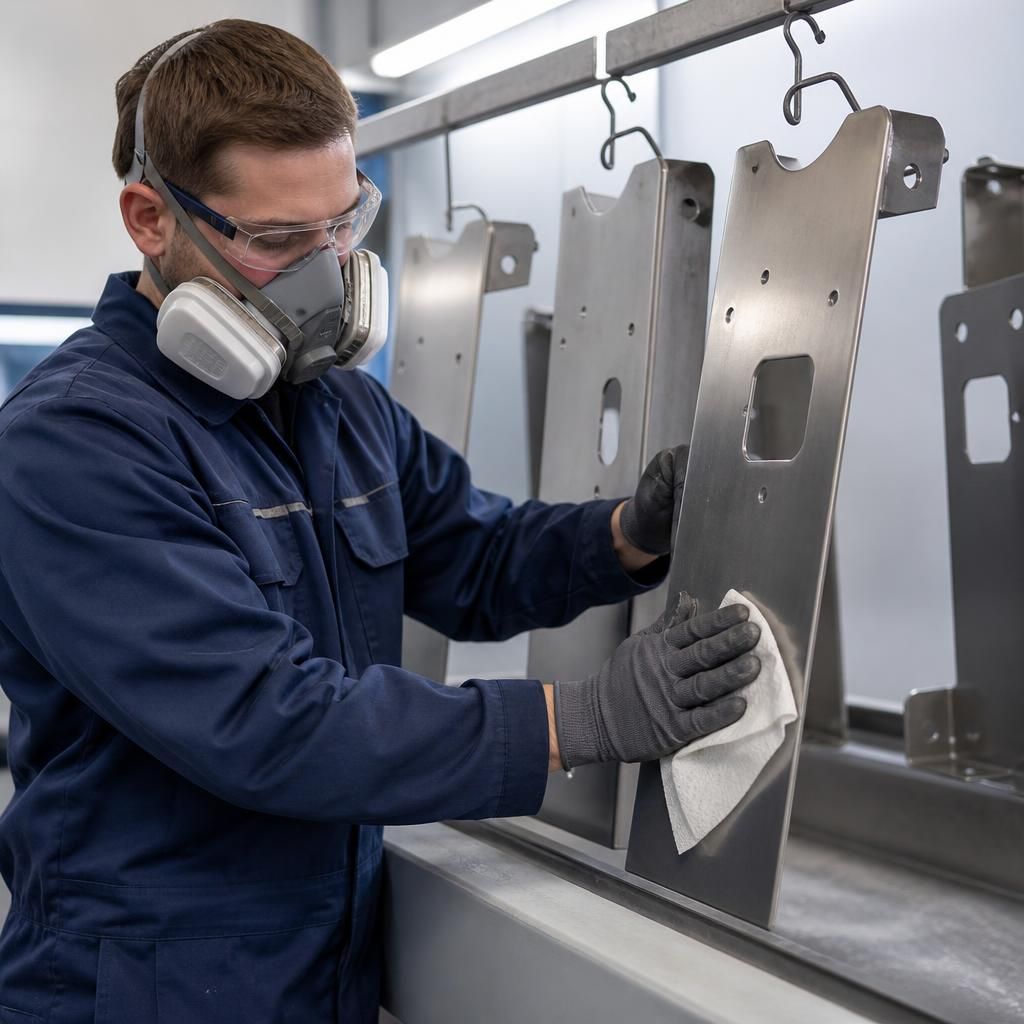
Surface preparation is the foundation of a reliable filler-primer application. Before spraying, remove oil, grease, mill scale, oxidation, loose paint and fabrication residue using a preparation method suitable for the metal and the coating system. Cleaning should leave no residue that could interfere with wetting or adhesion, and the component must be fully dry before primer is applied.
- Inspect cleaned steel or aluminium under suitable lighting rather than relying on solvent wiping alone.
- Pay particular attention to weld zones, handling marks, fingerprints, recesses and areas where abrasive or cleaning media may collect.
- Protect prepared metal from renewed contamination during transfer to the spray area.
- Do not apply filler primer over visible rust, moisture, oil or loose surface material; correct the condition first.
The required preparation standard depends on the substrate, the primer and the service environment. Where blasting, abrasion or chemical preparation is specified, follow the coating system documentation rather than substituting a convenient cleaning method. A clean, suitably keyed surface gives the filler primer a stable base and reduces the risk of lifting, pinholes or loss of adhesion beneath the powder coating.