

What maintenance is required to ensure the longevity of black protective primer finishes?
Maintaining black protective primer finishes requires regular inspection, gentle cleaning and prompt repair of chips, scratches, exposed metal and corrosion. Remove contaminants with a suitable non-abrasive cleaner, avoid aggressive methods that could damage the coating, and arrange professional assessment where deterioration extends beneath the visible surface.
The longevity of a black protective primer finish depends on controlling the conditions that can weaken the coating, rather than simply treating visible damage. A sound maintenance plan should account for the exposure environment, the metal substrate, the preparation beneath the primer, the compatibility of any topcoat and the way the component is handled in service.
Confirm the coating system. Establish whether the black primer is intended to remain exposed or is designed to receive a separate topcoat. Many protective primers provide adhesion and corrosion resistance as part of a multi-layer system, so leaving an undercoat exposed when it was not designed for direct environmental exposure can shorten the service life. Keep the coating specification, product data and application records with the asset. These documents help identify compatible repair materials and confirm any restrictions relating to chemicals, temperature, immersion or overcoating.
Match maintenance to the operating environment. Components exposed to road salt, industrial pollutants, fertilisers, solvents, frequent condensation or standing water require more control than items kept in a clean, dry interior. Coastal and heavily industrial locations can place particular demands on the coating because deposited contaminants retain moisture and may accelerate corrosion at weaknesses in the film. Where exposure conditions change, reassess whether the existing primer remains suitable or whether an additional protective topcoat is necessary.
Prevent water retention. The surrounding design can have as much influence on service life as the coating itself. Check that water can drain from horizontal surfaces, joints, folded sections and hollow fabrications. Pay attention to crevices, unsealed tube ends, lap joints and areas where dirt collects. Persistent dampness can cause corrosion beneath an apparently intact coating, especially where moisture enters through a joint or edge. Improving drainage, sealing appropriate joints and correcting sources of condensation can therefore reduce the load placed on the primer.
Protect edges, interfaces and fixings. Coating edges, drilled holes, weld zones, cut-outs and contact points are commonly more vulnerable than broad flat surfaces. During installation or maintenance work, prevent tools, slings and adjacent components from striking or scraping these areas. Use suitable isolating materials where dissimilar metals or wet contaminants could create a galvanic corrosion risk. Fasteners should be checked for incompatible finishes, trapped moisture and loosening that could allow movement against the coating.
Control chemical contact. Oils, hydraulic fluids, cleaning agents and process chemicals should not be allowed to remain on the surface unnecessarily. Before using a cleaner, degreaser or disinfectant, check its suitability against the coating specification and test it on an inconspicuous area where practical. Avoid mixing chemicals and do not assume that a product suitable for bare steel is suitable for a cured primer. If a spill occurs, follow the relevant safety data and coating guidance rather than using an abrasive or solvent-based treatment by default.
Manage mechanical wear. Repeated contact, vibration, sliding parts and abrasive dust can gradually reduce film thickness without producing one obvious defect. Review brackets, clamps, access panels and loading points where movement occurs. Replace hard debris trapped between mating surfaces and use appropriate protective pads or redesigned contact points where the coating is being worn during normal operation. Maintenance work should avoid dragging metal parts across the primed surface.
Use compatible repair and recoating methods. Localised remedial work should be based on the condition of the complete coating system, not just the colour. The affected area may require controlled removal of loose material, preparation of the exposed substrate, treatment of corrosion and application of a compatible primer or repair coating. If the damage is widespread, blistering is present, or corrosion extends beneath apparently sound areas, a local touch-up may be unsuitable. The component may need professional assessment and preparation before partial or complete recoating.
Where a topcoat is required, confirm intercoat adhesion and recoat suitability before application. Surface contamination, excessive gloss, incompatible chemistry or inadequate preparation can cause peeling even when the new product is otherwise suitable. A black appearance alone does not confirm that two products will bond correctly; the technical requirements of the primer and topcoat must be compared.
Keep maintenance records. Record the location of the component, exposure conditions, coating system, cleaning products, repairs and any change in use. Photographs and notes about recurring problem areas can show whether deterioration is isolated or developing across a design feature. This information supports planned refurbishment and helps distinguish coating failure from problems caused by water ingress, movement, chemical exposure or substrate corrosion.
For critical steelwork or components exposed to aggressive conditions, maintenance should form part of the asset’s wider inspection and corrosion-control programme. If the primer has lost adhesion, corrosion is visible around joints or edges, or the coating has deteriorated over a broad area, obtain a coating specialist’s assessment before carrying out further treatment. The correct intervention may involve substrate preparation, revised detailing, a compatible primer and a suitable protective finish rather than repeated cosmetic repairs.
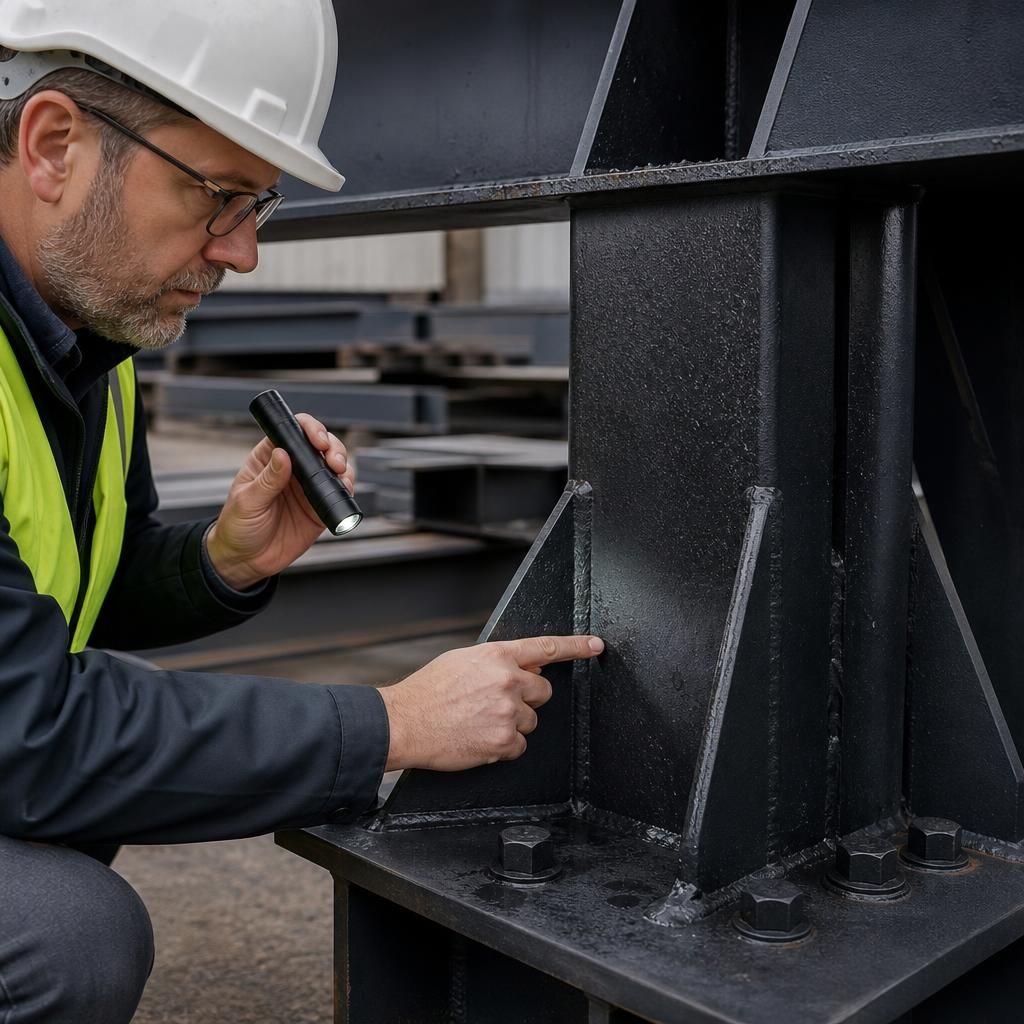
For an exposed black protective primer finish, monitor changes in appearance as well as obvious rust. Chalking, fading, loss of gloss, rust staining, blistering or lifting at edges can indicate weathering, contamination or a breakdown in the coating system. A change in colour alone does not prove that the metal substrate is corroding, but it should prompt closer inspection of the film, joints and vulnerable edges.
Record photographs from consistent positions during planned inspections so gradual deterioration is easier to identify. If the surface change is accompanied by cracking, flaking, softness, exposed steel or moisture beneath the coating, treat it as a coating defect rather than a cosmetic issue and obtain advice on the appropriate repair system.
Discuss maintenance for your black protective primer finish
If you are reviewing the condition of a black protective primer finish, discuss the coating specification and inspection findings with a powder coating specialist before selecting a repair or recoating method. This can help establish whether local treatment is appropriate or whether the component requires broader preparation and refinishing.