

How do primer systems affect the overall durability of powder-coated finishes?
Primer systems improve the durability of powder-coated finishes by strengthening adhesion between the metal substrate and topcoat while adding an additional protective barrier. When correctly selected and applied, they help reduce corrosion-related breakdown, underfilm deterioration and premature coating failure in demanding industrial environments.
A primer system affects overall durability by controlling how the complete coating stack responds to mechanical wear, moisture, chemicals, temperature changes and defects in the finish. Its contribution is not limited to the primer film itself: the substrate, primer, topcoat, curing conditions and service environment must work as a compatible system.
Durability is determined by the weakest part of the coating system. A hard topcoat may provide good surface resistance, but its performance can be reduced if the primer is poorly bonded, incompletely cured or unsuitable for the metal substrate. Conversely, a correctly specified primer can support the topcoat by providing a more stable base and helping the coating system tolerate damage without rapid deterioration.
Several characteristics of the primer influence this performance:
- Film integrity: The primer should form a continuous, even film at the specified thickness. Thin areas, pinholes and inconsistent coverage create local weak points where moisture or contaminants can reach the substrate.
- Intercoat bonding: The primer and topcoat must be chemically and physically compatible. A sound bond between the layers helps prevent lifting, flaking or separation when the finished component is exposed to impact, abrasion or temperature variation.
- Edge and recess protection: Corners, edges, welds, holes and enclosed sections are often more vulnerable than broad flat surfaces. Primer selection, application technique and part positioning should provide suitable coverage in these areas rather than relying solely on the topcoat.
- Flexibility and toughness: Components that are handled, formed, vibrated or exposed to impact may need a coating system that can absorb limited movement without cracking. A very rigid system is not automatically the most durable choice for every application.
The primer can also affect how the finish responds to mechanical damage. Scratches, chips and abrasion may expose the underlying metal, particularly on parts that are installed outdoors, transported frequently or used in industrial equipment. A suitable primer system can limit the progression of damage beneath the surrounding coating, but it cannot compensate for severe impact, incorrect film thickness or inadequate preparation. The coating specification should therefore consider the likely type of contact, handling and wear rather than selecting a primer solely by its general corrosion performance.
Temperature is another factor. Repeated heating and cooling causes the metal and coating layers to expand and contract. If the layers respond differently, internal stresses can build at the interface. Over time, this may contribute to cracking, loss of adhesion or edge lifting. A primer system selected for the operating temperature and the movement of the component is more likely to retain its integrity than one chosen without considering thermal conditions.
Curing has a direct effect on the final properties of the system. The primer and topcoat must each receive the required heat exposure for the powder to flow, bond and develop its intended characteristics. Under-curing can leave the coating with reduced hardness, adhesion or chemical resistance. Excessive or unsuitable heating can also affect the substrate, the primer chemistry or the appearance of the finish. The relevant metal thickness, part geometry and oven conditions should be considered when establishing the process.
Surface preparation remains essential even when a primer is specified. Oil, grease, oxide, mill scale, weld residues, dust and other contaminants can interfere with bonding. A primer applied over an inadequately prepared surface may appear sound initially while remaining vulnerable to premature separation. Preparation should be appropriate to the substrate and the required service environment, followed by careful handling so that the cleaned surface is not recontaminated before coating.
Compatibility with the base metal also affects long-term performance. Steel, galvanised steel, aluminium and other substrates can have different surface characteristics and preparation requirements. A primer that performs well on one metal may not be suitable for another without changes to preparation or the coating specification. Galvanised surfaces, for example, may require attention to their condition and any surface treatments before a primer is applied.
The topcoat must be selected as part of the same system. Important considerations include its intended resistance to ultraviolet exposure, chemicals, moisture, abrasion and weathering, as well as its compatibility with the primer. A primer designed for heavy-duty protection does not make an unsuitable topcoat appropriate for a severe service environment. Likewise, a decorative topcoat should not be assumed to provide the functional performance required by an industrial component.
In practice, assessing durability involves reviewing the complete service conditions:
- the metal substrate and its condition;
- indoor, outdoor, submerged or high-humidity exposure;
- contact with chemicals, salts, oils or cleaning agents;
- expected impact, handling, vibration and abrasion;
- operating and cyclic temperatures;
- part geometry, including edges, joints and enclosed areas; and
- the required appearance, film build and maintenance conditions.
Inspection should cover preparation, primer coverage, film thickness, curing and the finished surface. Particular attention should be paid to edges, welds, corners and areas that are difficult to coat consistently. Where the application is demanding, the coating specification should define the substrate preparation, primer and topcoat combination, application parameters and acceptance criteria before production begins.
Therefore, a primer system improves durability when it is correctly matched to the substrate, topcoat and service environment and then applied under controlled conditions. It supports the complete finish by reducing weak interfaces and improving resistance to the stresses that cause coating breakdown, while the final result still depends on preparation, curing, film control and the suitability of every layer.
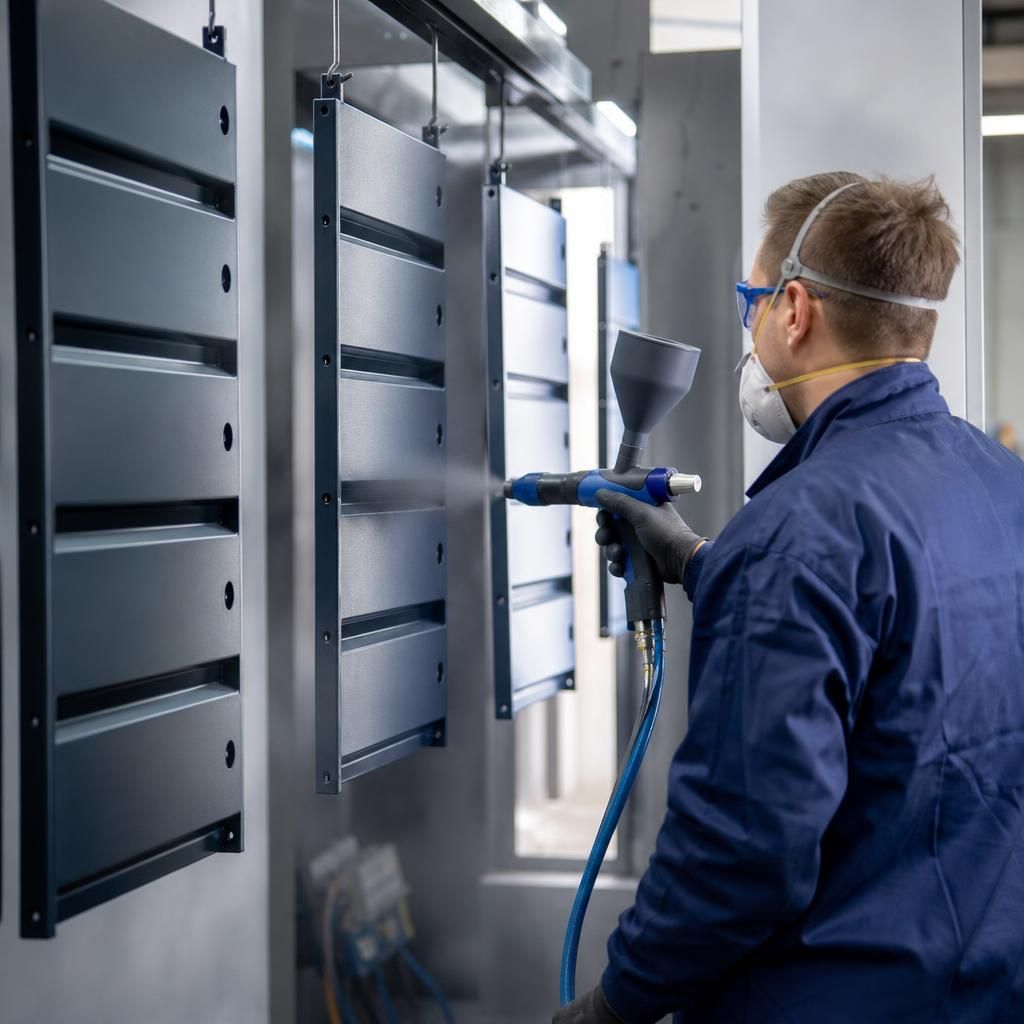
Overall durability should be assessed against the property that matters most in service. A finish may retain adhesion and protect the metal while its colour or gloss changes, whereas a visually acceptable surface may already have lost protection at damaged areas or interfaces. The primer mainly supports substrate protection and intercoat integrity; the topcoat generally determines much of the surface’s resistance to light, chemicals, handling and weathering.
For this reason, primer performance should not be judged by appearance alone. A suitable specification defines whether success means maintaining corrosion protection, adhesion, surface appearance, chemical resistance or a combination of these requirements. This makes it easier to select a primer and topcoat that address the actual failure risks rather than treating durability as a single property.