

What factors influence the price of powder coated aluminium per kg?
The price of powder coated aluminium per kg is influenced by the quantity and weight of the order, the aluminium section’s size and geometry, surface preparation, coating type and colour, masking requirements, and packaging or collection and delivery needs. A clear specification covering these factors allows the coating cost to be assessed accurately.
Powder coated aluminium is not priced by metal weight alone. The quoted cost per kilogram usually reflects how efficiently the parts can be processed, the labour and equipment required, production planning, quality requirements, and the way the supplier defines the chargeable weight. These factors can make two aluminium orders with the same total weight produce different per-kilogram prices.
Minimum charges and set-up costs
Powder coating involves preparation of the equipment, loading of the parts and checks before production begins. On a small order, these fixed activities represent a larger cost for each kilogram than they would on a substantial production run. A supplier may therefore apply a minimum batch charge, set-up charge or minimum invoice value rather than relying solely on a simple weight calculation.
Repeat orders can sometimes be easier to price because the processing requirements, hanging method and inspection approach are already established. However, the price still depends on whether the parts can be incorporated into an existing production sequence without additional preparation or disruption.
Line utilisation and loading efficiency
The usable capacity of the coating line affects the cost per kilogram. Aluminium sections need to be positioned securely for processing, and the available hanging points, rack capacity and oven space determine how much work can be handled in one run. Light sections may occupy considerable physical space while adding relatively little weight, which can make their price per kilogram higher than that of denser components.
Parts that can be loaded efficiently and processed together generally make better use of labour and equipment. Conversely, an order that occupies a full production cycle but contains limited chargeable weight may carry a higher unit rate.
Production sequence and equipment cleaning
Colour and finish changes require planning because equipment may need to be cleaned between runs to prevent contamination. A coating job that fits into the existing sequence can have a different cost from one requiring an isolated run or additional cleaning. The effect is particularly relevant where several small batches have different specifications.
Cure requirements can also affect production planning. If a specification requires a particular oven temperature, dwell time or process control, the work may need to be scheduled separately from other jobs. The resulting use of plant, supervision and production capacity can influence the price per kilogram.
Powder consumption and transfer efficiency
The weight of finished aluminium does not show how much powder the process consumes. Powder is applied to the surface, and consumption is affected by the surface area of the sections, the required film build and the efficiency of application. Overspray, start-up material and powder that cannot be recovered may add to the material cost.
This is one reason why a narrow, lightweight section can have a higher coating cost relative to its metal weight than a compact, heavy component. Pricing based only on the incoming aluminium weight may therefore be unsuitable for some profiles.
Inspection, testing and documentation
The required level of quality control can alter the quotation. A straightforward visual inspection is different from a specification requiring recorded checks, sample approval, coating-thickness verification, adhesion testing, colour assessment or traceable batch documentation. Each additional control requires time, equipment and records.
When requesting a price, specify whether the work is being assessed against a defined project or industry standard and identify any records that must accompany the finished parts. If these requirements are introduced after the quotation, the original per-kilogram rate may no longer cover the additional work.
Acceptance criteria and the cost of rework
Clear acceptance criteria help prevent uncertainty in pricing. These may cover allowable cosmetic marks, visible faces, areas that will be concealed during installation and the treatment of minor defects. A highly demanding appearance standard can require closer inspection and, where necessary, additional processing.
Rework should also be addressed in the specification. The cause of a problem, responsibility for replacement material and treatment of rejected parts can all affect the final cost. Agreeing these points before production makes comparisons between quotations more meaningful.
How to compare per-kilogram quotations
- Check whether the rate is based on the incoming aluminium weight, the finished weight or another agreed measurement.
- Ask whether a minimum batch charge or minimum invoice value applies.
- Confirm which inspection, testing and documentation requirements are included.
- Establish how set-up, cleaning, rework and rejected parts are treated.
- Provide drawings, estimated batch details and the required acceptance standard so the supplier can assess the actual production method.
A useful quotation should explain the basis of the per-kilogram rate rather than presenting an isolated figure. Powder-coatings.co.uk can assess the specification for aluminium sections and provide a price based on the practical processing requirements of the order.
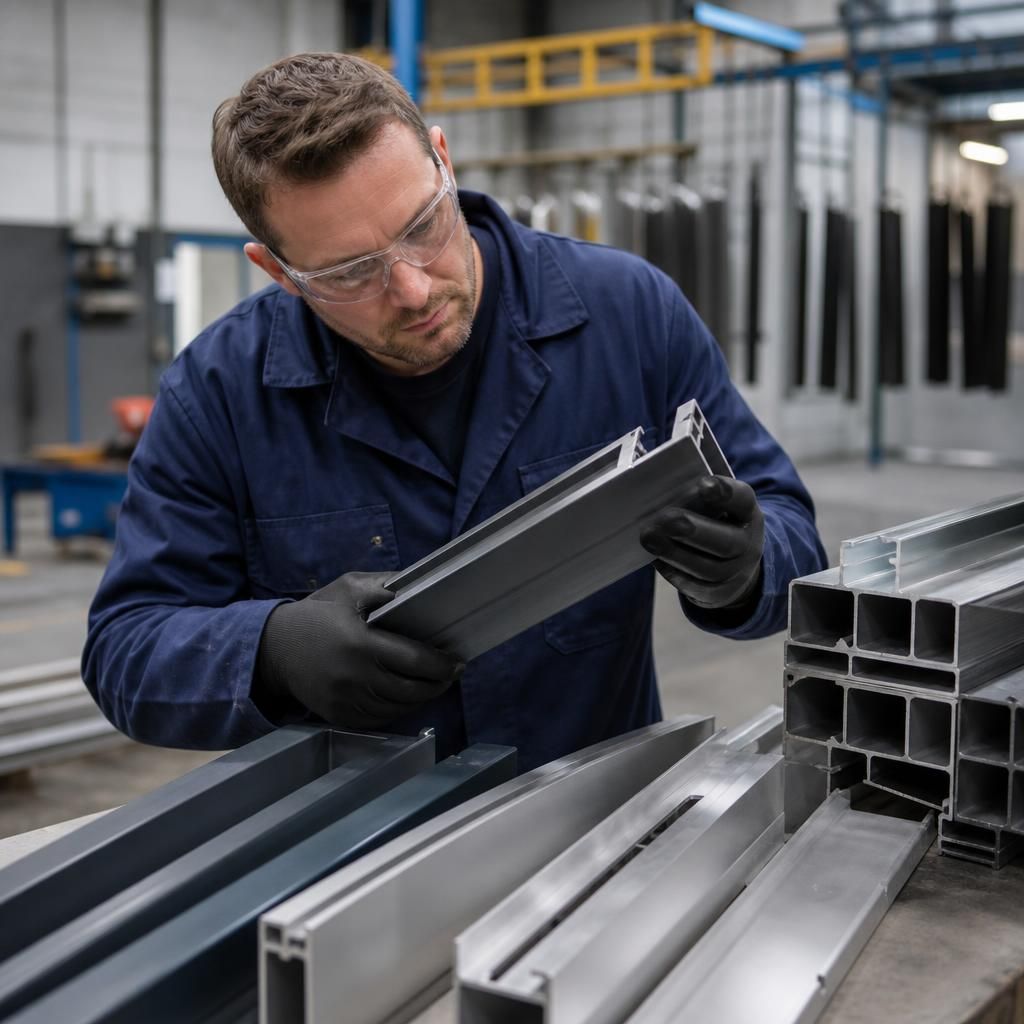
The condition and specification of the aluminium substrate can affect the price independently of its weight. Clean, untreated extrusions may follow a standard preparation route, whereas parts with anodising, an existing coating, adhesive residue, sealant, oil or oxidation may need additional assessment or treatment before powder can be applied.
The alloy and condition of the sections should also be identified, particularly where a batch contains different aluminium grades or previously used components. Providing this information, together with photographs or drawings where relevant, helps the coater determine whether the parts can follow the same preparation and coating route or require separate handling.