

What is the process for applying electrostatic epoxy powder coating to metal components?
Electrostatic epoxy powder coating is applied by preparing and cleaning the metal component, electrically charging the powder and spraying it onto the earthed surface so it adheres evenly. The coated component is then heated in a curing oven, allowing the powder to melt, flow and form a continuous protective finish.
Applying electrostatic epoxy powder coating is a controlled production process in which the component, powder, application equipment and curing cycle must all be matched to the required service conditions. The main stages are specification, component preparation, masking and racking, powder deposition, thermal curing, inspection and careful handling.
- Define the coating specification. Before processing begins, the coater should confirm the metal type, component dimensions, expected exposure, required colour and texture, film build, masking requirements and any areas that must remain uncoated. Epoxy powder is selected according to the performance required; the operating environment may determine whether a particular formulation is suitable, especially where components will be exposed to chemicals, moisture, abrasion or sunlight.
- Assess the component and remove contaminants. Parts are checked for weld spatter, sharp edges, burrs, oil, grease, rust, mill scale and other surface defects. These issues can affect adhesion and appearance, so they should be corrected before coating. The preparation method is chosen to suit the substrate and condition of the metal. It may include degreasing, abrasive preparation or chemical pre-treatment, followed by thorough drying. Any residue left on the surface can cause contamination, pinholing or premature coating failure.
- Mask critical areas and arrange the part for processing. Threads, bearing seats, electrical contact points, machined faces and other close-tolerance features may need heat-resistant plugs, caps or masking tape. Components are then positioned on suitable hooks or fixtures. The arrangement should expose the required faces to the spray while avoiding contact marks and allowing the part to move through the curing equipment safely. Drainage and venting are also considered for hollow or fabricated sections, as trapped fluids or air can create defects during heating.
- Establish a reliable electrical path. Electrostatic application depends on the component being properly connected to earth. Racking, hooks and contact points must be clean enough to maintain consistent conductivity. Poor contact can reduce powder attraction, create uneven coverage and increase overspray. For repeat production, the racking method should be kept consistent and checked as part of the process rather than treated as a one-off setup.
- Apply the powder to the required film build. The spray gun charges the powder particles as they pass through the equipment, while the earthed metal attracts them. The operator controls gun distance, movement, powder output and voltage to build an even layer over the component. Edges, corners, recesses and Faraday areas require particular attention because electrostatic forces can make powder distribution less uniform in these locations. Complex parts may need changes in gun angle or a carefully planned spray sequence. Excessive build can affect appearance and curing, while insufficient coverage may reduce protection and create visible variation.
- Transfer the coated component to the curing stage. Once the powder has been deposited, the part is moved without disturbing the unfused coating. It is heated according to the powder manufacturer’s technical requirements. The important control is the temperature reached by the metal and the time it remains at the required condition, not simply the temperature displayed inside the oven. During curing, the powder melts, flows and chemically cross-links to form the finished epoxy film. Component thickness, mass and geometry influence how quickly the metal reaches the necessary cure condition.
- Verify the cured finish. After cooling, the coating is inspected for coverage, colour consistency, texture, gloss, runs, craters, pinholes, contamination and areas of exposed metal. Where the specification requires it, checks may include dry-film thickness, adhesion, cure confirmation and visual comparison against an approved reference. The inspection method should reflect the component’s function: a threaded part, for example, may need dimensional checks as well as a surface assessment.
- Protect the finished components. Fully cured parts should be handled using clean methods that avoid scratching, impact and contamination. Packaging, stacking and transport arrangements need to prevent coated surfaces rubbing together or bearing loads at vulnerable points. Any areas masked during application are checked after removal, and components are reviewed for damage before they are released for assembly or delivery.
For batch work, consistency depends on recording the powder specification, preparation method, racking arrangement, application settings, oven conditions and inspection results. This creates a repeatable process and makes it easier to identify whether a defect originated from the substrate, application stage, curing cycle or subsequent handling. Components with unusual geometry, mixed metals or tight dimensional tolerances should be reviewed before production so that preparation, masking and curing can be planned around their specific requirements.
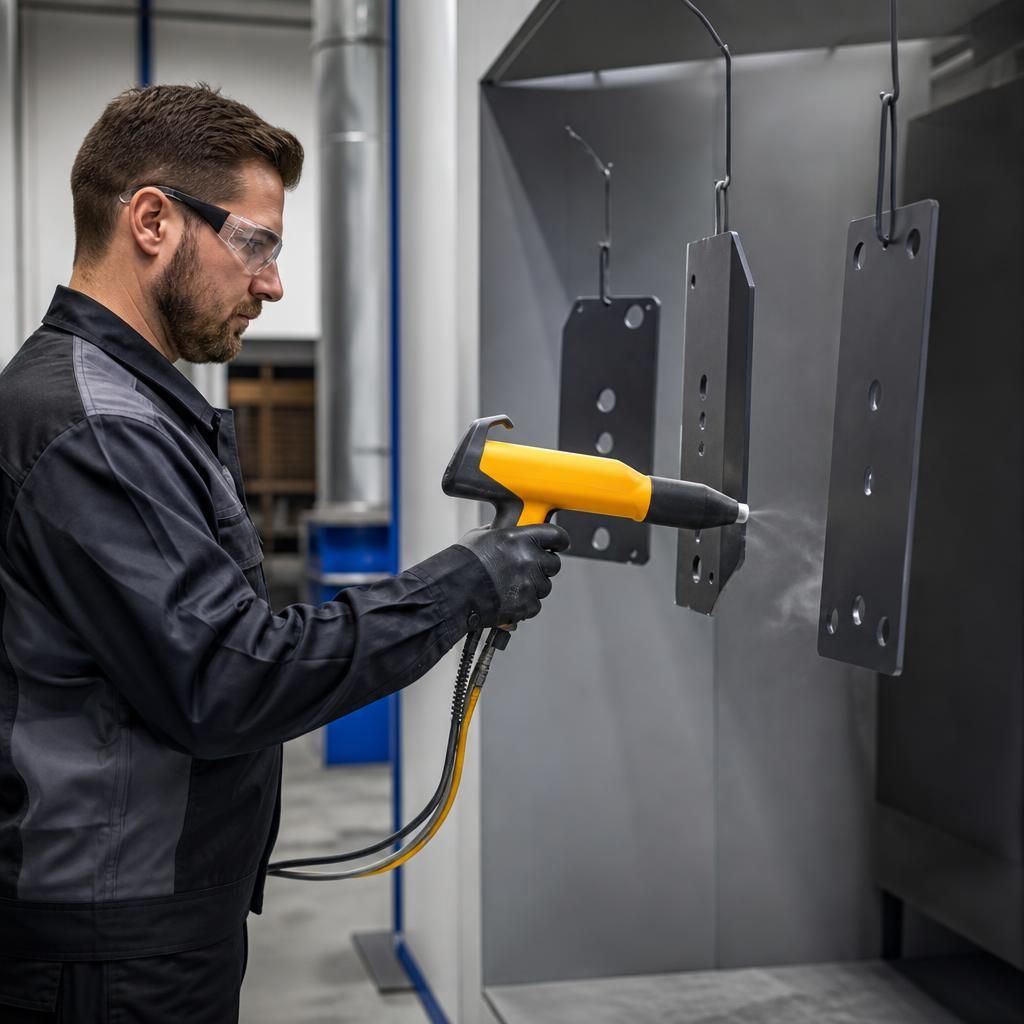
A trial application can confirm the process before production coating begins. For components with unusual geometry, critical appearance requirements or close dimensional tolerances, a representative test piece or sample panel may be coated first. This allows the chosen powder, surface preparation, masking arrangement and spray technique to be reviewed together rather than assessed separately.
The sample can then be checked for colour, texture, coverage, edge protection and the effect of curing on the component. Any necessary changes to gun access, racking, masking or the curing cycle can be made before the full batch is processed, helping establish a clear reference for production inspection.