

What are the benefits of using your powder coating plant for large-scale aluminium projects?
Our powder coating plant enables large-scale aluminium projects to be processed in consistent batches, with controlled application helping achieve an even, durable finish across components. It also supports efficient handling of substantial production volumes while providing protection against wear and environmental exposure.
Using a specialist powder coating plant for large-scale aluminium projects provides a controlled route from preparation to finishing, helping manage varied component geometries, coating specifications, handling requirements and inspection within one planned operation. This is particularly useful where aluminium profiles, panels, fabricated sections or assembled parts must be finished to a defined specification.
Key benefits include:
- Aluminium-specific surface preparation: Aluminium can carry oxide layers, machining residues, oils and other contaminants that affect coating adhesion. A properly managed preparation stage helps establish a clean, suitable surface before powder is applied, reducing the risk of defects caused by inadequate cleaning or pre-treatment.
- Better control of component fit: Powder coating adds a controlled layer to the surface of a part. Masking, racking and careful handling can help keep threads, apertures, mating faces and other functional areas clear where the coated item must connect accurately with another component.
- Capacity for varied component sizes: A plant equipped for industrial work can organise the loading, movement and finishing of long aluminium sections, panels and other substantial parts. This avoids treating every component as an isolated job and supports a more practical production plan for projects containing different shapes and dimensions.
- Specification-led finish management: Large projects often involve requirements for a particular colour, gloss level, texture, coating build or masking arrangement. Agreeing these points before production gives the coating team clear acceptance criteria and helps ensure that components are assessed against the same specification throughout the project.
- Protection during handling and installation: Aluminium parts may pass through several stages after coating, including packing, transport, fabrication and site installation. Appropriate racking, curing and handling procedures help minimise avoidable marking while the finished components are being moved between these stages.
- Improved production planning: A specialist plant can plan preparation, coating, curing, inspection and packing as connected stages. This simplifies coordination for manufacturers and fabricators, particularly where coated parts must be returned in an agreed order for assembly or installation.
Large-scale aluminium work also benefits from early technical discussion. The coating provider should understand the aluminium alloy or component type, the part dimensions, areas that must remain uncoated, the intended service conditions and any requirements for assembly after finishing. These details influence how parts are racked, which surfaces are masked and how they are inspected.
Quality checks should be linked to the project specification rather than appearance alone. Depending on the application, this may include checking the condition of the prepared surface, visual finish, coverage of accessible areas, coating thickness, adhesion and cure. Defining these checks in advance gives the manufacturer a clearer basis for approving finished parts and dealing with any areas that do not meet the agreed requirements.
The main value of a powder coating plant for a substantial aluminium project is therefore not simply the application of powder. It is the ability to coordinate preparation, component handling, specification control and inspection as one industrial process. For B2B projects, that structured approach can make coating easier to integrate with fabrication and assembly requirements across the wider production programme.
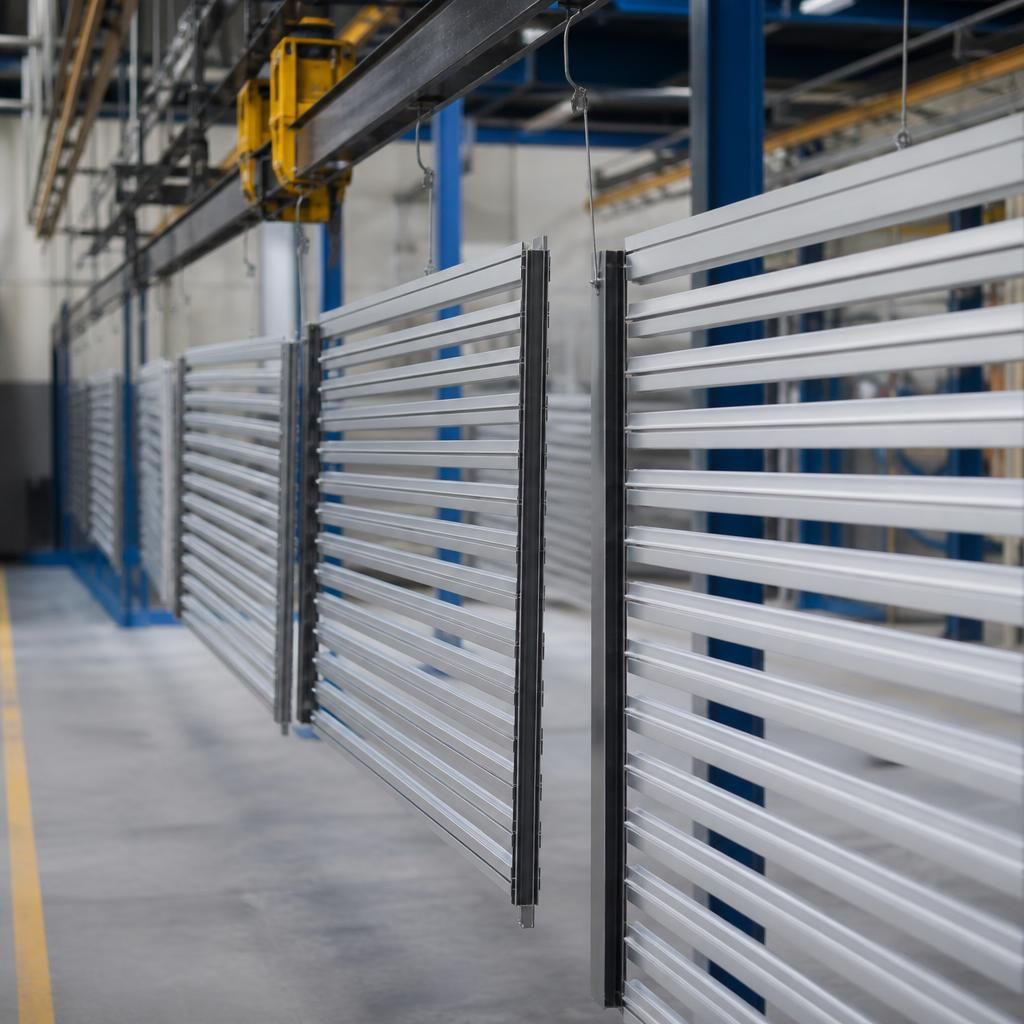
A powder coating plant can also help large aluminium projects maintain a consistent production route across repeated consignments. Powder is applied as a dry coating and then cured to form the finished surface, so components can move through defined application and curing stages without the extended drying arrangements associated with some liquid coating systems. This makes the process easier to organise when substantial quantities of profiles, panels or fabricated sections must follow the same coating specification.
For project teams, this supports clearer coordination between coated batches and the next manufacturing stage. Parts can be grouped by colour, finish or assembly requirement, helping reduce unnecessary changes in the production sequence and making incoming consignments easier to identify and manage.