

What types of finishes can be achieved with electrostatic aluminium powder spray?
Electrostatic aluminium powder spray can produce smooth, matt, satin, gloss, textured and metallic finishes in a broad range of colours. The selected powder and curing process determine the final appearance, surface texture and level of sheen.
Electrostatic aluminium powder spray can create decorative, tactile and protective finishes, ranging from opaque colour coatings to clear, metallic and textured effects. The result is determined by the powder formulation, application method, curing conditions and the condition of the aluminium before coating.
Opaque colour finishes provide a consistent block of colour that conceals the underlying metal. They are available across standard colour systems and can be specified to suit architectural components, fabricated parts, machinery panels or vehicle-related components. The same nominal colour can appear different depending on the coating’s surface profile, so the colour and finish level should be specified together rather than treated as separate decisions.
Clear and translucent finishes can be used where the appearance of the aluminium needs to remain visible. A clear powder coat may preserve the impression of the substrate while adding a protective layer, although the final appearance depends on the aluminium’s preparation and surface quality. It will not disguise scratches, oxidation, grinding marks or variations in the metal beneath it.
Metallic and mica effects contain reflective particles that create visual depth and a changing appearance as the viewing angle or lighting changes. These effects are more sensitive to application technique than a plain colour. Gun settings, part orientation, powder distribution and curing must be controlled carefully to prevent visible variation between components. For batch work, parts should be processed using the same agreed specification and sequence wherever possible.
Textured finishes alter both the appearance and feel of the coated surface. Fine textures can reduce the emphasis of minor visual irregularities, while heavier textures create a more pronounced tactile effect. Wrinkle, hammer and other patterned appearances may be available where the selected powder is formulated to produce them. Texture also affects how dirt is retained, how components are cleaned and how closely mating parts can fit, so it should be assessed against the component’s use rather than chosen for appearance alone.
Finishes can also be designed with a contrasting or multi-stage appearance. For example, different areas may require separate colours, a coated face may need to contrast with an uncoated or differently coated section, or a clear layer may be applied over a decorative base. These arrangements require suitable masking, racking and curing plans. The geometry of the component is important because recessed areas, internal corners and contact points can affect how the powder is deposited and where a second operation is practical.
Some powder systems are selected primarily for performance rather than visual effect. Nylon coatings, for instance, can provide a distinct smooth or textured surface with additional resistance characteristics suited to particular components. Protective coatings may likewise be specified where resistance to wear, impact, chemicals or outdoor exposure is more important than a decorative appearance. The appropriate system depends on the service conditions and must be confirmed against the powder manufacturer’s technical data.
When comparing possible finishes, consider the following:
- the required colour, reflectivity and surface texture;
- whether the aluminium needs to remain visible beneath the coating;
- the component’s exposure to weather, abrasion, chemicals, heat or handling;
- the effect of texture on cleaning, tolerances and assembly;
- the size, shape and quantity of the parts; and
- whether the appearance must remain consistent across separate batches.
A representative sample or agreed reference panel is useful for finishes involving metallic particles, clear coatings or pronounced texture. It allows the visual result to be assessed under relevant lighting before production and helps define what constitutes an acceptable variation across the finished aluminium components.
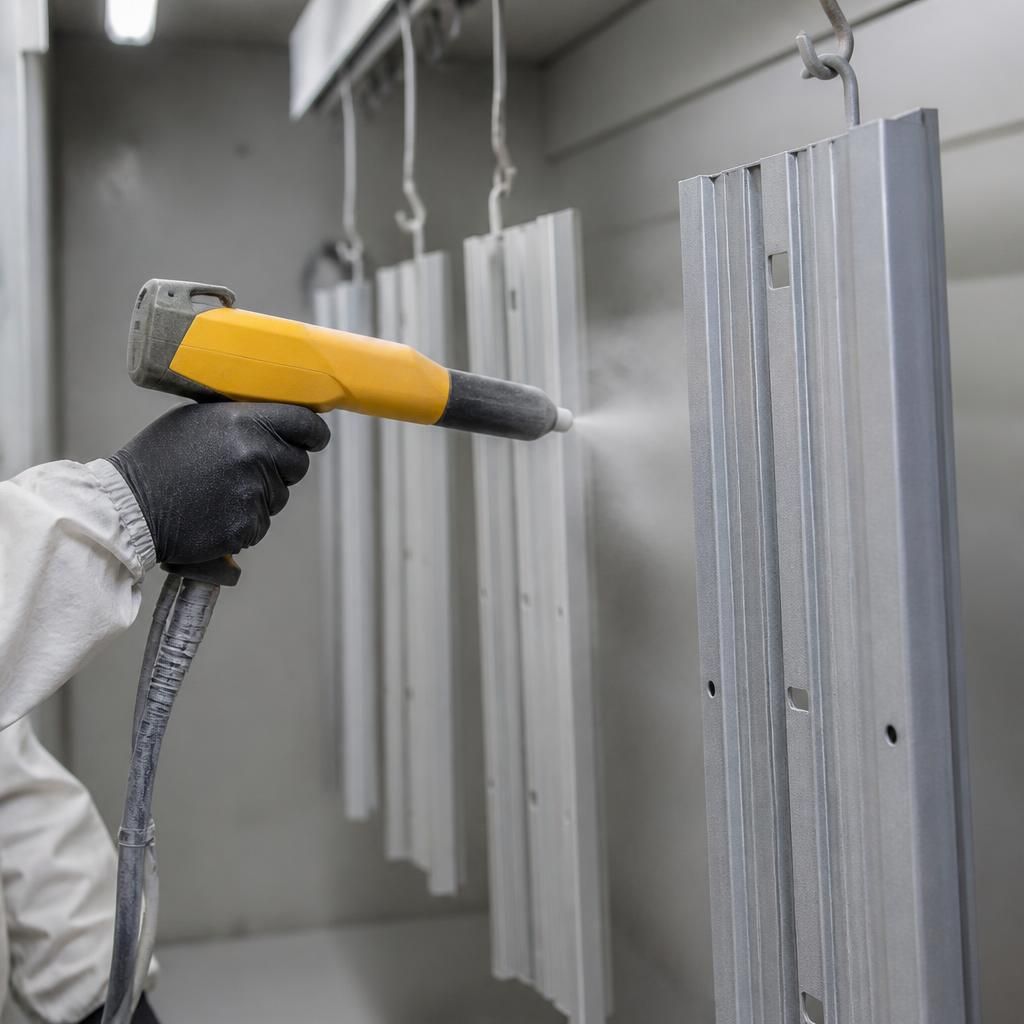
The apparent character of an electrostatic aluminium powder spray finish is influenced by coating build as well as by the powder’s colour, sheen and texture. Uneven build can make the surface look inconsistent, while excessive build may soften fine details, reduce clearances or affect the fit of mating parts. Film thickness should therefore be controlled alongside the chosen finish, particularly on components with sharp edges, recesses, threads or close assembly tolerances.
Discuss your electrostatic aluminium powder spray finish requirements
Discuss your electrostatic aluminium powder spray finish requirements with our team, including the component’s intended use, quantities and any relevant specification documents. This information helps assess a suitable coating approach for your aluminium parts.