

What types of blasting media are best suited for preparing aluminium for powder coating?
Fine glass bead, plastic media and carefully controlled aluminium oxide are generally well suited to preparing aluminium for powder coating. The choice depends on the alloy, surface contamination and required profile, but the media should be clean and sufficiently gentle to avoid excessive abrasion, distortion or embedded contamination.
The best blasting media for aluminium are those that remove oxidation, paint and handling residue without cutting deeply into the relatively soft substrate. Fine glass bead, plastic media and controlled aluminium oxide are commonly considered, but the most suitable option depends on the alloy, the existing coating, the surface condition and the powder coating specification.
Fine glass bead: Glass bead produces a relatively uniform, clean finish and is often selected where the aluminium must retain a consistent appearance. Its rounded particles peen and clean the surface rather than creating an aggressive, sharply cut profile. This makes it useful for visible components and parts where preserving dimensional accuracy matters. The bead size and blasting pressure still need to be controlled, as excessive impact can alter the appearance or texture of the metal.
Plastic media: Plastic abrasive is one of the gentler options for aluminium. It can remove light coatings, dirt and residues while reducing the risk of excessive metal removal. It is particularly useful for thin sections, formed items, delicate edges and components with existing detail that could be damaged by a harder abrasive. Plastic media may be less effective against heavy corrosion or firmly bonded coatings, so it is normally chosen after assessing the condition of the part rather than as a universal substitute for other media.
Aluminium oxide: Aluminium oxide is harder and more angular than glass bead or plastic media, so it can provide more effective removal of tenacious coatings and corrosion. It may also create a more pronounced anchor profile for the subsequent coating system. On aluminium, however, it requires careful control of particle size, pressure, nozzle distance and dwell time. Excessive blasting can roughen the surface, round edges, remove too much material or leave abrasive residue in recesses.
Other specialist options: Garnet can be considered where a relatively aggressive mineral abrasive is needed without using ferrous shot. Walnut shell and similar soft organic media may suit light cleaning or sensitive components, although their effectiveness is limited against hard, adherent coatings. Soda-based media can remove some contaminants with low substrate impact, but the surface must be thoroughly cleaned afterwards because residual salts or powder can interfere with coating adhesion.
Media that require caution: Steel shot, steel grit and other ferrous abrasives are generally unsuitable for routine aluminium preparation. They can damage the softer surface and introduce ferrous particles, which may later contribute to staining or corrosion-related defects. Reclaimed abrasive also presents a contamination risk if its previous use, cleanliness or particle breakdown is not controlled.
Media selection should take account of the required surface profile, not simply the apparent cleanliness of the aluminium. A surface that looks bright may still contain embedded abrasive, oxide residue, oil or moisture. Conversely, an excessively rough profile can remain visible through a thin powder coating and can increase powder consumption without improving performance. A trial on a representative area helps establish whether the chosen media removes the contamination while preserving edges, holes, threads and formed details.
Blasting parameters are as important as the abrasive itself. Operators assess the nozzle size, air pressure, impact angle, stand-off distance and movement speed, then adjust them for the component’s thickness and geometry. Broad, even passes are preferable to concentrating the blast on one area. Thin panels and unsupported sections need particular care because heat and repeated impact can contribute to distortion.
After blasting, the component should be cleared of loose abrasive and dust using a suitable method, then inspected for remaining oxidation, grease, embedded particles and damage. Masking is needed where blasting or powder must not reach threads, machined faces, electrical contact points or close-tolerance areas. The prepared aluminium should then proceed promptly through the specified cleaning and pretreatment stages so that new contamination or surface oxidation does not undermine the powder coating system.
In practical terms, fine glass bead or plastic media are often the safer starting choices for sound, visible or delicate aluminium, while aluminium oxide or another controlled mineral abrasive may be appropriate for more resistant contamination. The final decision should be based on a test area, the component’s geometry and the requirements of the complete pretreatment and powder coating system.
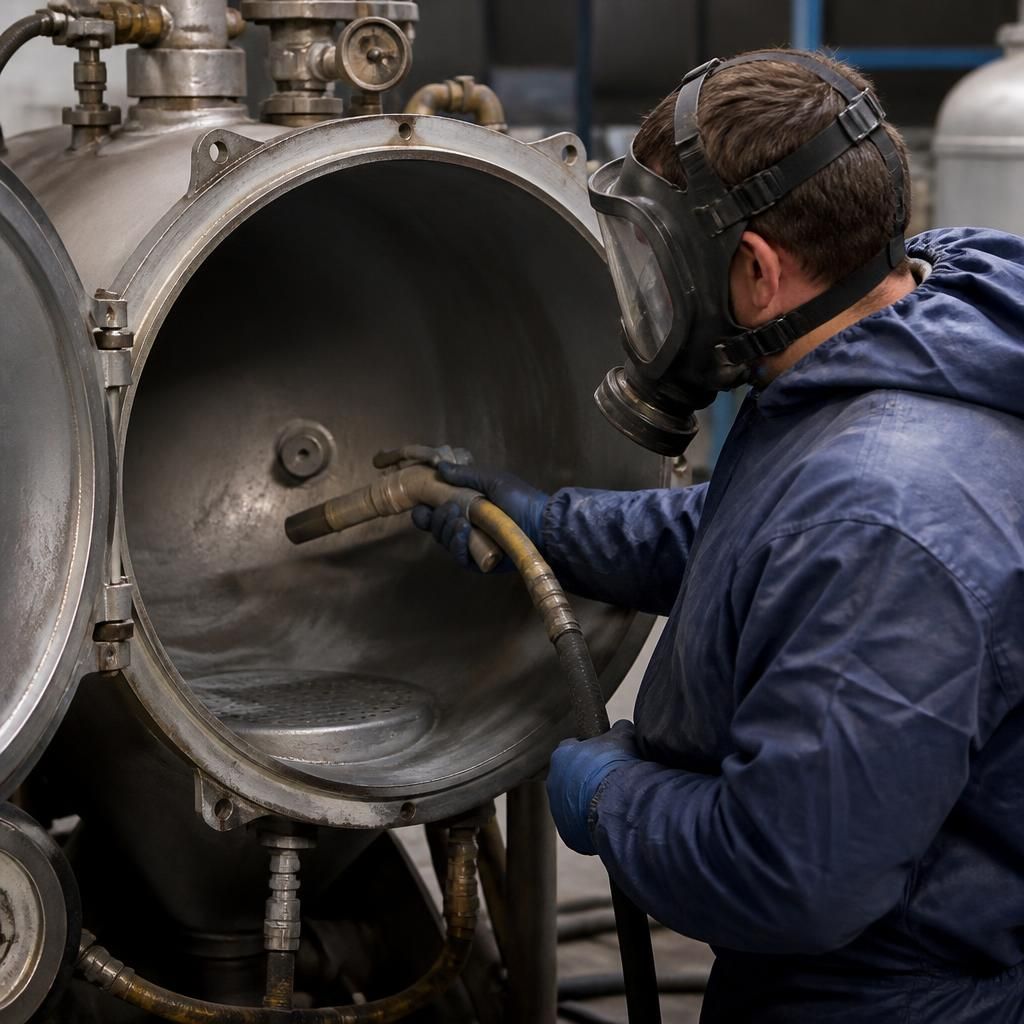
For aluminium, preventing cross-contamination is as important as choosing a suitably gentle abrasive. Blast equipment previously used with steel shot or other ferrous media can retain particles in the pot, hoses, recovery system or nozzle, allowing iron contamination to reach the aluminium surface. Where equipment is shared, it should be thoroughly cleaned and the abrasive supply checked before processing non-ferrous components. This helps ensure that the prepared surface reflects the selected aluminium-safe media rather than unintended metallic residue.
Discuss the right blasting media for your aluminium components
Share your aluminium component details and existing surface condition with the powder-coating team to identify a suitable blasting media and pretreatment approach. A representative assessment can help confirm the process before production work begins.