

Can the 2-coat powder coating repair process be applied to all types of metals?
No. A 2-coat powder coating repair process can suit many common metal substrates, but it is not automatically appropriate for every metal or surface condition. Suitability depends on the substrate, its heat tolerance, cleanliness, existing coating and the compatibility of the protective primer and topcoat, so each component requires a suitable preparation and coating specification.
The 2-coat powder coating repair process is suitable for many steel, aluminium and other heat-resistant metal components, but it is not a universal treatment for every alloy. The correct specification depends on how the metal reacts to preparation, the temperature required for curing, the condition of the existing finish and the performance required from the repaired coating.
Steel and mild steel are usually the most straightforward substrates. They can generally be prepared by removing rust, scale, oil and the failed coating before applying a compatible primer and powder topcoat. The extent of corrosion is important: surface rust can often be removed, whereas deeply pitted or structurally damaged steel may need repair or replacement before coating. Any sharp edges, weld spatter or fabrication residue can also affect the continuity of the two-coat system.
Galvanised steel can also be coated, but it needs more controlled preparation than untreated steel. The surface may require cleaning, removal of loose zinc deposits and a method that provides a suitable key without unnecessarily reducing the zinc layer. The primer must be compatible with the galvanised surface. Trapped moisture or gases within the zinc coating can create pinholes or blistering during curing, so the condition and history of the galvanised component should be assessed before work begins.
Aluminium is commonly powder coated, particularly in fabricated components and architectural or industrial parts. Its naturally occurring oxide layer can reduce adhesion if it is not properly cleaned and prepared. Aluminium can also contain casting porosity or contaminants that become visible during heating. A suitable preparation method, primer and curing specification are therefore needed, especially for cast aluminium or components with a previous coating.
Stainless steel may accept a two-coat system, but its smooth, corrosion-resistant surface does not provide the same natural key as prepared mild steel. Degreasing and controlled abrasion or another approved preparation method may be needed to promote adhesion without damaging the substrate. The coating specification should also account for the environment in which the component will operate, since the powder finish is not a substitute for the corrosion resistance of the stainless steel itself.
Cast iron can be coated when its porosity, surface condition and thermal behaviour are properly considered. Oil retained in porous castings may emerge during heating and cause defects in the finish. Removing contaminants and checking the casting for moisture, old paint and embedded residues are particularly important. Heavy sections may also heat and cool differently from thinner areas, which can affect the curing result if the process is not controlled.
Other metals, including copper alloys, zinc-based castings and specialist alloys, may be coat-able in particular circumstances, but they should not be treated as interchangeable. The assessment should consider:
- Heat tolerance: the component must withstand the curing cycle without distortion, loss of temper, dimensional change or damage to seals and other attached materials.
- Surface chemistry: oxidation, galvanising, passivation, oil residues and previous treatments can influence adhesion.
- Existing coating: sound areas may still need to be removed or reduced if the new primer is not compatible with them. A repair over a poorly bonded coating will not restore the underlying adhesion.
- Geometry: recesses, welds, sharp corners, threaded sections and internal faces may require specific preparation and coating controls.
- Service environment: outdoor exposure, chemicals, abrasion, moisture and temperature changes affect the choice of primer and topcoat.
- Electrical or dimensional requirements: coating thickness may matter where the component relies on electrical contact, close tolerances or accurate thread dimensions.
Low-melting-point metals and components containing heat-sensitive materials present greater limitations. Certain zinc, lead, tin or magnesium-based parts may distort, release trapped gases or require specialist handling at standard powder-curing temperatures. Assemblies containing bearings, plastics, adhesives, rubber seals or electronic parts may also need to be dismantled before processing. If they cannot be removed, a conventional oven-cured two-coat system may not be appropriate.
Repair work also requires a decision about whether the item can be locally restored or should be fully stripped and recoated. Local preparation may be unsuitable where corrosion extends beneath the surrounding finish, where the original coating is poorly adhered, or where a uniform appearance and consistent protection are required across the complete component. A full strip and recoat can provide a more reliable base, but the choice depends on the metal, the extent of damage and the component’s intended use.
For that reason, a coating specialist should review the metal identification, drawings or tolerances, previous finish, operating environment and any heat-sensitive features before confirming the specification. Powder-coating services for manufacturers, fabricators, construction firms and automotive businesses can assess the component and select a preparation, primer and topcoat combination suited to the substrate rather than applying the same two-coat system to every metal.
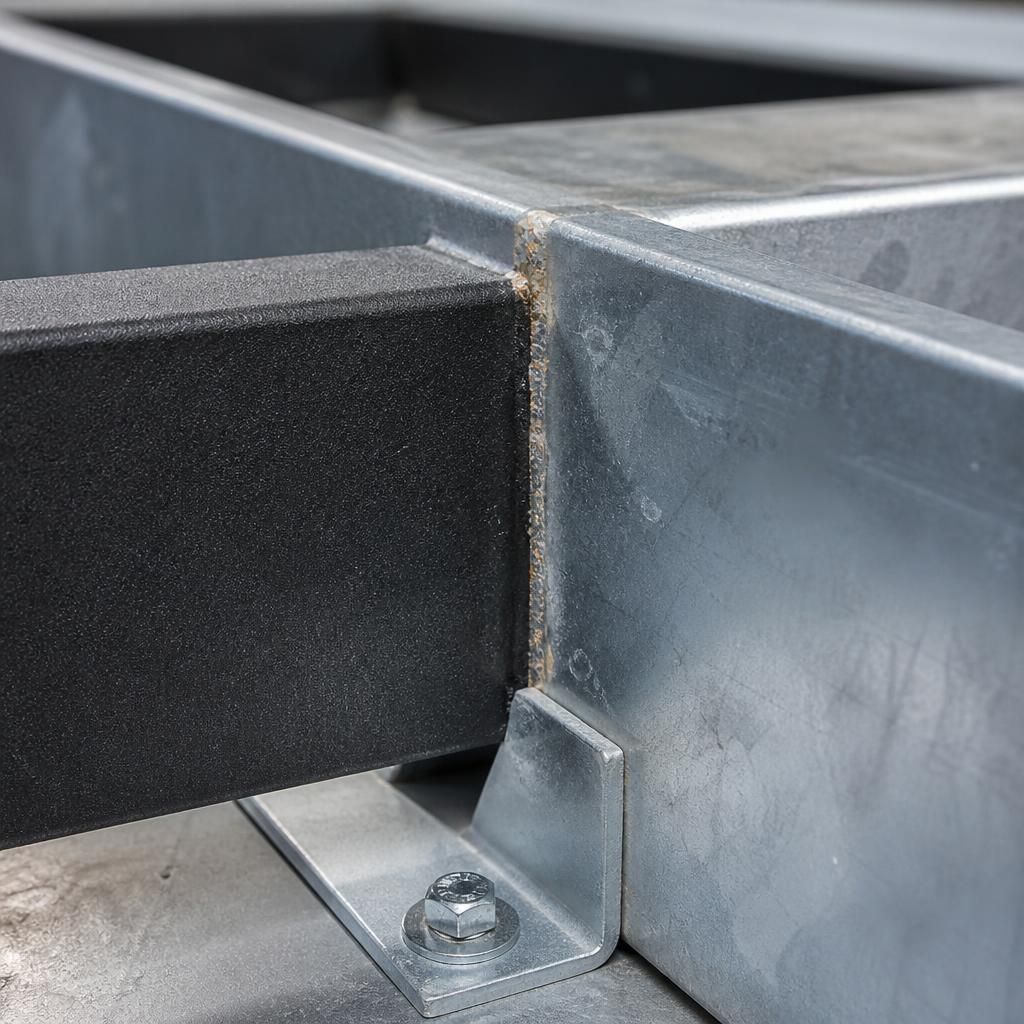
A 2-coat powder coating repair does not make dissimilar metals behave as a single substrate. Where steel, aluminium, zinc-based parts or other metals are joined, the specification must account for the interfaces between them as well as the individual surfaces.
Moisture reaching an unprotected joint can contribute to galvanic corrosion, particularly where dissimilar metals are in electrical contact. Coating continuity around edges, fasteners, seams and recesses is therefore important, while contact areas that must provide electrical bonding may need controlled masking. Mixed-metal assemblies may require separate preparation and coating decisions for each component rather than one uniform repair specification.
Discuss Your Metal Component’s Repair Specification
Discuss your metal component’s repair specification with a powder-coating specialist, including the substrate, existing finish, tolerances and service environment. This assessment can establish whether a 2-coat repair is suitable and identify the appropriate preparation and coating system.