

What techniques ensure thorough removal of rust and old coatings during surface prep?
Thorough removal of rust and old coatings requires an initial inspection, suitable degreasing, and controlled mechanical or abrasive blasting to expose clean, sound metal. The surface should then be checked for remaining corrosion, coating residue and abrasive dust before powder coating begins.
Thorough rust and old-coating removal depends on using the least aggressive effective technique for the metal, the corrosion depth and the existing coating system. The objective is not simply to make the surface look clean: all poorly bonded material must be removed while leaving a sound, suitably keyed substrate that will support the new powder coating.
Use mechanical removal for heavy or loosely bonded material. Scrapers, chipping tools, abrasive pads, wire brushes and powered needle scalers can remove flaking paint, bulky rust scale and brittle deposits before finer treatment begins. This is particularly useful on weld spatter, corners and thick edges where loose material could obstruct a uniform blast. Mechanical tools should be used carefully on thin sheet or softer metals, as gouges, smeared metal and excessive heat can create defects beneath the powder finish.
Choose abrasive blasting according to the substrate and coating. Blasting is generally the most consistent method for removing firmly attached paint, oxide and corrosion from steel components. The blast pressure, nozzle distance, angle and dwell time should be controlled so the operator removes the defective layer without distorting the part or unnecessarily eroding sound metal. Broad faces, recesses, holes, returns and welds need attention from suitable angles; a single pass over the most accessible surfaces can leave rust or coating trapped in sheltered areas.
Heavy scale may require a preliminary abrasive or mechanical pass before a finer, more controlled treatment. Where the old coating is unusually hard, elastic or layered, the process may need staged removal rather than increased blasting force. Excessive force can embed abrasive, round sharp edges, open defects in welds or produce an uneven surface profile that affects powder coverage.
Deal with corrosion in pits rather than treating only the visible peaks. Rust can remain in surface depressions after the high points have been cleaned. The affected area should therefore be worked from different directions and checked under suitable lighting and magnification where necessary. Deep pitting may not be removable without reducing the surrounding metal; in that situation, the component may require engineering assessment rather than progressively more aggressive cleaning. Blasting is a preparation process, not a repair for metal that has lost its required strength or dimensions.
Use chemical stripping selectively. Chemical paint removers can be appropriate for intricate parts, delicate surfaces and geometries that are difficult to blast evenly. The treatment must be compatible with the substrate and the coating, and all residues must subsequently be removed through the specified rinsing, neutralising and drying process. Trapped stripper, salts or moisture can interfere with powder adhesion and may promote corrosion beneath the new finish. Chemical stripping is therefore not complete until the part is free from both the old coating and the treatment residues.
Thermal removal can loosen some coating systems, but it is unsuitable where heat could alter the metal, damage attached components or release hazardous decomposition products. It should only be considered where the material and process controls have been assessed in advance. Coatings that may contain lead, chromates or other hazardous substances also require appropriate identification, containment, waste handling and worker protection before disturbance.
Give special attention to edges, joints and fabricated details. Rust and old paint often persist around weld toes, folded returns, bolt holes, drain points and overlaps. These areas may need smaller tools, angled blasting, local abrasive work or repeated passes. Any masking, plugs, temporary fixtures or accumulated debris should be removed or dealt with so they do not conceal untreated metal. Sharp burrs and loosely attached weld residue should be eliminated because they can cause thin coverage, pinholes or premature breakdown at the edge.
After removal, the prepared metal should be assessed for remaining coating islands, rust staining, embedded contamination, abrasive residue and excessive roughness. A clean appearance alone is not sufficient: the surface must be dry, free from loose matter and consistent with the powder-coating system and substrate. If contamination or corrosion reappears before coating, the affected area should be treated again rather than coated over. Prompt transfer to the next stage also helps prevent newly exposed steel from developing flash rust, particularly in damp conditions.
For complex batches, consistent results come from defining the removal method for each component type, controlling the equipment settings and checking representative parts from the batch. Recording the abrasive, operating conditions and any areas requiring additional treatment makes it easier to reproduce the preparation standard across repeat production without relying solely on visual judgement.
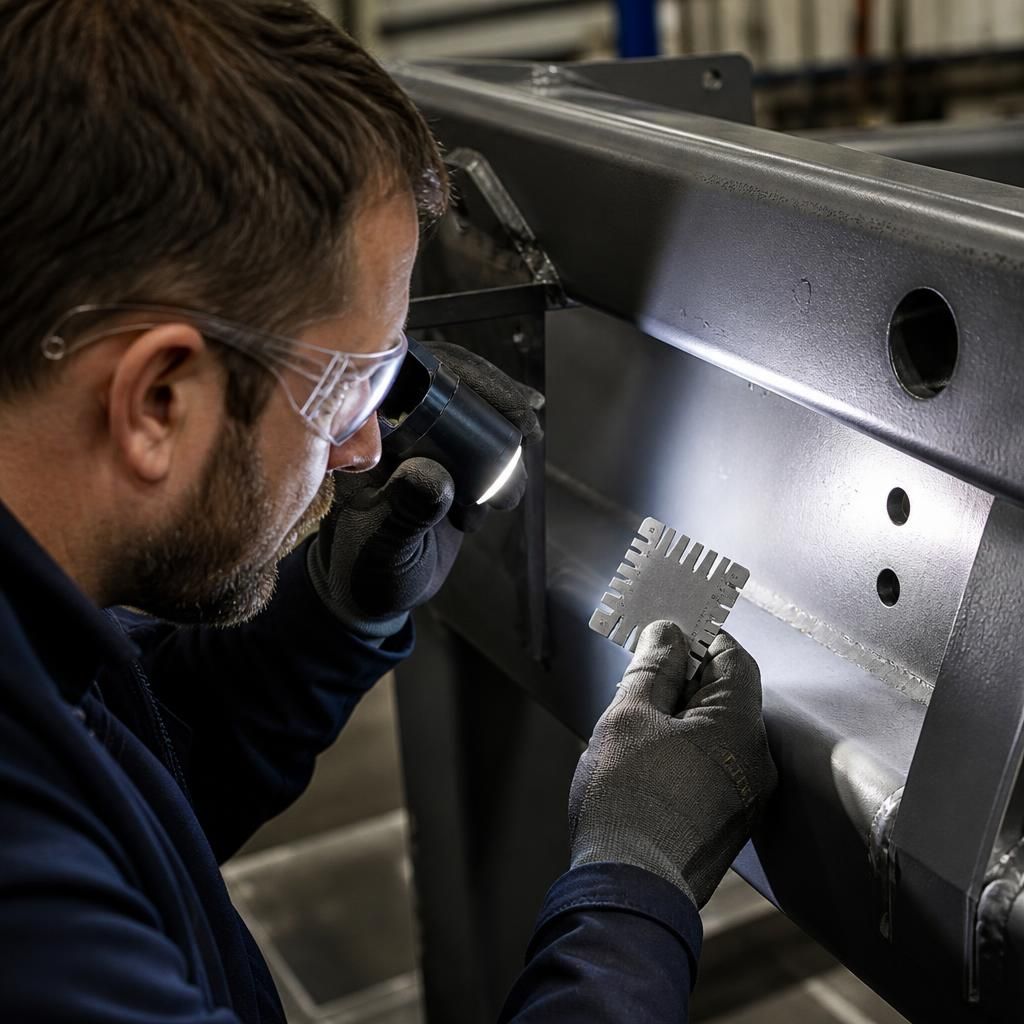
A defined acceptance standard is essential for confirming that rust and old coating have been removed thoroughly. Before preparation begins, specify the required visual cleanliness grade, surface profile and allowable dust level for the metal and powder-coating system. This prevents a component being accepted simply because it appears clean from a normal viewing angle.
Inspection should be carried out under strong, angled lighting so that remaining coating islands, rust in pits and residues around welds become easier to identify. Where the specification requires it, use a surface-profile comparator, replica measurement or a suitable dust test rather than relying on appearance alone. Check several areas of each component, including less accessible faces and fabricated details. If the result does not meet the agreed standard, return the part for local treatment before it moves to coating.