

What safety precautions should be taken during the sandblasting process for powder coating repair?
During sandblasting for powder coating repair, operators should use suitable PPE, including respiratory, eye, hearing and protective clothing, while keeping the work area controlled and well ventilated. Dust extraction, equipment checks, safe abrasive handling and isolation of nearby personnel and ignition or electrical hazards help prevent exposure, injury and contamination.
Safe sandblasting for powder coating repair depends on controlling the hazards created by the existing coating, the abrasive, the blasting equipment and the work environment before the process begins. A suitable risk assessment and method statement should define the substrate, coating condition, abrasive system, equipment settings, work area, waste route and emergency arrangements.
Assess the existing coating before blasting. Powder-coated parts may have been exposed to oils, chemicals or other substances that require specific controls. Older paint systems can contain hazardous materials, including lead or chromate compounds. Where the coating history is uncertain, it should be assessed or tested before disturbance. The findings should inform the COSHH assessment, selection of controls and disposal method. Blasting should not begin if the operator cannot establish what residues may be released.
Use trained and authorised operators. The operator should understand the blasting equipment, abrasive characteristics, pressure controls, nozzle handling, emergency shut-off arrangements and the limitations of the enclosure or booth. Training should also cover the particular risks of removing an unknown or hazardous coating. New or inexperienced personnel should not operate the equipment without suitable supervision.
Control the process through written procedures. The method should set out the approved abrasive, operating parameters, component position, inspection stages and cleaning requirements. Blasting pressure and nozzle distance should be appropriate for the metal and the repair area. Excessive force can distort thin sections, round sharp edges, remove too much base material or drive abrasive into recesses. A controlled technique protects both the component and the operator.
Inspect the equipment before use. In addition to general equipment checks, particular attention should be given to the blast pot, valves, couplings, nozzle, remote-control or deadman system, hoses and protective whip checks. Hoses should be correctly rated, securely connected and positioned to reduce the risk of damage or sudden movement. Defective components should be taken out of service rather than temporarily worked around. The system should be depressurised before connections, blockages or nozzles are dismantled.
Prevent unexpected release of pressure. The operator must be able to stop the abrasive stream immediately if a hose fails, a person enters the area, the component moves or visibility is lost. The deadman control should remain functional and should never be bypassed. Blast pots and connected lines should be isolated and safely depressurised during maintenance, clearing operations and cleaning.
Secure and position the workpiece. Metal parts should be supported so they cannot tip, roll, swing or vibrate under the force of the abrasive stream. Lifting points, stands and fixtures should be suitable for the component’s weight and shape. The operator should avoid placing hands or feet where a moving part could trap them, and manual handling arrangements should account for awkward or heavy items before blasting starts.
Manage access and communication. The blasting area should have clear boundaries, warning notices and a defined entry procedure. Anyone who must enter should understand the hazards and follow the required controls. Operators should have a reliable way to communicate with colleagues, particularly where an enclosure or helmet restricts speech and visibility. A clear emergency plan should identify how to stop the equipment, summon assistance, deal with an injury and report a release of hazardous material.
Protect the finished repair from contamination. Blasting and coating preparation should be separated from activities that introduce oil, moisture, silicone, loose fibres or other contaminants. Abrasive, blast media and cleaned components should be stored in a way that prevents contamination. Once the old coating has been removed, the surface should be inspected for embedded abrasive, flash rust, sharp defects or areas that remain coated. The prepared metal should then be handled and transferred according to the coating system’s requirements.
Control waste after blasting. Spent abrasive and removed coating should be collected without creating secondary contamination. Waste should be kept in suitable, labelled containers and managed according to its contents and the applicable disposal requirements. If testing identifies hazardous residues, the waste route must reflect that classification; it should not be treated as ordinary metal or general workshop waste. The enclosure, fixtures and adjacent equipment should be cleaned using a method that does not redistribute settled material.
Review the process when conditions change. The assessment should be revisited if the substrate changes, a different abrasive is introduced, the coating is found to be hazardous, equipment is modified or blasting moves to a new location. Near misses, equipment faults, unexpected surface damage and signs of operator exposure should trigger a review before work resumes. These precautions help ensure that powder coating repair begins with a sound, uncontaminated and properly prepared metal surface.
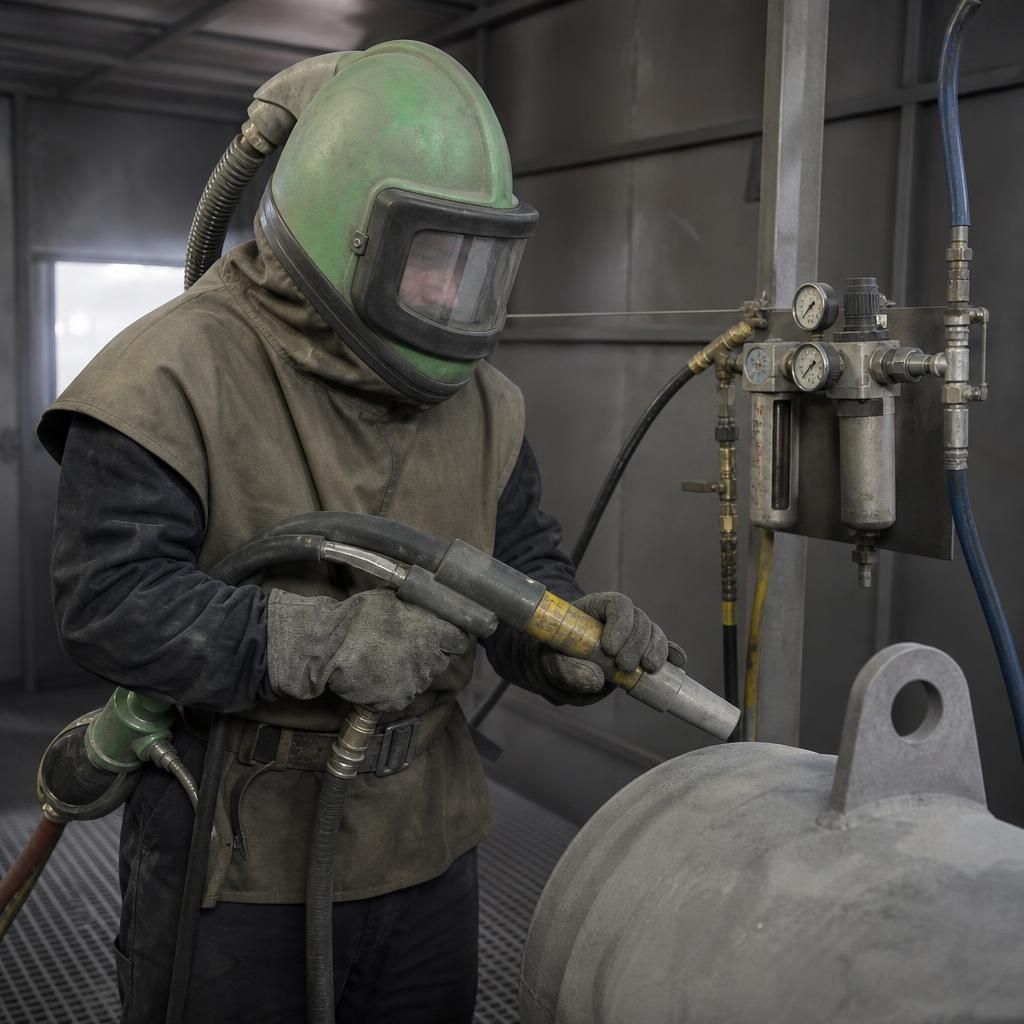
Where an operator uses an air-fed blast helmet, the breathing-air supply requires separate control from the abrasive equipment. Workshop compressed air must not be assumed suitable for breathing, as it may contain oil, moisture or other contaminants. The supply should be provided by equipment intended for breathing air, with the hose, connections and filtration maintained in accordance with the system instructions.
Before blasting starts, check that the air supply is adequate, the hose is undamaged and the helmet provides clear airflow. The breathing-air intake should be positioned away from vehicle exhausts, solvent vapours, abrasive dust and other sources of contamination. If the supply fails or becomes suspect, the operator should leave the blasting area and follow the planned emergency procedure rather than removing the helmet inside the contaminated zone.
Discuss Safe Sandblasting for Your Powder Coating Repair
Discuss your powder coating repair requirements with a specialist before arranging sandblasting, particularly if the existing coating or its history is uncertain. Sharing the component material, condition and any known residues will help establish suitable safety controls and preparation requirements.