

What considerations are essential for ensuring optimal nylon coating curing during batch production?
Optimal nylon coating curing during batch production depends on controlling the specified temperature and dwell time, while accounting for coating thickness, component geometry, oven loading and heat distribution. Consistent preparation, accurate process monitoring and inspection of finished parts help confirm that each batch achieves the required protective and visual finish.
Optimal nylon coating curing in batch production depends on controlling the complete process around the cure, not simply setting an oven temperature. The essential considerations are substrate condition, powder suitability, coating-system compatibility, part handling, equipment calibration, batch traceability and objective checks that confirm the finished film meets the required specification.
Confirm the substrate is suitable before coating. Steel, aluminium and other metal substrates must be free from oil, grease, rust, mill scale, moisture and residues that could interfere with adhesion or release gases during heating. Cleaning and pretreatment should be selected for the base metal and the required service environment. Any chemical residue left on the surface can contribute to poor adhesion, pinholing or contamination of the nylon film. Components should also be thoroughly dry before entering the coating operation.
Match the nylon material to the application. Nylon powders differ in formulation, particle characteristics, processing requirements and resistance to chemicals, abrasion, impact or outdoor exposure. The coating specification should therefore identify the approved powder, colour, finish and intended performance rather than treating all nylon products as interchangeable. The powder supplier’s technical data should be used as the starting point for the curing schedule, with any changes assessed rather than assumed to be equivalent.
Check compatibility where more than one layer is used. In a two-coat system, the underlying layer must provide a stable surface for the nylon topcoat, and the two materials must be compatible under the selected heating conditions. The first layer should be checked for contamination, damage and adequate bonding before the second application. Excessive reheating can affect appearance or performance, while insufficient bonding between layers can lead to delamination in service.
Control the parts before they enter the oven. Components should be identified by batch and presented in a way that prevents contact marks, trapped contamination and damage to the uncured film. Racks, hooks and fixtures need a clean, conductive contact where the application method requires it, while masking must protect threads, machined faces, earth points and other areas that must remain free of coating. Fixtures should not obstruct important surfaces or create avoidable shadowing.
Validate the oven rather than relying only on its displayed setting. The controller reading indicates the programmed air condition, but it does not necessarily represent the metal temperature reached by every component. A process validation exercise can use appropriate temperature-recording equipment to establish how representative parts heat through the load. This helps identify cold zones, excessive recovery times or locations where parts receive a different thermal history. Sensors and controllers should be calibrated and maintained at defined intervals.
Consider the effect of batch composition. A production load containing a mixture of small and substantial components may not heat uniformly. The batch plan should group compatible parts where practical and avoid introducing a new load arrangement without checking its effect on the established process. Changes to part mass, fixture design, powder type, coating system or load density should trigger a review of the validated conditions.
Manage moisture and volatile materials. Water, oils, cleaning residues and trapped substances in joints, seams or hollow sections may expand during heating and create bubbles, blisters or pinholes. Components with enclosed sections need suitable drainage or venting designed into the part where appropriate. Washing, drying and storage arrangements should prevent cleaned parts from collecting moisture again before coating.
Define acceptance criteria before production starts. A suitable specification may cover colour, gloss, visual uniformity, adhesion, film build, coverage of difficult features and resistance relevant to the component’s use. The appropriate tests depend on the coating system and customer requirement. Visual inspection alone may identify obvious defects, but it cannot confirm every performance characteristic. Test methods should be applied consistently so that results can be compared between batches.
Inspect after the parts have cooled sufficiently for assessment. The inspection should look for defects such as craters, pinholes, blisters, bare areas, runs, inclusions, colour variation and damage from handling. Measurements should be taken from representative locations, particularly where the design creates different coating conditions. Parts should not be packed or stacked in a way that marks the surface while it is still vulnerable to handling damage.
Keep batch records and investigate deviations. Traceability should link the component identification to the powder details, preparation route, equipment used, operator checks, validation status and inspection results. If a batch falls outside the agreed criteria, the cause should be assessed before rework or release. Repeating the cure without identifying the reason for the deviation can reproduce the same defect, particularly where the underlying issue is contamination, poor contact, incorrect material or equipment drift.
For a specialist batch coater, these controls turn curing from a single oven operation into a repeatable production system. The most reliable approach is to approve the materials and preparation route, validate the equipment with representative parts, control every change that could affect the thermal history, and release batches only after documented checks show that the nylon coating meets the defined functional and aesthetic requirements.
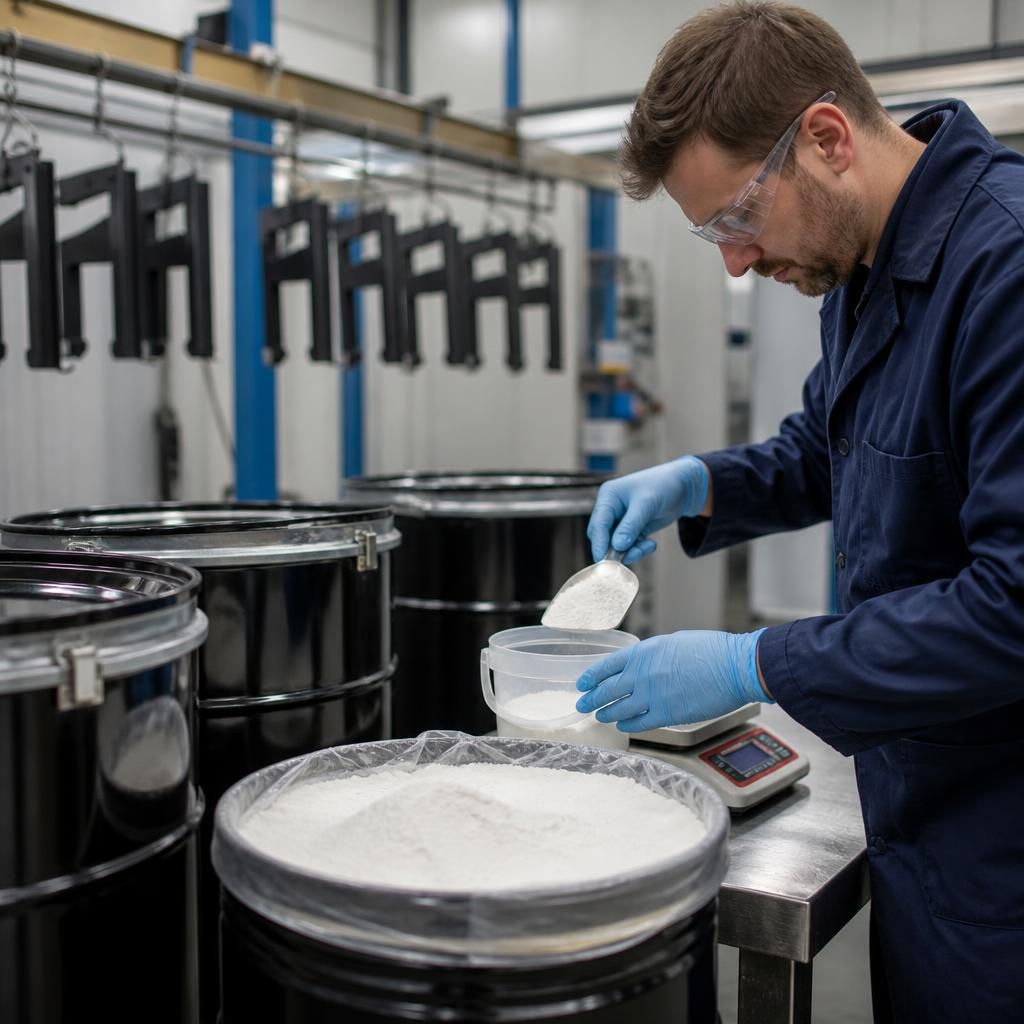
Powder condition is an important consideration before the curing stage. Nylon powder should be stored, handled and prepared in accordance with the material supplier’s instructions, because moisture or contamination in the powder can affect application quality and contribute to surface defects during heating. Containers should remain protected from the production environment until the material is required.
Before a batch is coated, confirm the powder identity, colour, finish and suitability for the approved process. Where powder is recovered or blended with virgin material, the permitted approach should be defined in the coating specification rather than decided informally. Consistent material control helps ensure that the curing conditions are applied to a stable coating system, making the finished batch easier to assess against its required appearance and performance.