

What methods ensure effective corrosion resistance for nylon-coated metal surfaces?
Effective corrosion resistance from nylon-coated metal surfaces depends on thorough cleaning and preparation, removal of rust and contaminants, and a firmly bonded, continuous coating. Controlled application and curing, suitable coverage at edges and recesses, and final inspection help prevent pinholes, weak adhesion and moisture reaching the substrate.
Effective corrosion resistance from a nylon-coated metal surface comes from treating the coating as part of a complete protection system. The nylon must be suitable for the service environment, compatible with the substrate, applied at an appropriate and consistent film build, and protected from mechanical or chemical damage throughout the component’s working life.
Select the nylon system for the exposure. Nylon grades differ in their resistance to moisture, salts, chemicals, abrasion and operating temperature. A component exposed to outdoor humidity requires different consideration from one used with oils, cleaning agents, road salts or abrasive materials. The specification should identify the expected contaminants, temperature range, contact conditions and any immersion exposure before the coating system is selected.
Nylon can absorb some moisture, so environmental conditions matter when assessing long-term performance. Where dimensional stability, water exposure or chemical contact is important, the coating type and application requirements should be checked against the component’s actual duty rather than relying on nylon as a generic corrosion solution.
Control the metal and coating interface. Corrosion can develop where dissimilar metals remain in electrical contact in the presence of moisture. Component design may therefore need insulating features, suitable fasteners, compatible washers or an appropriate treatment at joints and contact points. Areas that will later be machined, drilled or fastened should also be identified in advance, as post-coating operations can expose the underlying metal and create local corrosion sites.
Welds, folds, threaded sections and recessed details can retain moisture or create stress in the coating. Good component design reduces narrow crevices, provides drainage where practical and avoids abrupt transitions that place excessive strain on the nylon film. Rounded transitions and accessible surfaces generally support a more consistent protective finish than sharp, inaccessible details.
Maintain a suitable film build. The coating must be substantial enough to provide a reliable barrier, but excessive build can affect fit, threads, moving interfaces and dimensional tolerances. Film thickness should be considered alongside the component’s function, especially where parts must assemble with close clearance. Particular attention is needed around corners, holes, recesses and transitions because these areas can behave differently from broad, accessible faces during application.
Where the part has close tolerances, a coating specification should define which surfaces may be coated and which must remain clear. Masking, racking and part orientation can then be planned to reduce unwanted accumulation and preserve functional interfaces without compromising the protected areas.
Confirm the coating’s mechanical resistance. A coating that is chemically suitable but easily chipped may allow corrosion to begin at impact points. Nylon is often selected where toughness, abrasion resistance and a degree of flexibility are required, but the expected impact, rubbing, vibration and loading should still be assessed. Components that are handled frequently or fitted against other metal parts may need protective packaging and controlled assembly methods to prevent damage after coating.
Inspection should include more than appearance. Depending on the component and its service conditions, useful checks may include:
- film-thickness measurements at representative locations;
- adhesion testing on agreed sample areas or test pieces;
- examination for craters, inclusions, blisters, cracking or other surface defects;
- dimensional checks on holes, threads, mating faces and moving interfaces; and
- corrosion or environmental testing that reflects the intended exposure.
Laboratory tests such as humidity exposure, salt-spray testing, immersion testing or cyclic corrosion testing can help compare coating systems, but no single test represents every working environment. Test conditions should therefore be selected according to the actual combination of moisture, salts, chemicals, temperature cycling and mechanical wear.
Protect the finish after processing. Nylon-coated parts should be stored and transported so that sharp edges, metal swarf, abrasive packaging and trapped moisture cannot damage the film. Contact with incompatible chemicals should be avoided, and cleaning methods should be checked before use. Strong solvents, aggressive abrasives or unsuitable tools can soften, scratch or undermine the coating even when the original application was sound.
Maintenance should focus on early detection. Chips, cuts, blistering, discolouration, rust staining or lifting around joints indicate that the affected area should be assessed before corrosion spreads beneath the surrounding film. Repairs need to address the exposed metal and restore a compatible protective system; simply covering visible rust may leave active corrosion underneath.
For manufacturers and fabricators, the most reliable approach is to define the substrate, exposure, tolerances, nylon specification, testing requirements and handling method before production begins. Powder-coating specialists can then match the preparation and application process to the component rather than treating every metal part as the same corrosion-resistance project.
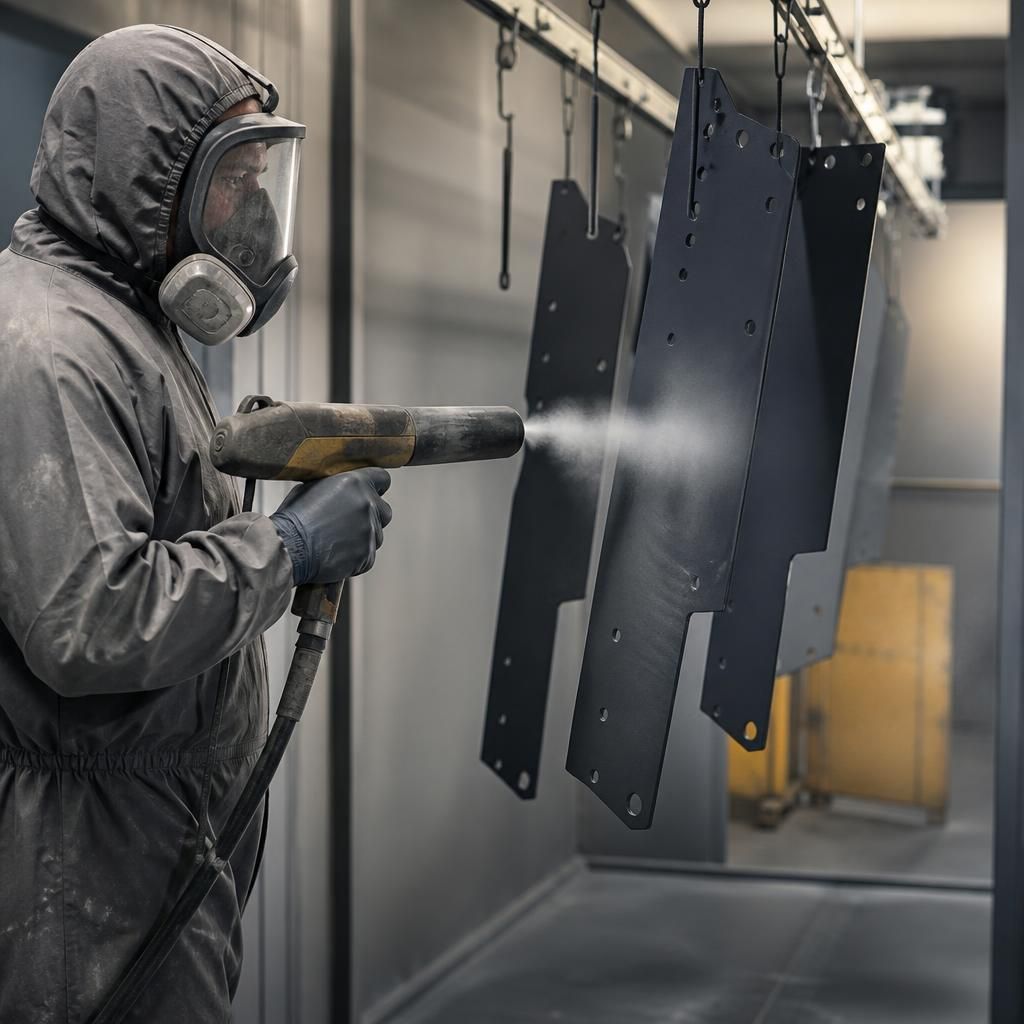
A controlled surface profile is an important part of corrosion resistance beneath a nylon coating. Abrasive preparation should create a consistent texture that gives the coating a firm mechanical key without leaving sharp peaks, embedded media or sheltered areas containing contamination. If the profile is uneven, the nylon film may be thinner over raised areas and less securely bonded in surface recesses, creating points where moisture can reach the metal.
The preparation method should also suit the substrate and the chosen nylon system. Where appropriate, a compatible pre-treatment can provide an additional barrier at the metal interface, but its chemistry, rinsing and drying requirements must be controlled so that residues do not interfere with coating adhesion. Checking the prepared surface before application helps confirm that it is clean, dry and consistent across the component rather than relying on the final appearance alone.
Discuss nylon coating for corrosion-resistant metal surfaces
For guidance on specifying a nylon coating system for your component, discuss the substrate, operating environment, tolerances and inspection requirements with our Midlands powder-coating specialists. Collection and delivery options are available for businesses across the Midlands and surrounding areas.