

What are the key steps involved in the powder coating repair process?
The powder coating repair process involves assessing the damage, preparing the affected metal surface, matching the replacement coating to the existing finish, applying the powder and curing it under controlled conditions. A final inspection checks adhesion, coverage, colour and surface quality before the component is returned for use.
The powder coating repair process is a controlled restoration of damaged areas while protecting any sound coating that remains. It involves defining the repair boundary, confirming the substrate and existing coating system, removing contamination and unstable material, selecting a compatible repair method, and verifying that the finished area is suitable for service.
- Define the repair scope. The affected component is examined to establish whether the defect is superficial or extends through the coating to the metal. Scratches, impact damage, blistering, flaking, pinholes and corrosion require different treatment. The surrounding finish is also checked for poor adhesion or widespread degradation. If the damage is extensive, a local repair may be unsuitable and the component may need full stripping and recoating instead.
- Identify the substrate and existing coating. The repair method depends on whether the part is steel, galvanised steel, aluminium or another metal, as well as the type and condition of the original powder coating. This information helps determine suitable preparation, primers, repair materials and curing conditions. Where the original specification is known, its colour, gloss level, texture and performance requirements should be recorded before work begins.
- Remove loose and damaged material. Flaking coating, corrosion products and weak edges are removed from the repair zone. The boundary is feathered or otherwise prepared so that the replacement material can transition cleanly into the retained coating. Sound coating should not be removed unnecessarily, since it can provide a stable edge and reduce the area requiring treatment.
- Clean and prepare the exposed metal. Oils, grease, dirt, salts and other contaminants can prevent adhesion and cause defects beneath the repair. The exposed substrate is therefore cleaned using a method appropriate to the metal and coating system. Mechanical preparation may be used to create a suitable profile, while corrosion must be removed and treated rather than sealed beneath new material. Any residue or dust is cleared before coating work starts.
- Protect areas that must remain uncoated. Threads, holes, machined faces, electrical contact points and mating surfaces may need masking. Masking must withstand the preparation and curing stages without leaving contamination, excessive edge build-up or adhesive residue. Correct masking is particularly important where the repaired component has tight assembly tolerances.
- Choose the repair application method. A local powder repair is not always practical because powder normally requires controlled heating to flow and cure. Small or inaccessible defects may therefore require a compatible liquid repair coating, while larger damage may be better addressed by recoating the complete component or a defined section. The chosen material should be suitable for the service environment and compatible with the retained finish, rather than selected on colour alone.
- Control the coating application. The repair material is applied evenly and within the product’s specified film thickness. Excessive build can create an obvious raised edge, interfere with fit or trap defects; insufficient coverage can leave weak protection over the substrate. Application equipment, cleanliness and environmental conditions are controlled to reduce contamination, uneven texture and unwanted inclusions.
- Cure or dry the repaired coating correctly. Powder coating requires the correct combination of part temperature and cure time, not simply exposure to a particular oven temperature. The metal thickness, component geometry and coating specification affect how heat reaches the repair. Under-curing can reduce adhesion and performance, while over-curing may alter colour, gloss or texture. If a liquid repair system is used, its drying and recoat requirements must be followed instead.
- Check the completed repair. Once the coating has stabilised, the repaired area is examined for coverage, edge transition, colour, gloss, texture, runs, inclusions and visible defects. Adhesion and film thickness checks may be used where the specification or operating environment calls for them. The component should also be checked for masking residue, dimensional interference and damage caused during handling.
- Record the repair and release the component. The work record should identify the defect, preparation carried out, repair material, application method and relevant curing conditions. Any limitations, such as a remaining colour variation or a repair that does not match the performance of a factory-applied finish, should be noted. The component can then be returned for assembly or service once it meets the agreed technical requirements.
The most important decision is whether the defect can be repaired locally without compromising the surrounding coating. Local treatment can be appropriate for limited damage, but widespread corrosion, poor adhesion or an unknown coating history may justify stripping and recoating the component. This prevents a visually acceptable repair from concealing a broader failure beneath the retained finish.
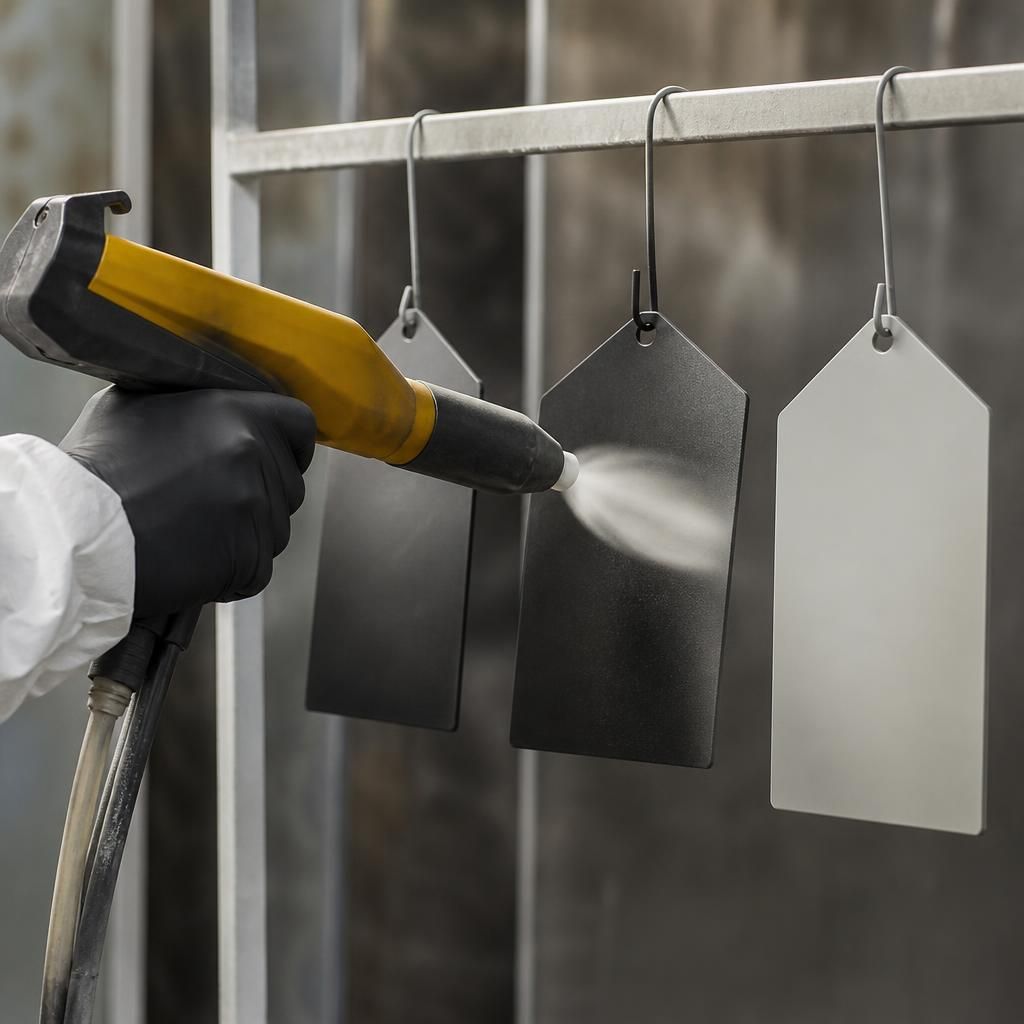
Compatibility should be confirmed before a repair material is applied to an unfamiliar or weathered coating. Where practical, a small test area or representative sample can be used to assess whether the proposed material adheres correctly and produces an acceptable relationship with the retained finish after curing.
This check is particularly useful when the original powder type, primer or curing history is unknown. It can reveal problems such as poor bonding, unexpected gloss differences or an unsuitable surface reaction before the component receives its final repair. The agreed acceptance criteria should cover both appearance and service requirements, rather than relying on colour matching alone.