

What specific properties make nylon coatings a preferred choice for protecting metal components?
Nylon coatings are preferred for protecting metal components because they form a tough, resilient barrier with strong resistance to impact, abrasion, chemicals, moisture and corrosion. Their combination of durability, flexibility and electrical insulation helps components withstand demanding handling, service and environmental conditions.
Nylon coatings are preferred for metal components because their thermoplastic structure provides a combination of surface smoothness, resilience, low friction, electrical insulation and sound-damping performance that many hard, brittle finishes cannot offer together. These properties make nylon particularly useful where a component needs more than a basic decorative or corrosion-resistant layer.
Low friction and a smooth surface are important advantages. Once cured, nylon can provide a relatively smooth, low-drag finish that helps reduce resistance between contacting parts. This is useful for components that slide, rotate or guide other parts, including bushes, rollers, chutes, guides and handling equipment. The coating can also reduce surface marking and help prevent materials from adhering readily to the metal.
Nylon also has useful resilience and elasticity. Rather than behaving like a rigid, brittle film, it can accommodate a degree of movement and surface flexing without immediately cracking or breaking away. This is valuable on components exposed to repeated handling, vibration or minor deformation. The coating’s ability to absorb some mechanical energy can help reduce the transmission of noise and vibration, making it suitable for applications where metal-on-metal contact would be undesirable.
Another significant property is electrical insulation. Nylon is a non-conductive material, so a correctly applied coating can separate a metal surface from surrounding components or from direct contact with an electrical circuit. This can help reduce the risk of accidental contact and provide an insulating interface. The suitability of the finish still depends on the component design, coating thickness, operating voltage and environmental exposure, so electrical requirements should be specified before coating.
The coating can also provide a stable, continuous surface layer over complex metal components. Powder application allows the coating to cover edges, profiles and shaped areas more consistently than a simple flat paint application, provided the part is correctly prepared and the process is controlled. This creates a physical separation between the substrate and its working environment. Surface preparation remains essential: contamination, oxidation, sharp edges or unsuitable pre-treatment can affect adhesion regardless of the inherent properties of the nylon.
Nylon’s resistance to many commonly encountered substances is another reason it is selected for industrial use. It can be suitable where components come into contact with oils, greases, cleaning agents or other chemicals, although the exact formulation and exposure conditions must be checked. Concentration, temperature, contact time and repeated immersion can all affect performance. A supplier should therefore assess the actual chemical environment rather than treating all nylon coatings as interchangeable.
Other practical properties may include:
- Good surface toughness: the finish can withstand routine contact and handling without behaving like a fragile decorative film.
- Reduced metal-to-metal contact: the polymer layer creates a separating surface that can help minimise direct contact between components.
- Noise reduction: its resilient character can damp some impact and vibration generated during operation.
- Non-conductive performance: the finish can be used where electrical separation is part of the component specification.
- Consistent appearance: nylon powders are available in finishes suited to functional components as well as visible fabricated parts.
Nylon is not automatically the best option for every metal component. Continuous high-temperature service, intense ultraviolet exposure, severe abrasion or contact with a particular chemical may require a different coating system or a specified nylon grade. The correct choice depends on the metal substrate, operating temperature, movement, contact conditions, chemical exposure, required thickness and the way the component will be prepared before application. These factors determine whether nylon’s particular combination of low friction, resilience, insulation and surface protection matches the application.
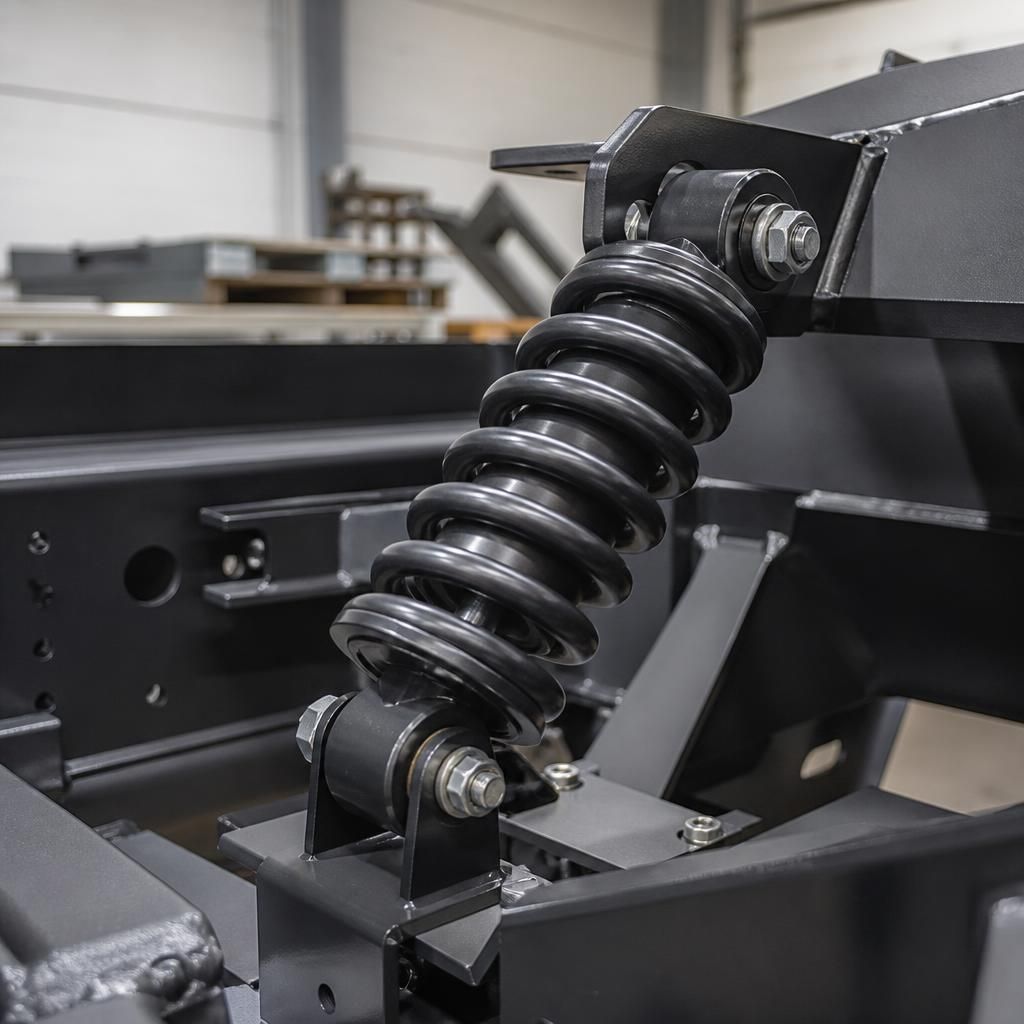
A further reason nylon coatings suit working metal components is their ability to accommodate repeated movement between the coating and the substrate. Metal and polymer expand and contract at different rates as temperature changes, while vibration and operational loading can create additional movement. A suitably specified nylon layer can tolerate this cycling more effectively than a rigid, brittle film, reducing the likelihood of cracking or flaking when the component is handled or used repeatedly.
This property is particularly relevant for assemblies exposed to changing temperatures, vibration or intermittent mechanical loading. It does not remove the need to check the coating grade and service conditions: sustained heat, aggressive chemicals and severe movement can still exceed the coating’s capabilities. The substrate, required film thickness and preparation method should therefore be assessed together when selecting nylon for a component subject to thermal or mechanical cycling.
Discuss the right nylon coating for your metal components
Discuss your component’s substrate, operating conditions and performance requirements with the powder-coating.co.uk team to assess whether a nylon coating is suitable. They can help identify the appropriate coating specification and preparation requirements for your application.