

How do nylon coatings provide corrosion resistance for metal components?
Nylon coatings provide corrosion resistance by forming a continuous protective barrier over metal components, limiting contact with moisture, salts and corrosive chemicals. Their resistance to abrasion also helps preserve that barrier during handling and service, reducing opportunities for corrosion to begin.
Nylon coatings protect metal components from corrosion by electrically isolating the substrate and preventing corrosive conditions from reaching exposed metal. Corrosion is an electrochemical reaction that requires a suitable electrolyte, such as dampness or a contaminated surface, together with access to the metal. A correctly applied nylon film interrupts this process and helps maintain the component’s original surface condition during handling and use.
The coating’s performance depends on more than simply covering the visible faces of a component. Strong adhesion to properly prepared metal reduces the risk of lifting, blistering or delamination. If the coating remains firmly attached around edges, corners, joints and fixing points, corrosive substances have fewer routes into the interface between the nylon and the substrate. This is particularly important because corrosion can spread beneath a coating once moisture has entered through a damaged or poorly bonded area.
Nylon also contributes to corrosion protection through its toughness. A brittle or poorly bonded finish may crack when a component is knocked, flexed or fitted to another part. Nylon can accommodate routine impact and handling more effectively than some less resilient finishes, helping the surface remain continuous. It does not make the component immune to damage, however: deep scratches, cuts and exposed edges should be assessed and repaired where appropriate.
Surface preparation is a major factor in the result. Oil, grease, mill scale, rust, dust and other contaminants can prevent proper contact between the metal and the coating. Preparation normally involves cleaning and, where required, abrasive treatment or another suitable method to create a sound, receptive surface. Any existing corrosion should be removed or controlled before coating; nylon should not be used to conceal an unstable substrate and should not be expected to stop corrosion that is already active beneath the surface.
Uniform coverage is equally important. Thin areas, pinholes, inclusions and missed recesses can become local points where moisture or chemicals reach the metal. Excessive build-up may also affect fit, flexibility or adhesion, particularly on mating surfaces, threads and close-tolerance components. Application therefore needs to account for the component’s geometry, including sharp edges, internal corners, holes and areas that are difficult to reach. Inspection of the finished coating can include visual checks, thickness assessment and adhesion testing where the component’s use justifies it.
The nylon grade and finish should be selected for the environment in which the component will operate. Temperature, exposure to water or salt, cleaning agents, industrial chemicals, outdoor conditions and mechanical loading can all influence long-term corrosion protection. Nylon is not automatically suitable for every chemical or service condition, and moisture absorption can vary between nylon types. Compatibility should therefore be considered alongside the metal substrate, the preparation method and the required finish.
For corrosion-sensitive components, the most reliable approach is to treat the coating as part of a complete protection system:
- Choose a nylon coating type compatible with the operating environment and the metal being coated.
- Remove contamination and unstable corrosion before application.
- Ensure the coating reaches edges, recesses and other vulnerable areas without compromising component tolerances.
- Check the finished surface for discontinuities, damage and adhesion problems before installation.
- Protect, repair or recoat areas damaged during transport, assembly or service.
When these controls are addressed, nylon coating can provide durable corrosion protection while also supporting the component’s resistance to routine wear and handling. The final result is determined by the interaction of coating selection, surface preparation, application quality and the conditions the metal component will face in service.
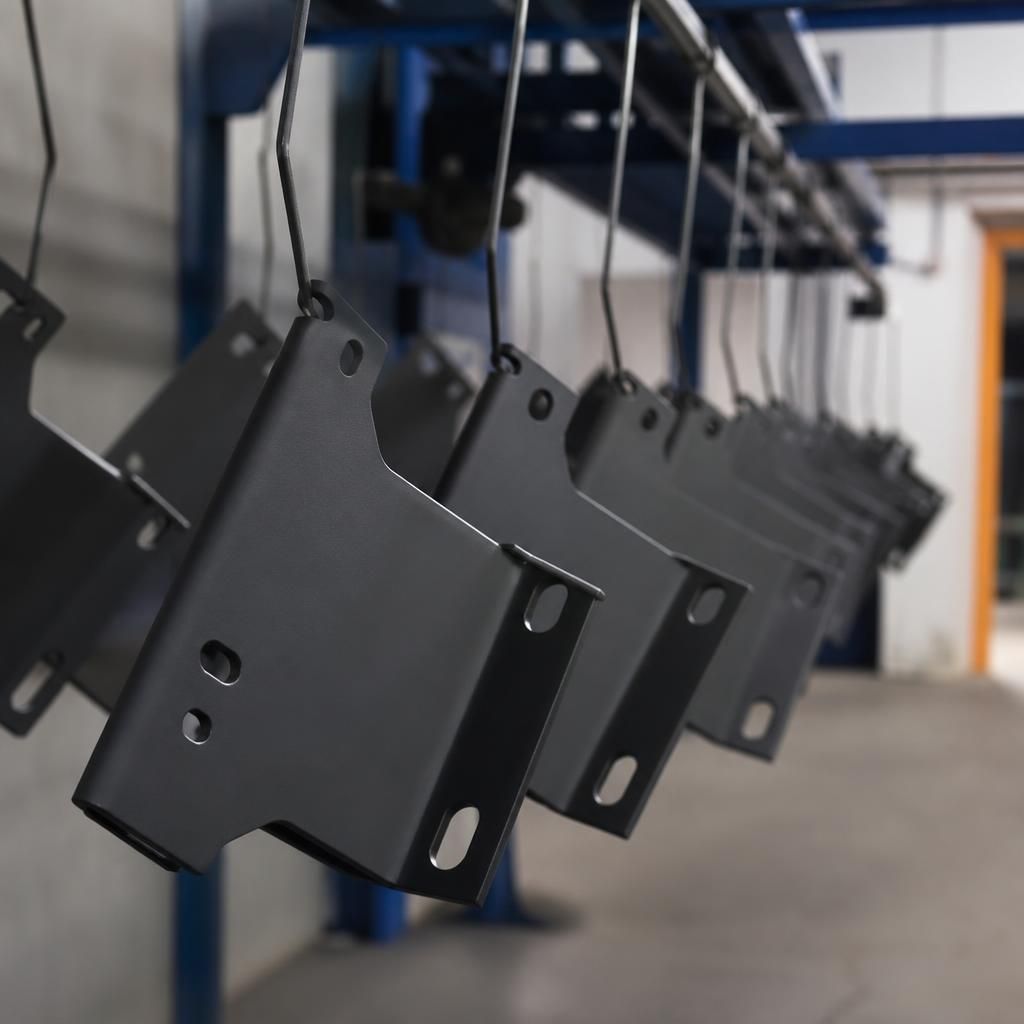
Nylon coatings provide barrier protection, rather than sacrificial protection. Unlike a metallic coating that may corrode preferentially to protect the underlying steel, nylon does not react in this way. Its role is to separate the metal from water, dissolved salts and other electrolytes, while electrically isolating the coated surface.
This distinction matters when assessing a component’s service condition. The coating must remain continuous and compatible with the substrate, particularly where dissimilar metals, fixings or conductive contaminants could create localised corrosion cells. Nylon can reduce direct contact between these elements, but it should be specified as part of a system that also addresses joints, interfaces and any areas where the coating may be interrupted.
Discuss Nylon Coatings for Corrosion Protection
If you are assessing nylon coating for corrosion-sensitive metal components, contact Powder-coatings.co.uk to discuss the substrate, operating environment and finish requirements. This helps establish whether nylon coating is appropriate for the component and its intended service conditions.