

What factors influence the choice of abrasive materials for sand blasting high-temp coatings?
The choice of abrasive for sand blasting high-temp coatings depends on the metal substrate, required surface profile, existing coating or contamination, coating specification and the risk of embedding abrasive into the surface. Abrasive hardness, particle size, shape, recyclability, dust generation and compatibility with the blasting equipment also influence the final selection.
The most suitable abrasive for preparing metal for a high-temperature coating is the one that produces the required surface condition without leaving chemically harmful residues, distorting the component or creating an unacceptable contamination risk. The decision therefore depends on the coating manufacturer’s preparation requirements, the metal component’s geometry and service conditions, the required cleanliness level, and the practical controls available for containing and removing spent media.
Coating chemistry and service conditions are important because high-temperature systems do not all tolerate the same preparation residues. An inorganic, ceramic or silicone-based coating may have different requirements for surface cleanliness and texture than another heat-resistant formulation. The abrasive should be selected against the coating technical data sheet rather than simply chosen because it is commonly used for general-purpose blasting. The intended operating temperature, exposure to thermal cycling and contact with chemicals can also affect how strictly residues must be controlled. A trace of a contaminant that has little effect on an ordinary decorative finish may contribute to blistering, poor adhesion or premature breakdown when the component is repeatedly heated.
Material compatibility extends beyond the main substrate. A fabricated component may contain welds, heat-affected zones, cast areas, inserts or different grades of metal. Media that are appropriate for one part of an assembly may be unsuitable for another. Ferrous media can create a risk of iron transfer onto non-ferrous surfaces, while residues from previously blasted work can introduce unwanted metallic or mineral contamination. Where the coating system is sensitive to corrosion products, a non-contaminating media strategy and careful separation of abrasive stocks may be preferable.
Required cleanliness and inspection method also influence the selection. Some applications require the removal of mill scale, oxide, old coating and corrosion products; others require a more controlled preparation because the existing surface is sound but must be keyed for adhesion. The chosen abrasive must be capable of producing the specified cleanliness grade consistently across the whole component, including weld toes, corners and partially concealed areas. Visual inspection may not identify soluble salts or fine residues, so the preparation plan should account for any additional testing required by the coating specification.
Component geometry can determine which media are practical. Deep recesses, narrow channels, drilled holes and internal corners affect how effectively abrasive can reach and leave the surface. Delicate edges, thin sheet, fins and machined faces may require a less aggressive approach than robust structural sections. The aim is to prepare every coating area evenly while avoiding changes to tolerances, sharp edges or functional mating surfaces. Masking, altered nozzle access and staged blasting may be necessary where the component cannot be treated uniformly from one position.
Contamination control between jobs is a further consideration. Abrasive may carry over residues from earlier work, particularly when it is recovered and reused. This matters when a batch includes stainless steel, galvanised parts, aluminium or components exposed to oils and process chemicals. Segregated media, suitable cleaning of the blast system and documented changeover procedures help prevent cross-contamination. Reuse is only appropriate when the recovered abrasive remains within the agreed condition for the application; otherwise, apparent cost savings can be outweighed by coating defects or additional preparation.
Dust and environmental controls affect the choice as well. Some media generate more airborne dust or create greater disposal requirements than others. The decision should consider the blast room or enclosure, extraction capacity, operator protection, recovery arrangements and the method used to dispose of spent abrasive. Media that are technically suitable but cannot be safely contained or removed may not be appropriate for the site. The presence of nearby equipment, sensitive machinery or other production areas can make dust control particularly significant.
Surface cleanliness after blasting is not determined by the abrasive alone. Compressed-air quality, handling after preparation, storage conditions and the interval before coating can all affect the result. Oil or moisture in the air supply can recontaminate a prepared surface, while handling with unclean gloves can transfer salts and grease. The preparation procedure should therefore define how blasted parts are inspected, protected and transferred to coating, rather than treating abrasive selection as an isolated decision.
A practical selection process normally follows this order:
- Review the high-temperature coating manufacturer’s preparation instructions and the specified cleanliness and surface condition.
- Identify every material and feature on the component, including welds, inserts, recesses and areas that must not be altered.
- Assess the risk of metallic, mineral, oil or soluble-salt contamination from both new and recovered media.
- Confirm that the blasting enclosure, extraction, recovery and inspection arrangements are suitable for the selected abrasive.
- Carry out a controlled trial on a representative area or component, then verify cleanliness, surface condition and coating compatibility before processing the full batch.
For industrial work, the best choice is therefore a controlled combination of abrasive, blasting procedure and inspection rather than a universally ‘strongest’ medium. Powder-coating.co.uk can discuss the component material, coating specification and preparation requirements when assessing specialist high-temperature coating work, with collection and delivery options for businesses across the Midlands and surrounding areas.
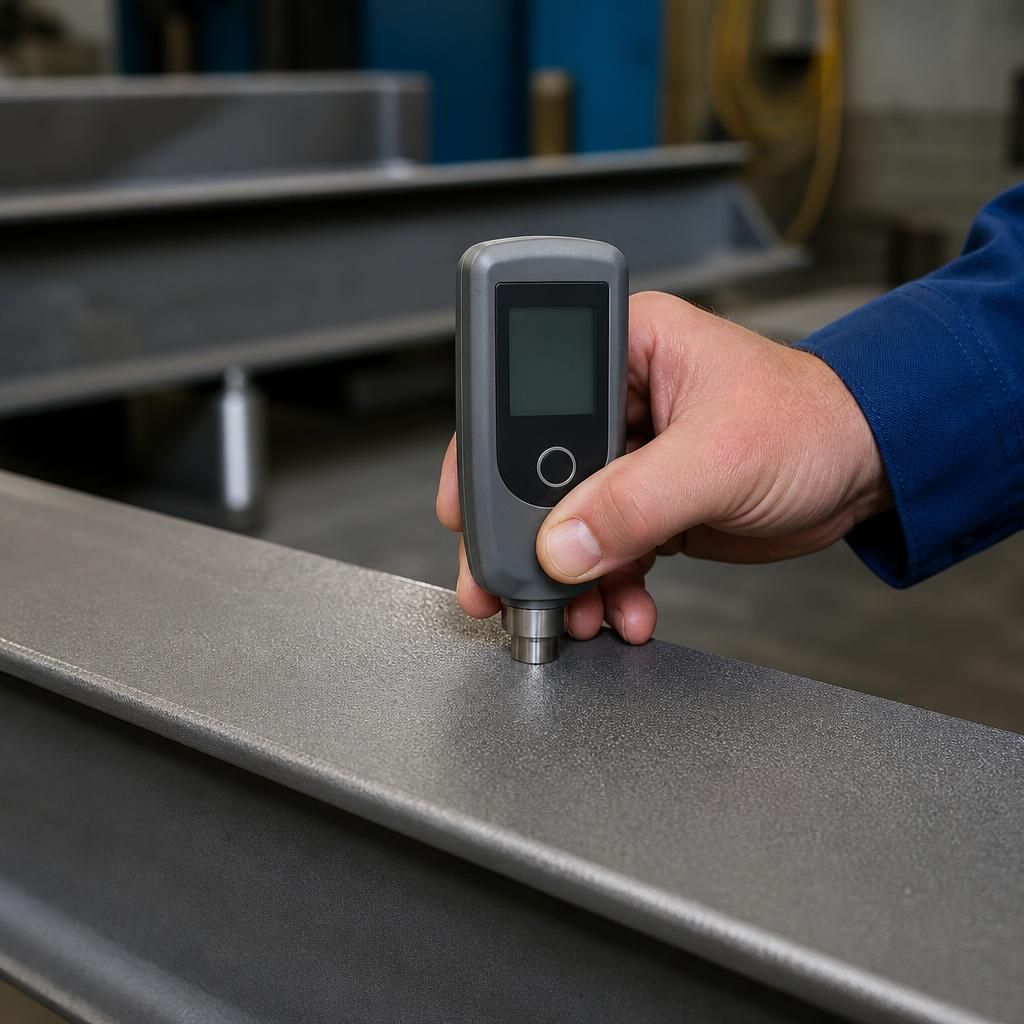
Surface profile is a critical reason for comparing abrasive materials. Angular particles cut into the metal and generally create a more pronounced key, while rounded media produce a less sharply cut texture. A profile that is too shallow may provide insufficient mechanical adhesion; one that is too deep can leave peaks that are difficult to cover evenly with the specified high-temperature coating.
The selected abrasive should therefore be assessed against the coating manufacturer’s permitted profile range, not judged by visual roughness alone. A representative test area can be checked with a suitable surface-profile gauge before full processing, helping confirm that the abrasive and blasting settings produce a consistent texture without unnecessarily removing sound metal.
Discuss Your Abrasive Requirements for High-Temperature Coatings
Discuss your component drawings, substrate and high-temperature coating specification with Powder-coating.co.uk to identify abrasive requirements before processing. This helps establish a suitable preparation approach for your application.