

What preparation steps are necessary before applying high temp powder coating?
Before applying high temperature powder coating, the metal must be thoroughly cleaned and degreased, with rust, mill scale, old coating and other contaminants removed by suitable preparation such as abrasive blasting. The surface should then be inspected, dried, masked where required and checked for compatibility with the specified powder and curing temperature.
Preparing a component for high temperature powder coating involves more than creating a clean surface. The part, its material, its design, the intended service temperature and the curing requirements must all be assessed before coating begins. This prevents unsuitable substrates, trapped gases, inaccessible areas and dimensional changes from compromising the finished coating.
Confirm the substrate and service conditions
Identify the metal used for each component and establish the temperatures it will experience in service. Aluminium, mild steel, stainless steel, castings and previously treated components can behave differently during heating. The selected powder must be suitable for both the substrate and the expected thermal environment, including repeated heating and cooling where thermal cycling is part of the application.
Provide details of the operating temperature, exposure to chemicals or moisture, contact with other components and any requirements for electrical insulation or corrosion protection. These factors influence coating selection and may determine whether additional preparation or a different coating system is needed.
Review the component design before processing
Inspect the part for features that could affect coating quality or curing. Deep recesses, narrow gaps, blind holes, overlapping sections and enclosed cavities may restrict powder coverage or retain air and process residues. Where possible, designs should allow the coating to reach all required faces and should avoid areas where powder could accumulate excessively.
Welded fabrications need particular attention. Weld spatter, sharp weld profiles, porous welds and residues from welding products can create surface defects or release gases during heating. Welds should be suitably finished, and porous or sealed sections should be assessed for outgassing risk before production.
Edges and corners should also be reviewed. Very sharp edges can receive a thinner coating than adjacent flat areas, while rough edges may remain visible through the finish. Where the component specification permits, edge radiusing and removal of burrs can improve coating continuity and reduce the risk of handling damage.
Prepare castings and porous materials for heating
Cast metal and porous fabrications can retain oil, moisture or gases within their structure. When the component enters the curing oven, these materials may expand and escape through the uncured powder, producing pinholes, blisters or surface craters. The risk is higher where the part has deep pores, enclosed sections or a history of absorbing contaminants.
Such components may require a controlled pre-treatment or preheating stage, followed by suitable handling before powder application. The correct approach depends on the material, component geometry and coating specification. It should be agreed before processing rather than treated as a correction after defects appear.
Remove or protect items that must not be coated
Components should be disassembled where practical so that moving parts, threaded sections, bearings, seals, electrical contacts and heat-sensitive items are not exposed to the coating or curing cycle. If disassembly is not possible, these areas require suitable high-temperature masking or temporary protection.
Masking needs to account for both powder coverage and oven temperature. The masking material must remain stable during curing and leave a defined edge without contaminating the coating. Bolt holes, earth points, mating faces and precision bores may need plugs, caps or dedicated fixtures. Masking dimensions should be specified clearly where the uncoated area affects assembly or electrical performance.
Plan racking, contact and grounding points
Before application, decide how the part will be supported and transported through the coating line. Contact points should be placed on areas where a small uncoated mark will not affect appearance, assembly or corrosion protection. The fixture must support the component securely without blocking important surfaces or allowing it to move during handling.
Electrical contact is also important during electrostatic application. The part and its supporting equipment need a reliable path to earth so that powder transfers consistently. Contact areas may need to be reserved, cleaned as part of the process and positioned consistently from one batch to the next. Heavy or irregular components may require additional support to prevent distortion or uneven coverage during heating.
Check dimensions and tolerances
Powder coating adds a measurable film to the prepared surface, so critical dimensions should be identified before work starts. Threads, close-fitting bores, locating faces, sliding surfaces and mating edges may require masking or an agreed coating allowance. Record any areas where the coating thickness must be controlled to maintain assembly fit.
Components should also be checked for distortion risk. Thin sheet, long sections and welded assemblies can move when heated, particularly if they contain residual stress. Appropriate racking and a suitable curing cycle help manage this risk, but the component design and allowable dimensional variation should be considered in advance.
Agree the coating and curing specification
The preparation plan should be linked to the powder manufacturer’s technical requirements and the component’s performance needs. Confirm the required colour, gloss, texture, film build, masking limits and curing conditions before the part enters production. High temperature performance depends on the complete coating system and its cure, not simply on selecting a powder described as heat resistant.
Where the application is unusual or the component is especially valuable, a trial piece or representative test panel can be used to assess coverage, appearance, adhesion and behaviour through the proposed heat cycle. This is particularly useful when the part includes mixed materials, complex welds or demanding dimensional tolerances.
Finally, preparation details should be recorded for repeat work, including the racking arrangement, masking locations, approved coating specification and any areas requiring special handling. A documented preparation standard helps maintain consistency across batches and gives the applicator clear instructions before powder is applied.
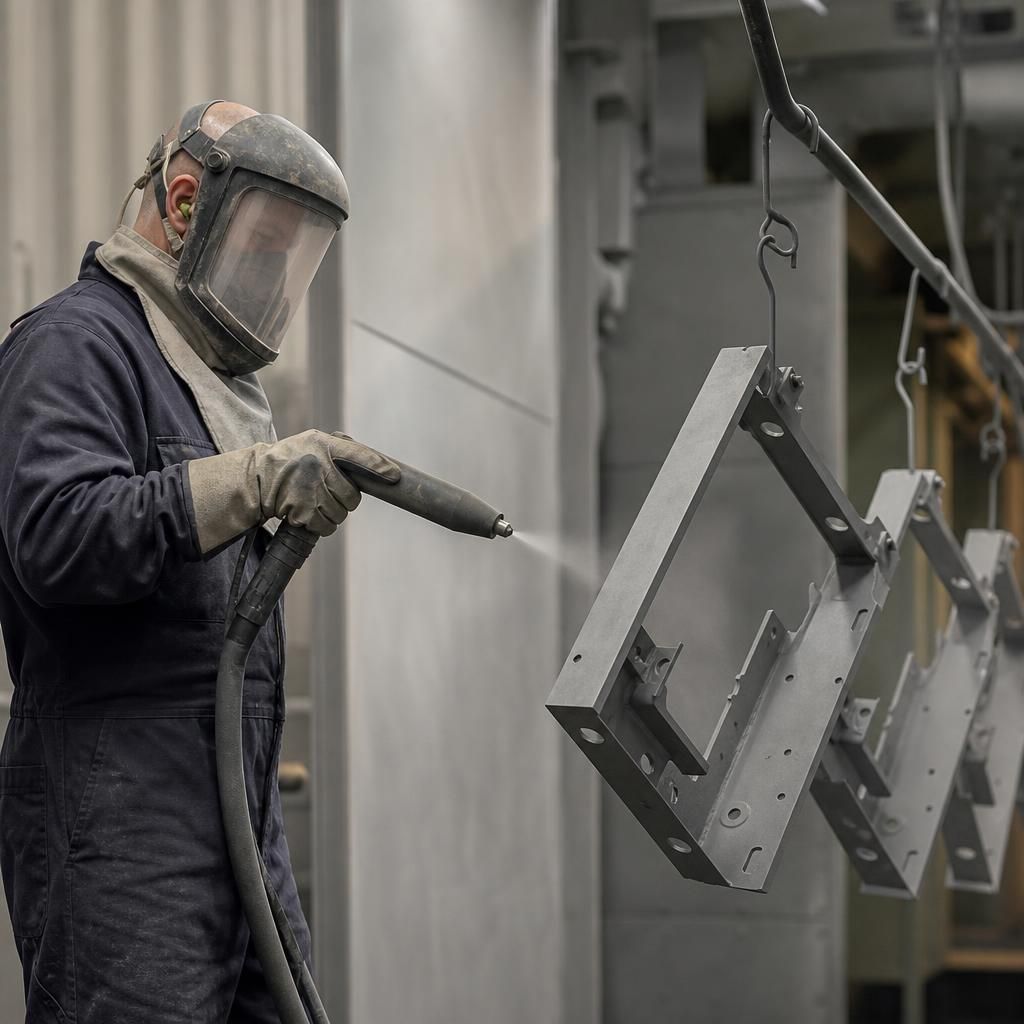
The final surface treatment must be chosen for the metal and the temperature-duty of the coating system. Abrasive blasting can create the required key for adhesion, but the abrasive, pressure and profile need to be controlled so that delicate sections are not damaged and abrasive is not left in recesses. Aluminium, stainless steel and mild steel may require different preparation methods.
After blasting or chemical pre-treatment, the component should be free from dust, salts and treatment residues before powder application. Any flash rust or visible contamination needs to be addressed rather than sealed beneath the coating. The prepared part should then be handled with clean gloves or suitable equipment to prevent fingerprints and oil transfer, and kept dry until it is coated.
Discuss Your High Temp Powder Coating Preparation Requirements
Discuss your component design, operating temperatures and preparation requirements with powder-coatings.co.uk before specifying the coating system. Providing drawings, material details and service conditions will help establish a suitable preparation and masking plan.