

What are the differences between epoxy primers and high-build zinc phosphate primers in terms of application and performance?
Epoxy primers generally provide strong adhesion and a uniform barrier film, while high-build zinc phosphate primers are formulated to apply a thicker layer and add pigment-based corrosion inhibition. In practice, high-build products require closer control of film thickness and curing, but can offer greater protection where steel needs additional barrier depth; epoxy primers are often preferred where adhesion, chemical resistance and a smooth base for the finish coat are the priorities.
Epoxy primers and high-build zinc phosphate primers differ mainly in how they are formulated, applied and used within a corrosion-protection system. Epoxy primers form a resin-based protective layer whose performance depends on resin, hardener, surface preparation and cure, whereas high-build zinc phosphate primers use a substantial concentration of zinc phosphate pigment to support corrosion inhibition beneath a subsequent finish coat.
Application differences
- Mixing and pot life: Many industrial epoxy primers are two-pack materials, so the resin and curing agent must be mixed in the specified ratio. The mixed product has a limited usable life, even if it remains fluid. High-build zinc phosphate products may be two-pack or single-pack, depending on their formulation. The product data sheet therefore needs to be checked before selecting mixing equipment, thinners or application procedures.
- Surface preparation: Both systems require the steel or other compatible substrate to be clean, dry and free from oil, grease, loose rust, mill scale and other contaminants. The required preparation grade can vary according to the product and the intended exposure. Epoxy primers are particularly dependent on a sound, uncontaminated surface because weak material beneath the film can reduce overall coating performance. Zinc phosphate primers also need firm substrate preparation; their inhibitive pigment is not a substitute for removing corrosion or contamination.
- Spray control: Epoxy formulations can be relatively viscous and may require suitable airless, air-assisted airless or conventional spray equipment. High-build zinc phosphate products can place greater demands on fluid delivery and spray technique because their formulation contains a high pigment load. Incorrect nozzle selection, pressure or thinning can cause poor atomisation, dry spray, sagging or an uneven film.
- Recoat and curing: Epoxy primers need adequate chemical cure before they are handled or overcoated. Temperature, humidity, ventilation and the chosen hardener affect the cure rate. Applying the next coat too early can trap solvents or interfere with film development, while waiting beyond the specified recoat interval may require abrasion or other preparation. Zinc phosphate primers also have defined drying and recoat conditions, which can differ substantially between solventborne and waterborne products.
- Edges, welds and complex shapes: Corners, welds, cut edges, holes and recesses are common weak points in any protective system. Stripe coating or careful pre-coating may be required before general spraying, particularly where the geometry makes it difficult to achieve consistent coverage. Neither primer should be selected solely because it is described as high-build; the application method must suit the component shape and the finish system.
Performance differences
- Corrosion mechanism: Zinc phosphate is an inhibitive pigment. In the presence of moisture at a damaged or permeable coating interface, it can help reduce the electrochemical activity associated with corrosion. It is not the same as a metallic zinc coating and does not provide sacrificial galvanic protection in the way a zinc-rich system does. Epoxy protection is primarily associated with the integrity and resistance of the cured resin film.
- Chemical and moisture resistance: A properly cured epoxy primer generally provides strong resistance to many industrial chemicals, oils and moisture, although the exact result depends on the resin, curing agent and exposure. Zinc phosphate primers can provide effective corrosion control as part of a compatible multi-coat system, but their resistance to specific chemicals must be confirmed from the technical data rather than assumed from the pigment name.
- Mechanical performance: Epoxy films can provide a hard, durable base with useful resistance to abrasion and impact. Excessive hardness can become a disadvantage if the substrate flexes or if the coating system is exposed to movement. High-build zinc phosphate primers may offer good protective depth and filling of minor surface irregularities, but a thick or poorly cured primer can be more vulnerable to cracking, solvent entrapment or intercoat problems.
- Weathering: Epoxy primers are not normally chosen as the final exposed finish where long-term ultraviolet resistance and colour retention are required. They are usually protected with a compatible topcoat. The same principle applies to many zinc phosphate primers: their role is commonly to protect the substrate beneath a finish coat, rather than to provide the complete exterior system by themselves.
Choosing between them
Epoxy primer is often the more suitable starting point where chemical exposure, substrate adhesion, mechanical demands or a tightly controlled multi-coat system are the main concerns. A high-build zinc phosphate primer may be preferable where the specification calls for inhibitive pigment protection, additional primer build or a system designed specifically for fabricated steel and general industrial exposure. These are not universal rules: the substrate, preparation standard, service environment, application equipment and selected topcoat must all be considered together.
Compatibility is critical when either primer is being overcoated, including with a powder coating system. The primer must be approved for the intended curing temperature and overcoat process, and the complete system should be assessed for intercoat adhesion, solvent release, appearance and corrosion performance. The relevant technical data sheet should establish mixing requirements, application equipment, permitted recoat interval, curing conditions and compatible finish coats before production work begins.
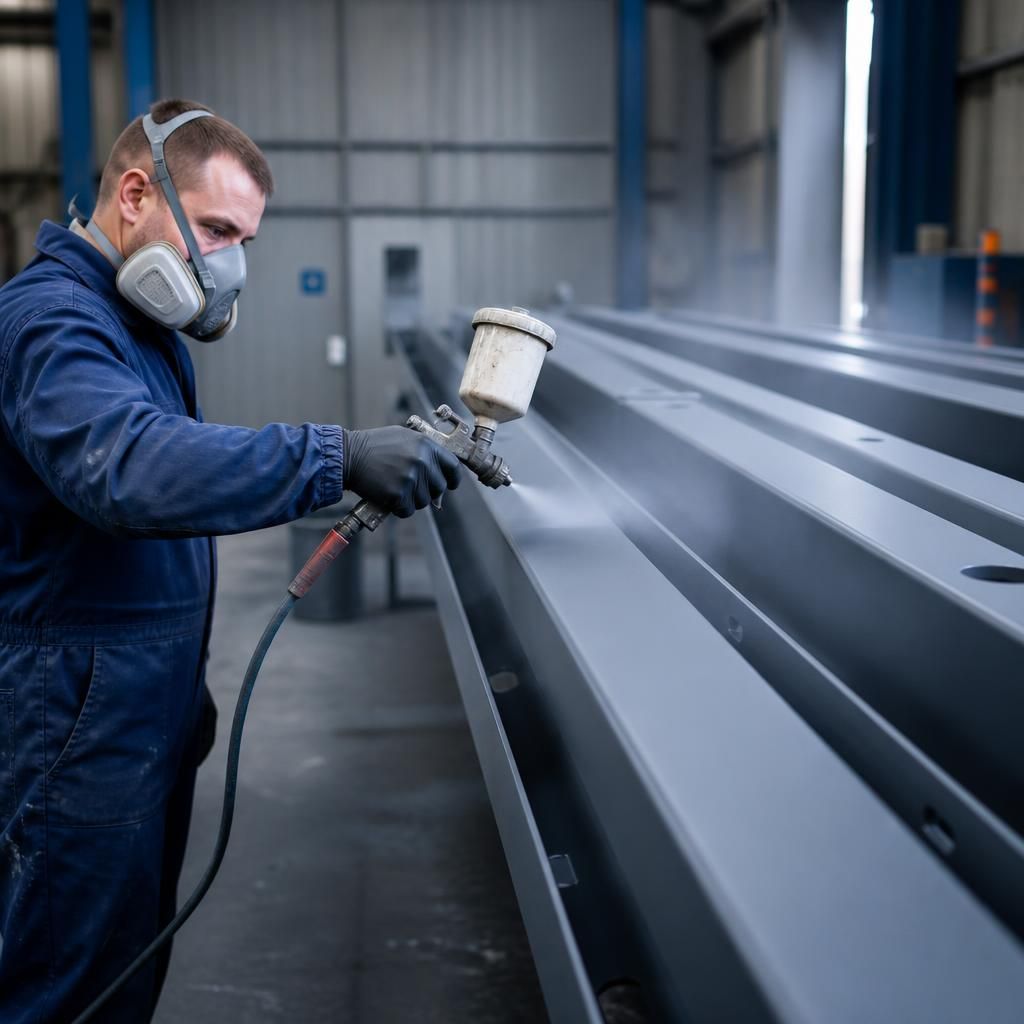
The practical difference between epoxy primers and high-build zinc phosphate primers can also be seen in the finish they provide for the subsequent coating. A correctly applied epoxy primer will often produce a relatively smooth, even base, making it suitable where the appearance of the final topcoat is important. High-build zinc phosphate primer is designed to deposit more material, so its surface profile may need closer attention before the finish coat is applied.
This does not make one product universally better. The required result depends on whether the specification prioritises a smooth decorative finish, additional primer depth or corrosion-inhibiting pigment protection. The coating system should therefore define the acceptable surface profile and finishing requirements, rather than selecting a primer solely from its name.
Discuss your epoxy or zinc phosphate primer requirements
Discuss your epoxy or high-build zinc phosphate primer requirements with a coating specialist, including the substrate, service environment and intended finish coat. This information can help establish which primer and complete coating system best fits the component and application process.