

What are the colour options available for epoxy powder coating?
Epoxy powder coating is available in a broad range of standard RAL colours, with options including different gloss levels, textures and finishes. Custom colour matching may also be possible where a specific corporate, design or functional requirement needs to be met.
Epoxy powder coating colour selection is based on the required shade, surface appearance and service environment. The final finish is determined not only by the colour reference, but also by the coating system, surface preparation, curing conditions and the way the component will be used.
Standard colour references provide the most practical starting point for industrial work. A specified reference helps the coater identify the intended shade consistently across batches and makes it easier to coordinate metal components produced at different times. The same nominal colour can appear different where the surface has a different texture, gloss level, film thickness or substrate beneath it, so a reference should be considered alongside the required finish.
Common selection considerations include:
- Shade: the chosen colour may need to align with equipment, surrounding structures, an established corporate scheme or a visual coding system.
- Gloss: a higher-gloss surface reflects more light and can make a colour appear more vivid, while a lower-gloss appearance generally gives a softer, less reflective result.
- Texture: textured surfaces can disguise minor visual variation and affect how light is scattered across the component. They may also make the colour appear subtly different from a smooth sample.
- Special visual effects: metallic, sparkle and other effect finishes can add visual depth, but their appearance may vary with viewing angle, application method and the orientation of the part.
- Contrast: contrasting colours can distinguish access panels, guards, machine sections or other functional areas, provided the scheme remains suitable for the intended setting.
For components used indoors, the colour decision is often primarily aesthetic and operational. For external or strongly sunlit applications, the suitability of the complete coating system needs separate consideration. Epoxy coatings are valued for their protective performance, but prolonged ultraviolet exposure can affect the appearance of some epoxy finishes, including colour retention and surface sheen. Where long-term exterior appearance is important, the coating specification should therefore be assessed against the expected exposure rather than selected on colour alone.
Colour can also influence practical maintenance. Very light shades may make marks, handling residue and contamination more visible, whereas very dark or highly reflective finishes can highlight dust, scratches or surface irregularities. A textured finish may reduce the prominence of minor imperfections, although it does not replace correct preparation of the steel or other metal substrate.
Where an exact visual result matters, approval should be based on a representative sample or panel rather than a screen image or printed chart. Digital displays and printed materials can alter the apparent shade, while the final component may have a different geometry and reflect light differently. The sample should match the proposed substrate preparation, coating appearance and curing process as closely as possible.
For batch production, it is sensible to record the selected colour reference together with the agreed gloss, texture and any special finish requirement. This creates a clear specification for repeat work and reduces ambiguity between the drawing, purchase order and coating instructions. Components that will be assembled together should, where practical, be coated under comparable conditions and checked as a group before installation.
Businesses commissioning coated metalwork across the Midlands can discuss the intended shade and finish with a specialist powder coater before confirming the specification. Collection and delivery options may also be relevant where components are being supplied from manufacturers, fabricators, construction projects or automotive businesses.
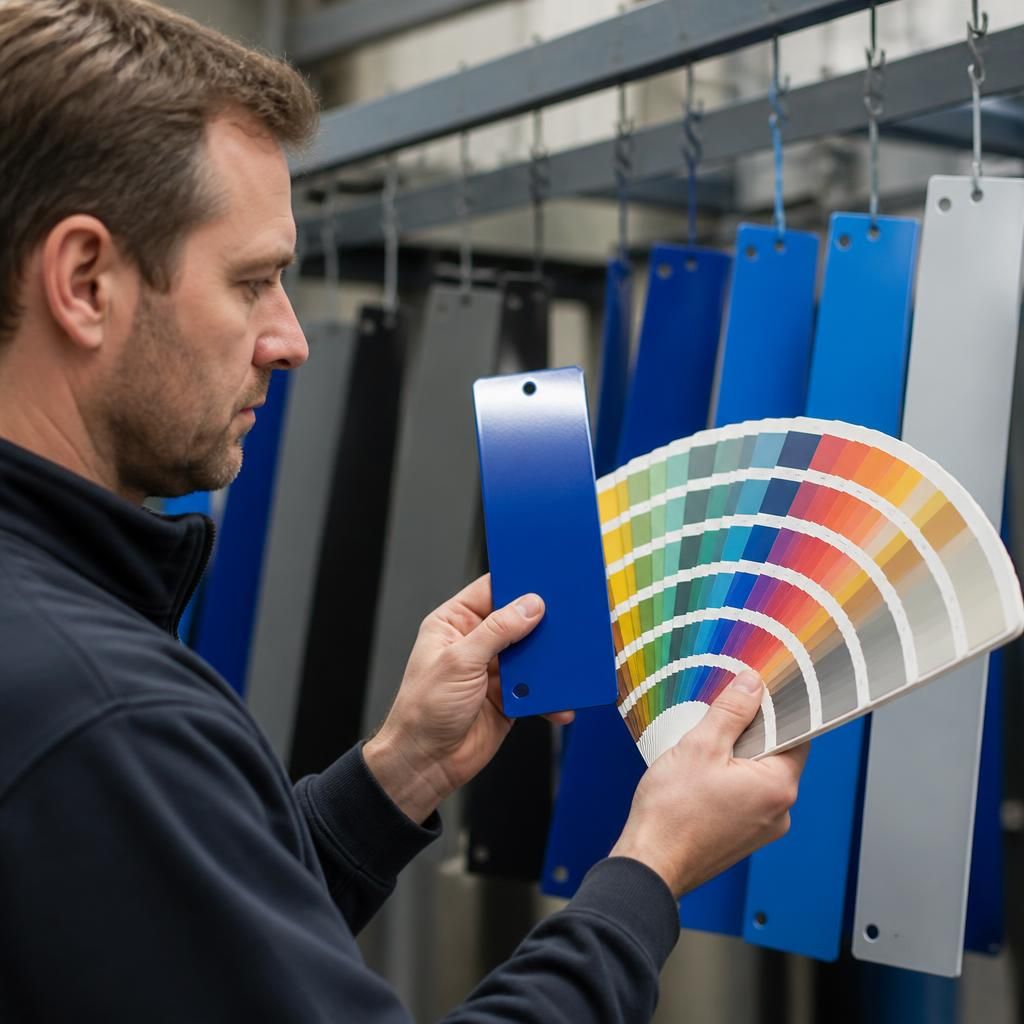
Colour choice can affect more than the visual appearance of an epoxy powder coated component. Different pigments and formulations may respond differently to ultraviolet exposure, heat or chemical contact, so the selected shade should be assessed as part of the complete coating specification rather than treated as a purely aesthetic decision.
Where a component has demanding service conditions, the practical choice may be between several visually similar shades or finishes that offer different suitability for the application. Providing details of the operating environment, cleaning chemicals and expected exposure allows the coating specialist to confirm whether the preferred colour and epoxy system are appropriate together.