

What are the maintenance requirements for thermoplastic powder-coated surfaces?
Thermoplastic powder-coated surfaces generally require routine cleaning with a mild detergent, soft cloth or brush, and clean water, followed by inspection for impact damage, abrasion, chemical attack or coating detachment. Avoid harsh solvents, abrasive tools and prolonged contamination, and arrange suitable repair or recoating if the substrate becomes exposed.
Maintenance of thermoplastic powder-coated surfaces is primarily a condition-based process: keep the coating free from harmful deposits, monitor areas exposed to wear or chemicals, protect the finish from avoidable mechanical damage, and repair defects before the underlying metal is exposed. The appropriate regime depends on the polymer used, the environment, the component’s function and the consequences of coating failure.
Maintenance should begin with a documented inspection plan. Record the coating type where known, the service environment, areas of repeated contact and any substances likely to reach the surface. Inspections should give particular attention to edges, corners, welds, fixings, joints, recesses and locations where water or process residues can collect. These areas are more likely to experience impact, abrasion, crevice corrosion or loss of adhesion than broad, undisturbed faces.
- Look for cracking, blistering, swelling, softening, chalking, colour change, localised wear and lifting at the coating edge.
- Check whether damage is limited to the coating or has reached and corroded the substrate.
- Examine interfaces with rubber seals, plastic components, fasteners and supports for trapped contamination or movement-related wear.
- Note changes in gloss or colour separately from functional damage, as visual change does not necessarily indicate loss of protection.
- Photograph and record defects so that deterioration can be compared during later inspections.
Inspection frequency should reflect exposure rather than follow a universal calendar. Components used indoors in a controlled, low-contamination environment may need less attention than items exposed to road salt, marine air, industrial chemicals, abrasive dust, ultraviolet radiation, repeated washing or substantial temperature cycling. Areas subject to frequent handling or contact should be checked whenever associated equipment is serviced, because mechanical damage can develop faster than general weathering.
Contamination control is an important part of long-term performance. Deposits such as salts, oils, process chemicals, metal dust and organic matter can retain moisture or attack particular coating chemistries. If a spill occurs, identify the substance and follow the coating supplier’s chemical-resistance guidance before selecting a cleaning agent. Do not assume that a cleaner suitable for one thermoplastic is suitable for every other formulation. Where a chemical has caused softening, staining or loss of adhesion, cleaning alone may not restore the coating’s protective properties.
Mechanical handling should also be reviewed. Avoid dragging coated parts across hard supports, allowing components to strike one another, or clamping them with contaminated or damaged fixtures. Contact points can be protected with clean, compatible pads or redesigned where repeated wear is occurring. Lifting equipment, racks and packaging should not introduce sharp edges or abrasive particles. If a component is removed for maintenance, support it in a way that does not concentrate load on a coated edge or projection.
Thermoplastic coatings can remain flexible and impact resistant, but flexibility does not make them immune to cutting, gouging or deformation. A mark that appears minor may become a pathway for moisture, particularly at a damaged edge. Monitor such defects for spreading, corrosion beneath the coating or separation between the coating and substrate. Do not conceal a defect with an unverified paint or sealant, since poor compatibility can worsen adhesion and make a later repair more difficult.
Repairs should be matched to both the coating and the damage. A superficial mark may require a different treatment from a deep impact, widespread detachment or corrosion of the base metal. The repair assessment should establish:
- the thermoplastic chemistry and original colour or finish, where this information is available;
- whether the surrounding coating remains firmly bonded;
- the condition of the exposed substrate and any corrosion present;
- the size, depth and location of the defect;
- whether the repaired area will experience immersion, chemical contact, abrasion, heat or repeated flexing.
Small local repairs may be possible with a compatible repair material, but the preparation method, application temperature and finishing technique must be suitable for the specific polymer. Heating, sanding or abrading a thermoplastic surface without technical guidance can distort the coating, contaminate the repair area or reduce adhesion. Where damage is extensive, where the substrate is corroded, or where the component performs a safety-critical or containment function, professional assessment and full or partial recoating may be more appropriate than an improvised touch-up.
Before recoating, the existing finish must be assessed rather than simply covered. The surface may require controlled removal, cleaning, preparation of exposed metal and confirmation that the proposed coating system is compatible with the remaining material. The repaired or recoated component should then be checked for continuity, adhesion, coverage and any defects introduced during the work. Testing should be proportionate to the component’s duty and specified by the responsible coating or engineering specialist.
Environmental controls can reduce maintenance demand. Improve drainage where standing water is recurring, prevent dissimilar-metal contact where galvanic corrosion is a risk, and shield vulnerable surfaces from persistent chemical splash or abrasive discharge. Review seals, joints and mounting arrangements if movement is repeatedly damaging the coating. For outdoor or high-exposure installations, include the surrounding structure in the inspection because corrosion or movement in the assembly can place stress on an otherwise sound finish.
A suitable maintenance record should include inspection dates, observed conditions, substances encountered, cleaning or repair work completed and any change in operating conditions. This information helps distinguish normal cosmetic ageing from a developing protection failure and supports a better decision between continued monitoring, local repair and complete recoating. For industrial components, the coating specification and repair history should remain with the asset so that future work uses a compatible system rather than an unverified substitute.
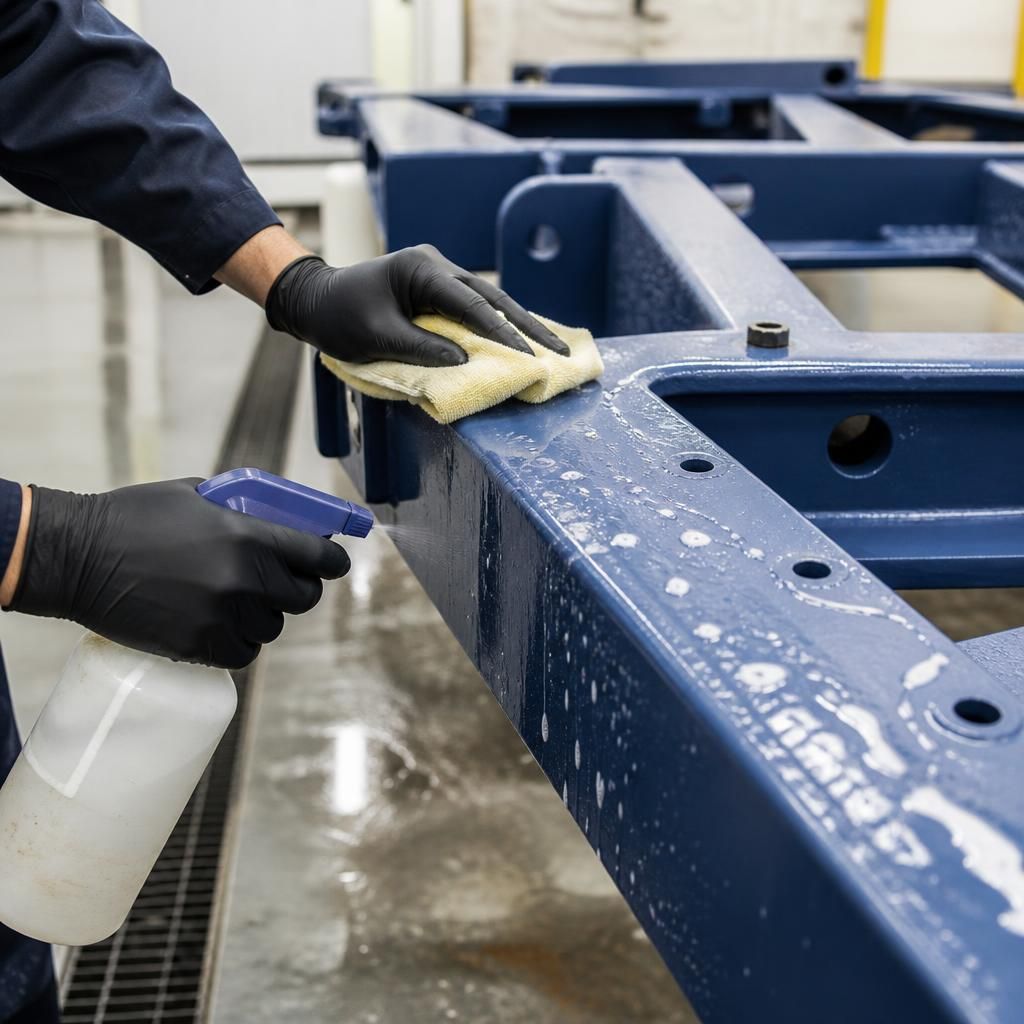
Cleaning should remove contamination without forcing water or debris into joints, seals and damaged edges. Remove loose particles first, then use a clean, compatible cloth or soft brush with a mild detergent solution. Rinse away detergent and dissolved residues with clean water, and allow the surface to dry before assessing its condition. Replace dirty cleaning materials rather than rubbing collected grit back across the coating.
- Clean from the least contaminated areas towards heavier deposits.
- Use separate materials for oily, chemical or dusty contamination.
- Avoid directing high-pressure water at coating edges, interfaces or known defects.
- Check the surface again after drying, since residue or moisture can temporarily conceal staining, lifting or softening.