

What factors should be considered when choosing a powder coating for metal parts?
When choosing a powder coating for metal parts, consider the part’s operating environment, required corrosion and wear resistance, intended finish, substrate and application requirements, and overall cost. The coating should be selected to suit the metal, exposure conditions, appearance and performance expected throughout the component’s service life.
Choosing a powder coating for metal parts involves defining the component’s functional specification, production constraints and acceptance criteria before selecting a coating system. The right choice is not based on colour alone; the powder chemistry, curing method, film build and preparation requirements must all work with the part and its intended use.
Consider the performance properties required by the component. Depending on the application, the coating may need to provide particular levels of flexibility, impact resistance, hardness, chemical resistance, electrical insulation or resistance to marking. These requirements should be ranked rather than treated as equally important. For example, a coating selected for a part that is handled frequently may need different mechanical properties from one applied to a static enclosure.
Select a suitable powder chemistry. Common powder systems have different characteristics. Epoxy-based coatings can provide strong adhesion and chemical resistance but are generally selected for applications where long-term exposure to sunlight is limited. Polyester systems are widely used where colour stability and exterior performance are important. Hybrid systems combine properties from more than one chemistry and may suit particular indoor applications. The choice should follow the technical specification rather than being made solely on price or appearance.
Check the curing requirements against the component. Powder coating normally requires the part to reach a specified temperature for a defined period. The relevant point is the metal temperature, not simply the temperature shown on the oven. Thick and thin sections may heat at different rates, while assemblies containing heat-sensitive components, seals or adhesives may not be suitable for the same curing cycle. The coating supplier or applicator should confirm that the proposed system can be cured without affecting the part.
Allow for geometry and dimensional tolerances. Coating adds a measurable layer to the surface, which can affect close-fitting components, threaded holes, bearing seats, sliding faces and locating points. Recesses, internal corners and narrow openings can also affect powder deposition. Areas that must remain free from coating should be identified clearly so that they can be masked before treatment. Sharp edges and weld transitions may require attention because they can influence coverage and the final appearance.
Define preparation and masking requirements. Oil, grease, weld residue, scale and other contaminants can undermine adhesion if they are not removed before coating. Fabrication quality also matters: excessive spatter, sharp burrs and poorly finished welds may remain visible through the coating. Drawings or job instructions should identify grounding points, electrical contact areas, earth points and surfaces that must remain uncoated. This avoids uncertainty during preparation and finishing.
Set clear visual and technical acceptance criteria. A specification should record the required colour reference, gloss level, texture, acceptable variation and any areas where cosmetic imperfections are not permitted. It should also state how the coating will be checked. Depending on the component, relevant checks may include film thickness, adhesion, cure, impact performance and visual inspection. Testing should reflect the part’s use and should not be specified independently of the coating system and preparation method.
Consider consistency across batches. Parts that are assembled together or viewed as one product may need a controlled colour and texture match. Powder from different batches can show slight variation, particularly where components are coated at different times or by different processes. A retained sample, approved reference panel or written acceptance standard can make future production easier to assess. This is particularly useful when a product will be manufactured in repeated batches.
Review compatibility with assembly and service operations. The coating must not interfere with fastener fit, electrical continuity, bonding, welding, labelling or subsequent machining. Powder-coated surfaces may also alter friction at joints and affect the fit of press-fit parts. Identify whether the component will be drilled, cut, stamped, bonded or assembled after coating, as these operations may require uncoated zones or a different coating specification.
Factor in batch size, part presentation and handling. The number of components, their dimensions, weight and method of hanging can affect how consistently they can be coated. Racking points may leave small contact marks or require masking, while awkwardly shaped parts may need a defined orientation during application. Providing accurate drawings, dimensions, material details and quantities helps the applicator assess the job and identify practical limitations before production begins.
For an informed selection, prepare a written coating specification covering the required properties, powder chemistry, curing restrictions, dimensional limits, masking points, visual standard and inspection method. Where the requirement is uncertain, a sample or trial part can help confirm compatibility before a full batch is processed. This approach reduces the risk of choosing a coating that looks suitable but is incompatible with the component’s manufacture, assembly or service requirements.
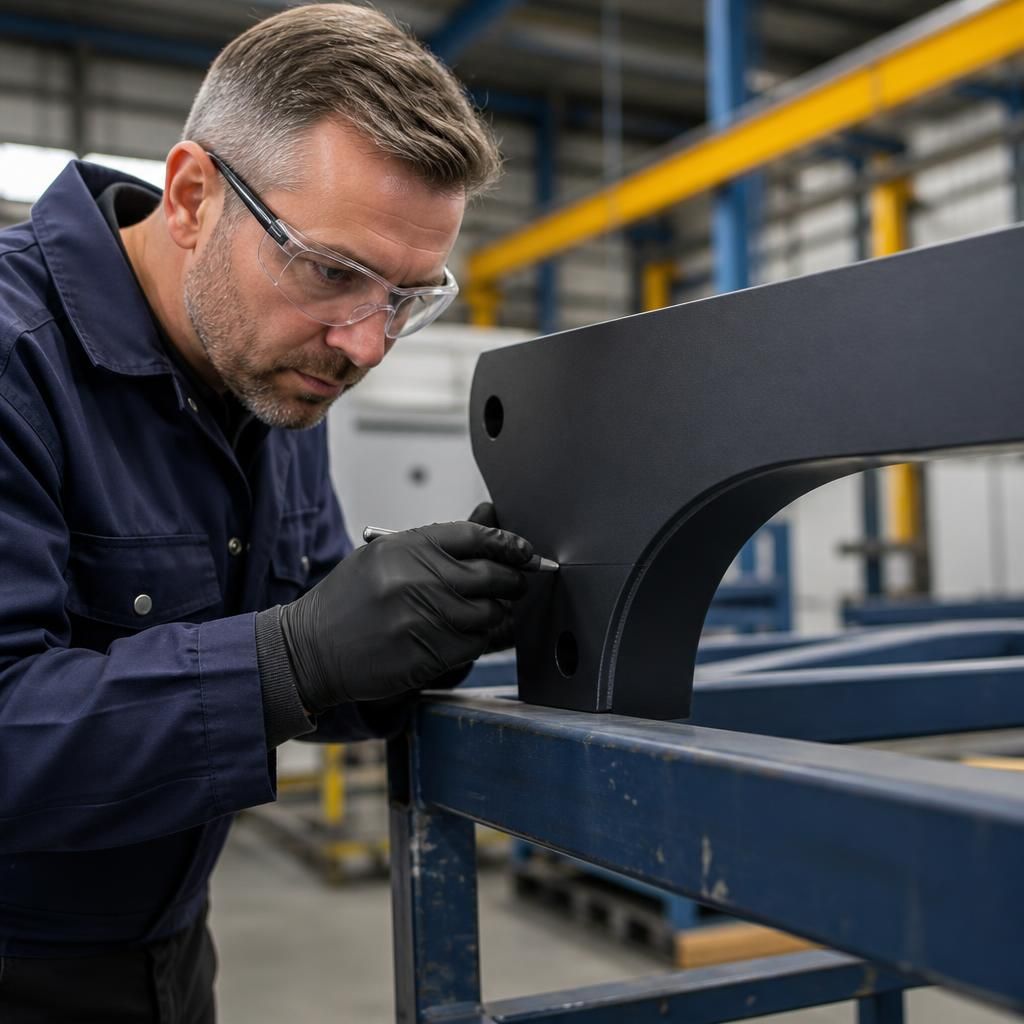
A less obvious factor is how the finish will be inspected and repaired during the component’s service life. Powder coating is applied as a continuous finish, so local damage from impact, cutting or installation may need a suitable repair system rather than an ordinary touch-up product. The repair method should be agreed before production, particularly where the component is difficult to remove or access.
Consider whether replacement parts, approved colour references and repair materials will be available for future maintenance. A repair may restore protection without producing an exact match in gloss or texture, so the specification should identify which areas are cosmetic and which require reinstatement of corrosion protection. This is especially relevant for equipment handled frequently or installed where inspection is restricted.