

How long do nylon and protective coatings typically last on industrial metal components?
Nylon and protective coatings can provide many years of service on industrial metal components when the coating is matched to the operating environment and applied correctly. Actual lifespan depends on factors including chemical and weather exposure, abrasion, impact, surface preparation, coating thickness and the maintenance regime.
The typical service life of nylon and protective coatings on industrial metal components can extend for many years, but there is no single lifespan that applies to every installation. A coating remains serviceable for as long as it continues to protect the substrate and meet the component’s functional requirements. The correct assessment therefore considers both the coating system and the conditions in which the finished part operates.
Nylon coatings: Nylon is commonly selected where a tough, low-friction and chemically resistant finish is required. It can perform well on components such as handling equipment, guides, rollers, chutes, brackets and other parts exposed to repeated contact. Its useful life depends on whether wear is gradual and evenly distributed or concentrated in particular areas. Sliding contact, sharp edges, trapped grit and repeated impact can eventually thin or damage the coating, even when the surrounding finish still appears sound.
Protective coatings: The term protective coating covers a range of systems designed for particular duties, including resistance to corrosion, moisture, chemicals, abrasion or outdoor exposure. A system chosen for a sheltered indoor component may not be suitable for continuous external exposure or contact with aggressive substances. Conversely, a coating selected for severe conditions may be unnecessary for a lightly used component. Expected life is therefore linked to the specification rather than to the word “protective” alone.
It is also important to distinguish between cosmetic deterioration and loss of protection. Fading, a change in gloss or minor surface marking may not immediately affect the metal underneath. Blistering, cracking, peeling, exposed edges, rust staining or damage that reaches the substrate are more significant because they can allow corrosion or contamination to spread beneath the coating. For safety-critical or heavily loaded parts, any visible failure should be assessed rather than judged by appearance alone.
The condition of the component before coating has a direct bearing on long-term performance. Contamination, corrosion products, sharp burrs, weld residues and poorly defined edges can create weak points in the finished system. Good preparation produces a suitable surface for adhesion and removes defects that could otherwise develop into premature failure. Geometry matters as well: recesses, holes, joints and internal surfaces may require particular attention to ensure that the coating provides continuous coverage.
Application control is equally important. The coating must be compatible with the base metal and the intended duty, and the finished film needs to be sufficiently uniform for the service conditions. Areas that are too thin may wear or corrode prematurely, while excessive build-up can affect fit, movement, tolerances or the operation of assembled components. Correct curing is also necessary, as an incorrectly cured coating may not achieve its intended mechanical or chemical resistance.
Service life can be extended by treating the coated component as part of a maintenance programme. Inspections should look for:
- scratches, chips, gouges or impact marks;
- localised wear on contact or sliding surfaces;
- lifting, blistering, cracking or flaking;
- corrosion staining around edges, fixings and damaged areas; and
- changes in clearance, friction or component performance that may indicate coating wear.
Cleaning methods should be compatible with the coating. Removing abrasive deposits can prevent unnecessary wear, but harsh chemicals, unsuitable solvents, aggressive tools or high-pressure cleaning used incorrectly may damage the surface. Where a component is exposed to a known chemical or process fluid, the cleaning and inspection procedure should be checked against the coating specification.
Replacement is not always required at the first sign of local damage. A minor defect may be repairable if it is isolated and the surrounding coating remains well bonded. More extensive peeling, corrosion beneath the coating, repeated wear in the same location or loss of dimensional accuracy may indicate that the part needs to be stripped, prepared and recoated. Repair decisions should take account of the component’s role, access for preparation and whether the original coating remains compatible with the proposed treatment.
For an accurate expectation of lifespan, the coating specification should record the component’s operating duty, exposure category, contact conditions, required finish and acceptable wear limit. Samples, test panels or experience with comparable parts can help confirm suitability where the application is unusual. Industrial powder coating specialists can use this information to recommend an appropriate nylon or protective system and application method, rather than assigning a generic life expectancy that may not reflect the component’s actual use.
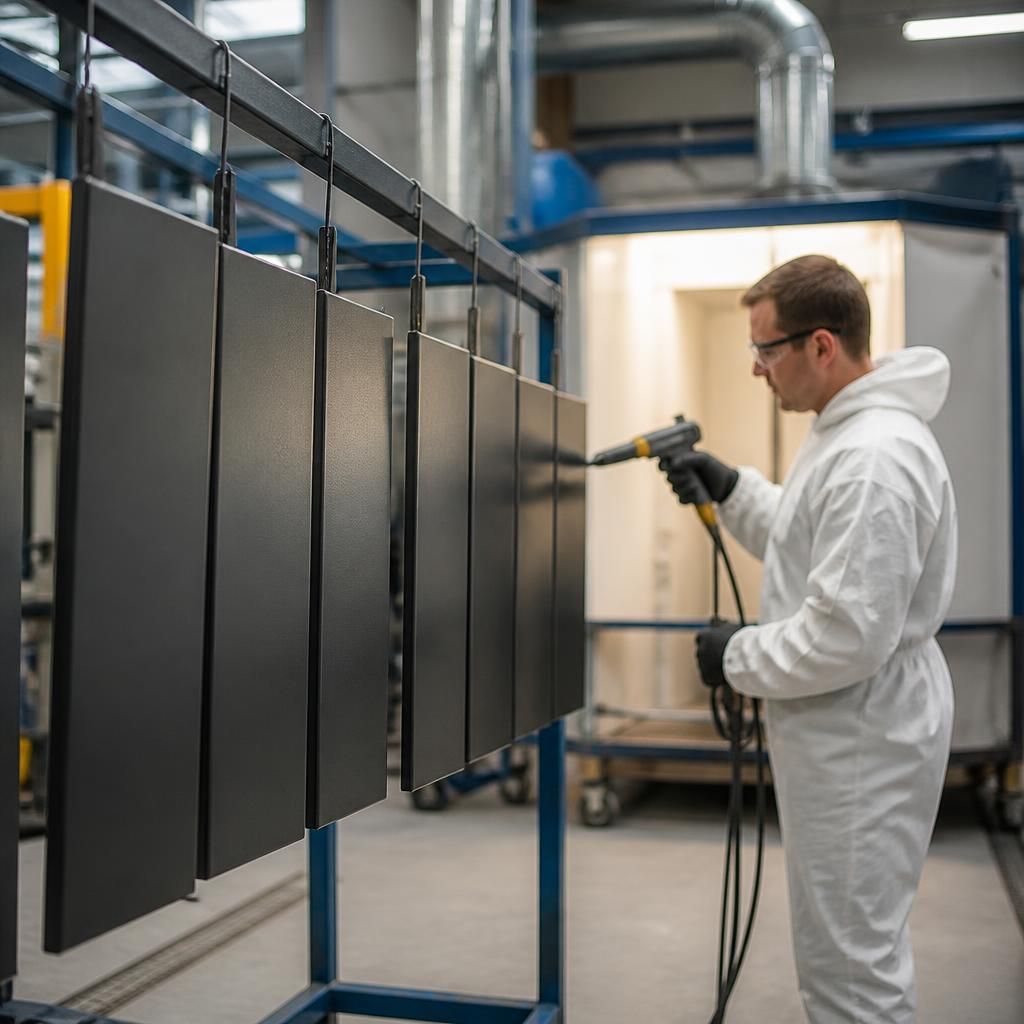
Laboratory durability results can help compare nylon and protective coating systems, but they do not translate directly into a fixed number of years in service. Test panels typically isolate particular conditions, whereas an industrial component may experience several stresses at once, such as abrasion combined with moisture, chemicals, temperature changes or mechanical loading.
For that reason, an expected service life is more reliable when it is based on evidence from the intended application. Useful evidence may include:
- performance records from comparable components operating in similar conditions;
- test panels exposed to the relevant process environment;
- inspection findings showing how quickly wear or surface deterioration develops; and
- the point at which coating performance no longer meets the component’s required duty.
This approach gives a more meaningful lifespan estimate than applying a generic figure to every nylon or protective coating. It also helps identify whether a change in coating specification, component design or operating practice would provide a longer service life.