

What is the process for preparing metal surfaces before powder coating is applied?
Before powder coating is applied, metal surfaces are cleaned to remove oil, grease, dirt, rust and other contaminants, then mechanically prepared—often by abrasive blasting—to create a suitable profile for adhesion. The prepared parts are inspected, kept free from contamination and masked where required before powder is applied and cured.
Preparing metal for powder coating involves more than removing visible dirt: the component must be assessed, corrected, chemically pre-treated where appropriate, correctly supported and protected so the coating can form a continuous, durable film. The exact preparation route depends on the base metal, its previous use, the condition of welds and edges, and the performance required from the finished component.
1. Assess the component and its previous treatment
Before processing begins, the component should be identified by substrate. Mild steel, stainless steel, aluminium and galvanised steel each behave differently during preparation and coating. Previously painted, plated or treated parts may require a different approach from newly fabricated metal. Any known service conditions, such as outdoor exposure, contact with chemicals or repeated abrasion, should also be considered because they influence the required pre-treatment and powder system.
Fabrication details are important at this stage. Welds should be continuous where the design requires them, and weld spatter, sharp burrs, excessive grinding marks and loose scale can create visible defects or weak points in the finished coating. Holes, folds and enclosed sections should be checked for trapped residues and for adequate drainage during subsequent processing.
2. Correct fabrication defects before coating
Powder coating follows the shape of the metal rather than concealing major surface imperfections. Scratches, pits, sharp corners, deep tooling marks and uneven weld profiles may remain visible after curing. These defects should therefore be addressed before the component enters the coating line. Edges may need to be softened, welds dressed and unsuitable filler materials removed or replaced with products compatible with the coating process.
Design also affects the result. Enclosed sections need suitable drain and vent holes, while overlapping faces can retain process chemicals or moisture. If these features are absent, liquid can remain trapped during preparation and later cause staining, blistering or corrosion beneath the coating. Components intended for coating should be designed with access for processing wherever possible.
3. Apply the appropriate chemical pre-treatment
After the surface has been physically prepared, a chemical pre-treatment may be used to improve corrosion resistance and provide a more suitable surface for the powder film. The chemistry is selected according to the substrate. Steel may require an iron or zinc-based conversion treatment, while aluminium and galvanised surfaces need processes suited to their different oxide or zinc layers. Stainless steel may require specialist treatment where adhesion or corrosion performance demands it.
Pre-treatment is not a universal substitute for sound fabrication or proper surface preparation. It must be applied consistently, rinsed effectively where the process requires rinsing, and followed by controlled drying. Residual salts, moisture or treatment chemicals can interfere with adhesion and may lead to premature coating failure.
4. Manage edges, joints and difficult areas
Coating coverage is influenced by geometry. Sharp external edges can receive a thinner powder film than adjacent flat areas, while recessed corners and internal angles can be affected by the electrical characteristics of the application process. Rounded edges, suitable weld profiles and sensible joint design help the powder reach the areas that need protection.
Bolts, threads, bearing seats, electrical contact points and close-tolerance faces may need temporary protection during processing. The protection must be positioned accurately so that it does not leave unwanted exposed metal or interfere with assembly. Internal cavities and narrow gaps also need consideration, particularly where the component will be exposed to moisture after installation.
5. Prepare the component for application
Parts are placed on suitable hooks, racks or other supports that provide stable handling and an effective electrical path during powder application. Contact points should be selected in areas where small marks will not affect assembly, appearance or function. Poor support can result in movement, uneven coverage or difficulty removing the component after curing.
Immediately before coating, prepared parts must be handled in a way that avoids transferring skin oils, dust or other residue back onto the surface. Clean gloves, suitable handling equipment and controlled movement between process stages help preserve the prepared condition. Components should not be left exposed to conditions that allow condensation or surface oxidation to develop.
6. Confirm readiness against the specification
The final preparation decision should be based on the coating specification rather than appearance alone. Relevant checks can include substrate condition, weld quality, edge treatment, the effectiveness of pre-treatment, dryness, masking position and the suitability of contact points. For batch work, the same preparation method should be applied consistently across the parts, with any variation in substrate or fabrication condition identified before coating begins.
Providing accurate drawings, material details, masking requirements and information about service conditions helps the coater select a preparation route that matches the component’s purpose. Good preparation cannot correct unsuitable design, concealed corrosion or contamination introduced after the process, so these issues should be resolved before the parts are released for powder application.
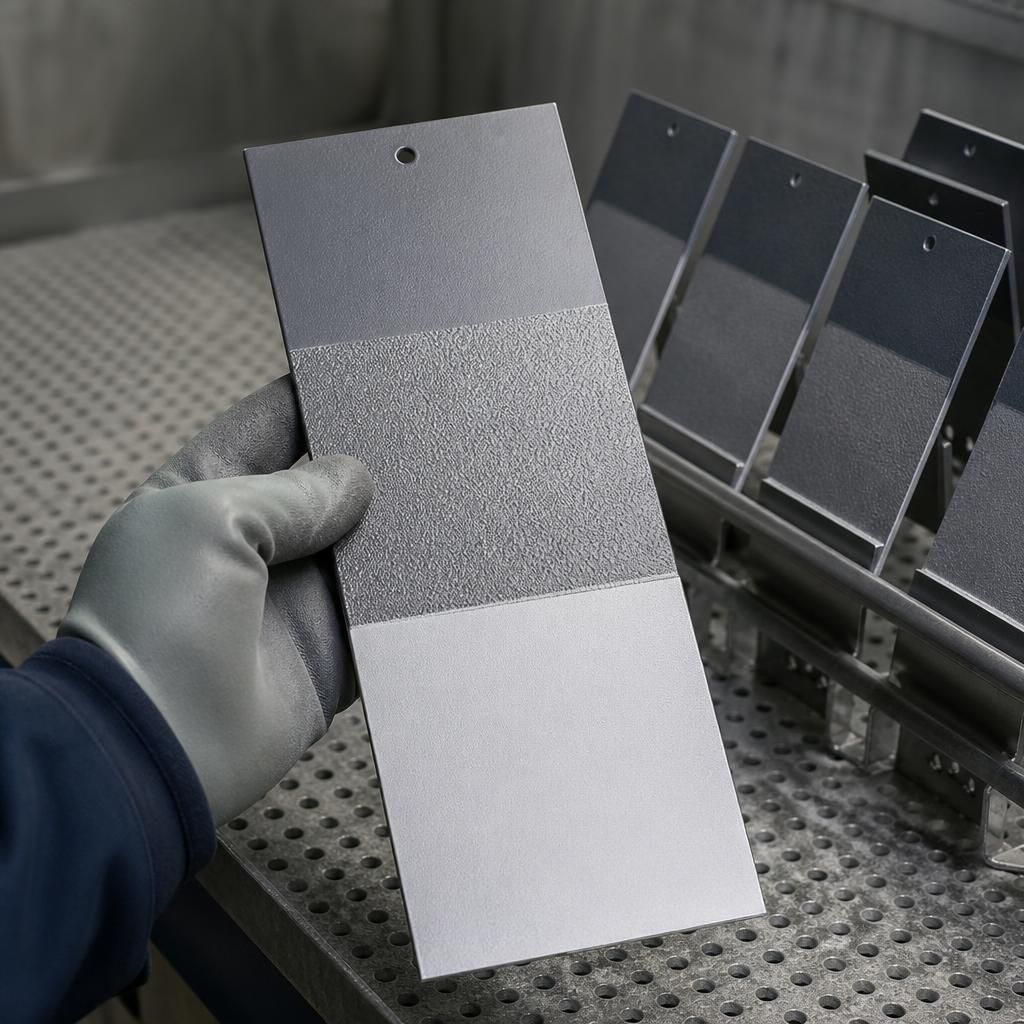
For unfamiliar materials, existing coatings or mixed batches, a representative test piece can be prepared before the full production run. This allows the preparation route to be checked for surface compatibility, adhesion and appearance without committing the entire batch to an unsuitable process.
The test should reflect the component’s actual substrate, welds, edges and service conditions. Its results can then be used to confirm the cleaning, mechanical preparation and pre-treatment requirements, identify areas that need different masking or handling, and establish a consistent method for the remaining parts.