

What are the benefits of using conversion coatings in specialist powder coating pretreatment?
Conversion coatings are chemical pretreatment layers that modify a metal surface before powder coating. They improve the coating’s adhesion, strengthen resistance to corrosion and moisture, and help the finished surface remain durable in demanding service conditions.
The main benefit of a conversion coating is that it chemically modifies the prepared metal surface to create a more stable and uniform foundation for the powder coating system. Unlike a separate paint film, the conversion layer is extremely thin and becomes part of the surface treatment, helping control how the substrate behaves during coating, handling and service.
Conversion coatings provide several practical benefits in specialist powder coating pretreatment:
- More consistent surface condition: The treatment can reduce variations caused by the natural reactivity of the metal, particularly after cleaning and rinsing. A controlled surface gives the subsequent coating process a more repeatable base across batches of components.
- Additional protection during coating manufacture: Metal parts may be exposed to handling, storage or short periods between pretreatment and powder application. A suitable conversion layer can reduce the surface’s susceptibility to rapid deterioration during this stage, provided the treated parts are handled and stored correctly.
- Better resistance at coating defects: Powder coatings are designed to form a continuous protective film, but scratches, chips, cut edges or penetrations can expose the substrate. A conversion layer can limit the tendency of localised surface damage to develop into wider degradation beneath the surrounding finish. Its effectiveness depends on the metal, coating chemistry, preparation quality and service environment.
- Minimal effect on component dimensions: Conversion coatings are not applied as a substantial build layer. This makes them suitable where close tolerances, mating faces, apertures, threads or accurately formed edges must be retained. Masking may still be needed for areas where any chemical treatment is unacceptable.
- Improved process repeatability: When the chemistry, concentration, temperature, contact time, rinsing and drying stages are controlled, conversion coating can make pretreatment less dependent on the variable condition of incoming metal. This is particularly useful for batch production and mixed component schedules.
- Compatibility with complex profiles: Because the process is chemical rather than dependent on direct abrasive contact, it can treat recessed areas, formed sections and intricate surfaces that may be difficult to prepare uniformly by mechanical means alone. Drainage and rinsing design remain important, since trapped process liquid can lead to staining or later coating defects.
The precise benefit depends on the substrate. Aluminium, galvanised steel, mild steel and other alloys do not respond identically to cleaning or conversion chemistry. A treatment selected for one metal may be unsuitable for another, so the pretreatment sequence should be matched to the alloy, existing surface condition and intended operating environment.
Common conversion-coating approaches include phosphate-based treatments and newer alternatives based on non-chromate chemistries. The correct choice is not determined by the treatment name alone. The powder type, required appearance, exposure to moisture or chemicals, component geometry, production volume and environmental requirements all influence the selection. Where mixed-metal assemblies are involved, the process must also account for the different reactions of each exposed substrate.
Preparation before conversion coating is equally important. Oil, grease, fabrication residues, mill scale, oxidation and previous treatments can prevent the chemistry from contacting the metal evenly. Cleaning stages therefore need to remove contamination without damaging the substrate. Rinsing must then remove residues from the active treatment, while drying should prevent water marks, retained moisture and flash oxidation before powder application.
Conversion coatings are not a substitute for sound powder application or appropriate component design. They cannot correct deeply corroded metal, contamination left on the surface, poor drainage, inadequate curing or damage caused after coating. Their role is to form one controlled stage within a complete pretreatment and finishing system.
For a reliable specification, assess the following points with the pretreatment provider:
- Which metals and alloys are being treated?
- What contaminants or existing finishes must be removed first?
- Is the conversion chemistry suitable for the powder coating and service environment?
- How are bath condition, rinsing and drying controlled?
- Are recessed areas, welds, edges and drainage points adequately addressed?
- What inspection or testing is used to confirm that the treated surface is suitable for coating?
Used within a correctly controlled sequence, conversion coating gives specialist powder coating pretreatment a chemically consistent, low-build and adaptable surface treatment. Its value is greatest when the chemistry is selected for the actual substrate and supported by disciplined cleaning, rinsing, drying and application controls.
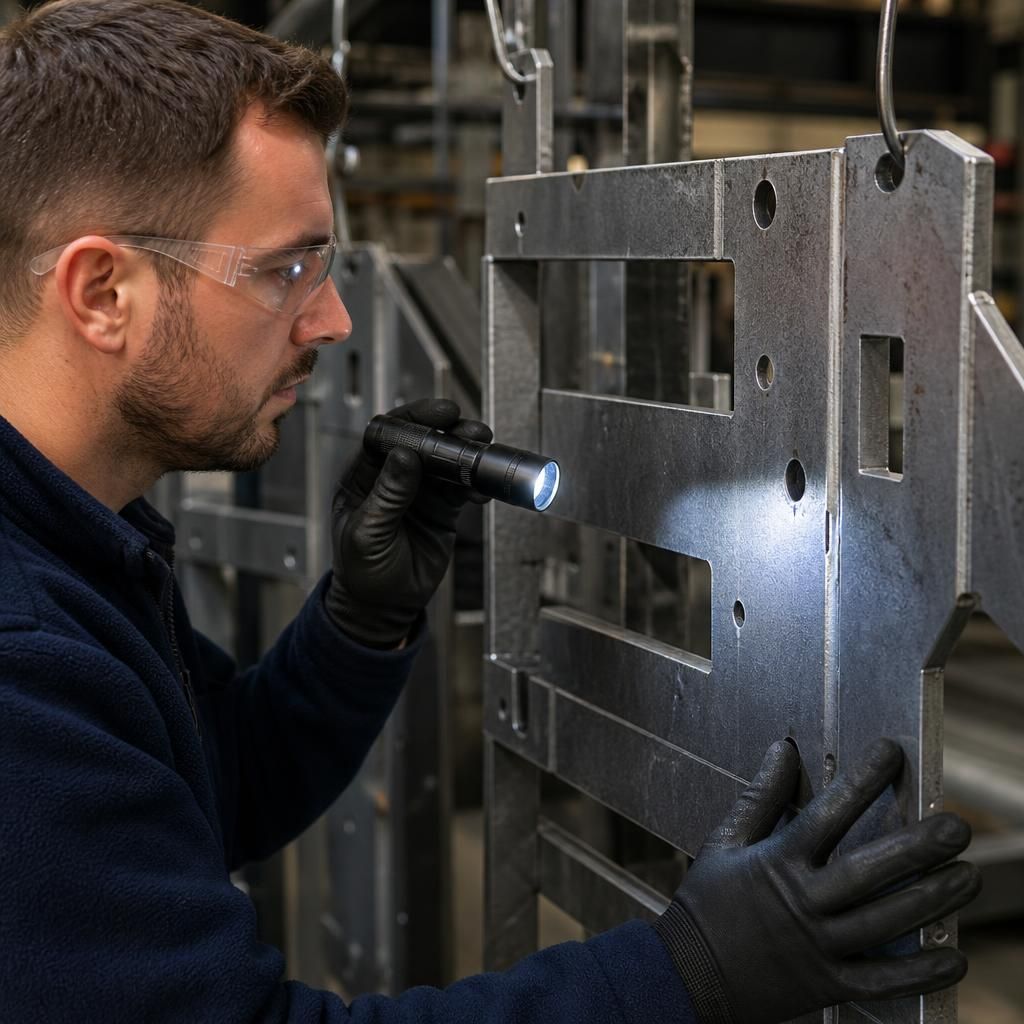
A further benefit of conversion coatings is that they preserve the inspectability of the prepared metal surface. Because the treatment adds negligible film thickness, it does not conceal pits, sharp edges, weld spatter or fabrication damage that could later affect the powder coating. These issues can therefore be identified and corrected before the final finish is applied, rather than being hidden beneath a thicker intermediate layer.
This supports better control of the complete coating system: the conversion layer provides chemical preparation, while the underlying metal remains visible for checking. It is particularly useful where components require documented inspection before coating or where surface defects could compromise the finished part.