

What is the role of degreasing in the surface clean pretreatment process?
Degreasing removes oils, grease and other organic residues from the metal before powder coating, creating a clean surface for subsequent pretreatment and coating. By preventing these contaminants from interfering with adhesion, it helps produce a more consistent, durable and defect-free finish.
Degreasing is the initial chemical preparation stage in surface clean pretreatment. It dissolves, emulsifies or lifts oily process soils so they can be removed from the metal rather than redistributed across it. This prepares the substrate for later cleaning, rinsing and any conversion treatment, where uniform contact with the metal is essential.
Metal components commonly arrive with more than one type of residue. Cutting fluids, stamping oils, drawing compounds, grease, fingerprints, polishing materials and handling deposits can form a thin film that is not always visible. The film may also collect workshop dust and fine metallic particles. Degreasing targets the organic part of this contamination, while separate stages may be needed for rust, mill scale, oxides or inorganic residues.
The degreaser works through a combination of chemistry, temperature, contact time and agitation. Alkaline cleaners can break down and disperse many industrial oils, while surfactants help lift loosened material into the cleaning solution. Spray pressure, immersion movement or mechanical action then assists removal from flat faces, recesses, drilled holes and joints. The correct balance matters: insufficient exposure can leave residues behind, whereas an unnecessarily aggressive treatment can affect the substrate or complicate waste handling.
Degreasing is therefore more than simply wiping a component with a cloth. Wiping may move contamination from one area to another and is difficult to control across complex batches. A controlled process exposes the relevant surfaces to a consistent cleaning action. Components with blind holes, folded sections or overlapping parts require particular attention because oil can remain trapped and later migrate during heating.
Process selection depends on the metal, the type and quantity of contamination, the component’s geometry and the pretreatment stages that follow. Common approaches include immersion cleaning, spray washing and, for suitable applications, solvent-based cleaning. An industrial coater must also consider whether the chosen chemistry is compatible with aluminium, steel, galvanised material or other substrates. A cleaner that is suitable for one metal may cause staining, etching or an undesirable surface condition on another if its concentration or exposure is not controlled.
After degreasing, rinsing has an important role. It removes spent cleaner, suspended contamination and alkaline residues from the component. If rinsing is incomplete, the remaining chemicals can interfere with subsequent pretreatment, leave marks after drying or contribute to coating defects. Water quality, spray coverage, drainage and the condition of the rinse stages all influence how effectively the cleaned surface is prepared for the next operation.
Drying is also part of the sequence rather than an incidental final step. Moisture can remain in seams, cavities and threaded areas, where it may dilute or carry residues into later stages. Components should be arranged to drain effectively, with particular care taken around enclosed sections. Once clean and dry, unnecessary handling should be avoided because contact can introduce fresh oils from gloves, equipment or packaging.
Effective degreasing is assessed through process control as well as visual inspection. Relevant checks can include:
- monitoring cleaner concentration, temperature and operating condition;
- checking spray coverage, immersion time or agitation;
- examining difficult-to-clean areas such as recesses, joints and internal faces;
- confirming that rinsing removes cleaner residues; and
- using suitable surface checks to identify remaining oily films or poor wetting.
A water-break test can provide a practical indication of surface cleanliness: on a suitably clean surface, water tends to form a continuous film rather than separating into beads around oily patches. This is an indicator, not a complete analysis, so it should be used alongside knowledge of the incoming material, the cleaning process and the required finish.
When degreasing is incomplete, the effects may only become apparent later. Remaining oils can cause localised adhesion problems, cratering, fisheyes, pinholes, uneven gloss or areas where the powder does not wet the metal consistently. These defects are often difficult to correct after curing because the contamination is beneath or within the coating system. For this reason, degreasing provides the foundation for the rest of the surface clean pretreatment process, even though it is only one stage within that process.
For batch and specialist metalwork, the practical objective is repeatability: the same cleaning conditions must suit the component design and remain stable as the load changes. Components with heavier oil deposits may require an adjusted cleaning stage or additional preparation rather than simply increasing the strength of the solution. Properly controlled degreasing removes the variables that would otherwise make subsequent pretreatment and powder coating less predictable.
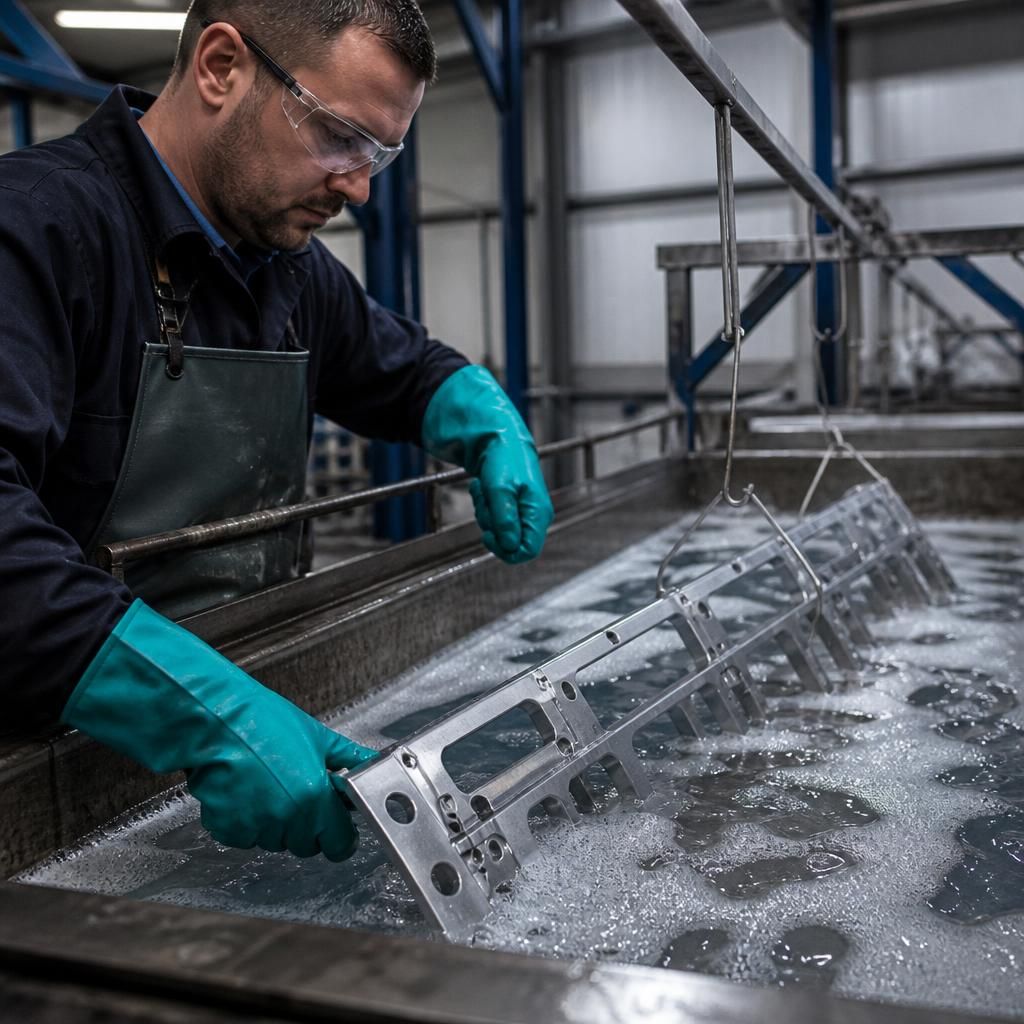
Degreasing gives the rest of the pretreatment system a reliable starting point by removing the invisible films that can mask the metal surface. This is important because later chemical treatments respond to the exposed substrate, not to the oil or grease covering it. A component may appear visually clean while still carrying enough residue to alter how the pretreatment solution spreads and reacts.
Its role is therefore both practical and diagnostic. If a cleaned component does not accept the following treatment evenly, the cause may be inadequate degreasing rather than a fault in the conversion stage or powder application. Reviewing the incoming contamination, component design and cleaning conditions helps identify that cause before coating, reducing the risk of defects being attributed to the wrong part of the process.
Discuss degreasing for your metal components
Discuss your metal components with Powder-coatings.co.uk to review the degreasing requirements for their substrate, geometry and incoming contamination before powder coating. This helps identify a suitable surface clean pretreatment approach for your batch or specialist coating work.