

What is the process for applying chromate powder coating pretreatment?
Chromate powder coating pretreatment involves cleaning and rinsing the metal, applying a chromate conversion coating, then drying the prepared surface before powder application. The powder is subsequently cured under controlled heat so it forms a durable finish bonded to the pretreated metal.
Applying chromate powder-coating pretreatment is a controlled preparation and verification process designed to create a chemically receptive surface for the powder finish. The exact sequence depends on the base metal, its condition, the required corrosion performance and the specification for the finished component.
- Review of the component and coating specification. Before processing, the applicator assesses the alloy or steel grade, component dimensions, welds, cast areas, previous coatings and areas that must remain uncoated. Drawings should identify threads, bearing faces, electrical contact points and close-tolerance surfaces requiring masking. The required powder type, colour, film thickness and cure schedule are also confirmed at this stage.
- Surface assessment and preparation. Oil, grease, mill scale, corrosion products, weld residues and handling contamination can interfere with conversion coating formation. Components are therefore assessed for defects that need attention before entering the chemical process. Sharp edges, burrs, weld spatter and poorly finished joints may remain visible through the final coating, so they should be corrected where the specification requires a uniform appearance or reliable edge coverage.
- Control of the chemical treatment. The chromate stage must be matched to the substrate. Aluminium, galvanised steel and other zinc-bearing surfaces do not react in exactly the same way, so the chemistry and operating conditions need to be suitable for the metal being treated. Concentration, pH, temperature, contact time and line speed are controlled within the process specification. These variables influence whether the conversion layer is continuous and correctly formed; more chemical does not automatically produce better protection.
- Handling and drying. After treatment, components must be handled without touching or contaminating the prepared surface. Parts are positioned so that liquid cannot remain trapped in box sections, seams, recesses or threaded holes. Effective drying is particularly important for hollow or complex fabrications, as retained moisture can cause blistering, poor adhesion or surface defects during subsequent coating.
- Masking and powder application. Masking materials are fitted to protect surfaces that must not receive coating. The powder is then applied using electrostatic equipment, with the part correctly earthed and the gun settings adjusted for its geometry. Recesses, corners and Faraday-cage areas may require changes in gun angle, distance or application technique. The operator checks coverage and film build rather than relying only on the visual appearance of the loose powder.
- Curing to the powder specification. The coated component is heated until the powder melts, flows and cross-links. Cure requirements relate to the temperature reached by the metal and the specified time at that temperature, not simply to the oven temperature or the time spent inside it. Large, heavy or irregular parts may heat at different rates from small sections, so the process must account for the component’s mass and geometry.
- Inspection and release. Once the finish has cooled, the component is checked for coverage, runs, pinholes, inclusions, exposed edges, colour consistency and damage from handling. Where required by the project specification, checks can also include dry-film thickness, adhesion and cure verification. Any non-conformance is assessed before release; local repair, stripping and reprocessing may be appropriate depending on the defect, substrate and acceptance criteria.
Process records commonly include the substrate, preparation route, chemical control results, powder identification, application settings, oven conditions and inspection findings. Maintaining these records helps link the finished coating to the agreed specification and makes it easier to investigate defects across a batch.
Chromate chemistry also requires controlled handling. The applicable safety data and workplace controls determine the necessary personal protective equipment, ventilation, chemical storage, spill response and waste arrangements. The particular chromate system must be identified because environmental and handling requirements vary between formulations. Chemical residues and contaminated rinse water should be managed through the approved waste route rather than discharged without authorisation.
For a specific project, the most important inputs are the metal type, component design, expected service conditions, masking requirements, finish specification and acceptance tests. Providing these details before processing allows the pretreatment and powder-coating parameters to be selected as one compatible system rather than treating the chromate stage and final coating as separate operations.
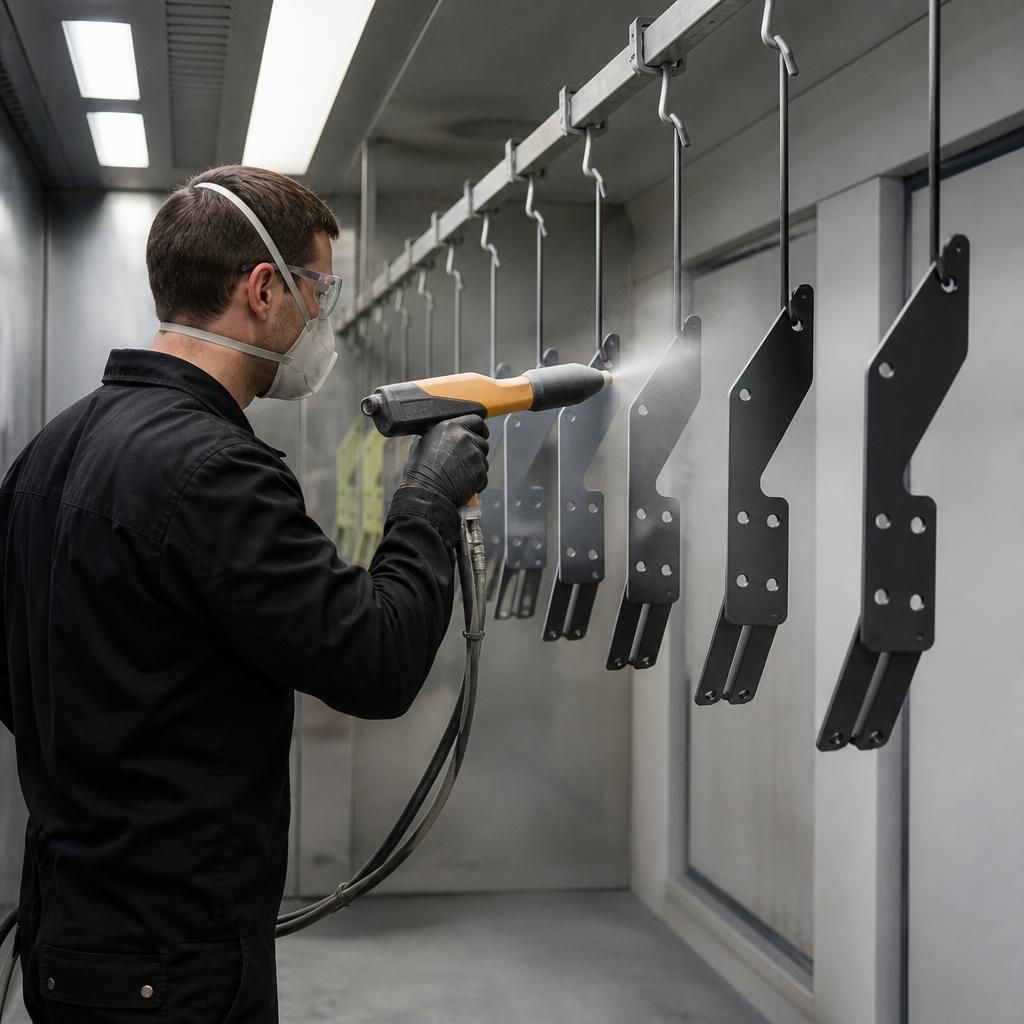
Process validation confirms that the selected chromate pretreatment and powder system work together on the actual component design before full production begins. A representative sample or trial component can be processed through the intended cleaning, conversion, drying, powder application and curing stages, allowing the coating team to assess areas such as recesses, joints, edges and masked surfaces that may behave differently from a flat test panel.
The trial finish is then reviewed against the agreed acceptance criteria. Depending on the specification, this may include checking appearance, film thickness, adhesion and cure, while any areas of incomplete coverage or surface disturbance can be investigated before the batch is processed. This approach helps confirm that the chosen chemical route, application method and oven cycle are suitable for the substrate and component geometry.
Discuss Your Chromate Powder Coating Pretreatment Requirements
Discuss your chromate powder coating pretreatment requirements with the coating team, including the substrate, component design, service conditions and required acceptance criteria. This information can be used to assess a suitable pretreatment and powder-coating process for your project.