

What preparation steps are involved before applying zinc phosphate spray pretreatment?
Before zinc phosphate spray pretreatment, the metal is cleaned and degreased to remove oil, grease, dirt and other contaminants. It is then rinsed, dried and inspected to confirm the surface is clean and suitable for consistent pretreatment.
Preparation before zinc phosphate spray pretreatment involves making the component physically suitable for processing, confirming the correct treatment specification and arranging it so every required surface can be reached. The aim is to prevent defects caused by rust, scale, weld residue, trapped fluids, poor drainage or contamination during handling.
Key preparation steps include:
- Review the component and coating requirements. Identify the base metal, intended powder coating system, service conditions and any areas that must remain untreated. Different metals and assemblies may require different process settings, so the pretreatment specification should be agreed before production begins.
- Assess the condition of the metal. Heavy corrosion, mill scale, oxidation, weld spatter, sharp burrs and loose material can interfere with the formation of a uniform phosphate layer. These defects should be removed or corrected using a suitable mechanical process before the part enters the spray line.
- Complete fabrication and repairs first. Drilling, grinding, welding and other fabrication work should normally be finished before pretreatment. Any remaining weld spatter or grinding residue may affect the surface profile, while later fabrication can damage the prepared surface and expose untreated areas.
- Check joints, seams and cavities. Box sections, folded edges and partly enclosed assemblies need particular attention. Gaps should not retain process chemicals or moisture, and components should have suitable drainage and ventilation where their design permits. Trapped liquid can cause staining, poor powder adhesion or corrosion beneath the finished coating.
- Mask areas that must remain free of treatment or powder. Threads, precision bores, electrical contact points and machined faces may need suitable plugs, caps or other masking. Masking materials must be compatible with the pretreatment and subsequent curing process, and should not shed particles onto the metal.
- Arrange secure loading and handling. Components should be positioned on the racking system so the spray can reach the relevant faces without excessive shadowing. Contact points should be kept as small as practical and placed where any rack marks will have the least effect. Parts must also be stable enough to avoid movement during spraying.
- Confirm process compatibility. The treatment line should be checked for the required spray coverage, chemical stages, water quality, temperature control and contact conditions. The selected process must be appropriate for the substrate and compatible with the powder coating specification rather than applied as a generic treatment.
- Protect the prepared surface before processing. Once a component has been mechanically prepared, it should be handled with clean gloves or suitable equipment and protected from fingerprints, workshop dust, moisture and contact with contaminated surfaces. Unnecessary delay or poor storage can reintroduce contamination before the phosphate stage.
Before zinc phosphate is applied, the operator should verify that the part identification, racking, masking and process route are correct. Particular attention is needed for mixed-metal assemblies, complex fabrications and parts with concealed faces, as these can respond differently from simple, open steel components.
Preparation is complete only when the component is physically sound, accessible to the spray, free from fabrication residues and suitable for the specified chemical process. This provides the conditions needed for a consistent zinc phosphate conversion layer and gives the later powder coating a properly prepared surface to bond to.
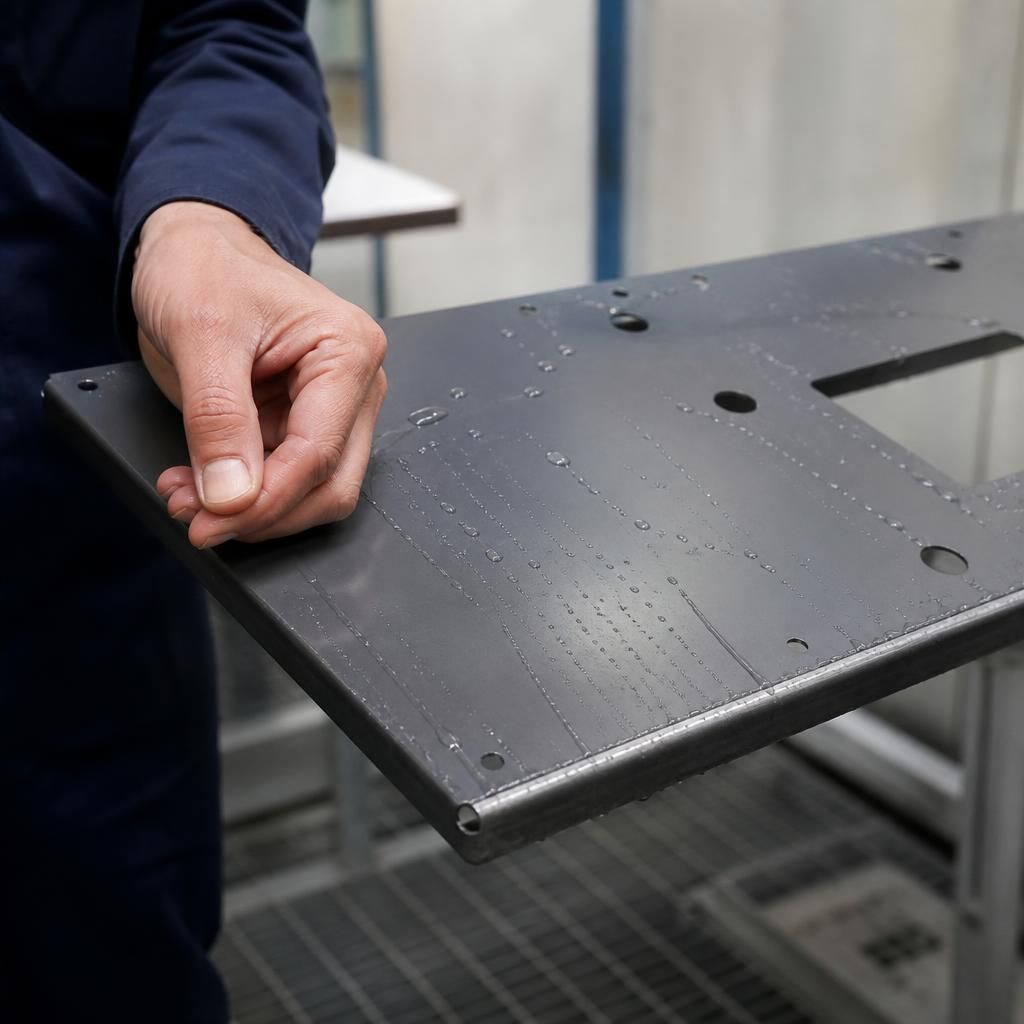
A practical final check before zinc phosphate spray pretreatment is the water-break test. When a clean metal surface is wetted, the water should form a continuous film. Beading, separating or retreating from areas may indicate residual oil, grease or another hydrophobic contaminant that could interfere with the conversion coating.
This check is particularly useful after degreasing and before the component is loaded for treatment. It should be carried out alongside a visual inspection, because water behaviour will not identify every issue, such as embedded abrasive residue, scale or surface damage. Any failed area should be cleaned again and reassessed before the chemical stage begins.
Discuss your zinc phosphate spray pretreatment requirements
Discuss your component materials, geometry and coating specification with Powder-coatings.co.uk to establish a suitable preparation and zinc phosphate spray pretreatment route. This helps ensure the proposed process reflects the part’s design and intended service conditions.