

What types of materials can be effectively coated using electrostatic powder coating?
Electrostatic powder coating is most effective on electrically conductive metal substrates, including steel, aluminium, iron and many fabricated metal components. Specialist metals and prepared galvanised surfaces may also be suitable, provided the substrate, pretreatment and curing requirements are compatible with the chosen powder coating.
Electrostatic powder coating is primarily suited to rigid, electrically conductive components that can withstand the heat of oven curing. In practice, suitability depends not only on the base material but also on its alloy, surface condition, shape, thickness, and any treatments already applied. The coating must be able to attract the charged powder, retain it during handling, and tolerate the curing cycle without distortion or degradation.
Commonly suitable substrate categories include:
- Carbon and mild steel: These are widely used for fabricated brackets, frames, panels, enclosures, machinery parts and structural components. Their surface condition and the level of corrosion protection required determine the appropriate cleaning and pretreatment process.
- Stainless steel: Stainless components can be coated where a coloured, decorative or additional protective finish is required. The surface normally needs careful preparation because its corrosion-resistant oxide layer can affect adhesion if it is not treated correctly.
- Cast iron: Cast components can generally be coated, although their porous surface may hold oil, moisture or gases. Thorough cleaning and suitable preheating or preparation may be needed to reduce contamination, pinholing and other surface defects.
- Zinc-coated substrates: Galvanised and zinc-plated parts may accept powder coating, but they require a pretreatment system designed for zinc. Trapped moisture or gases can be released during curing, so the coating specification and preparation method need to account for outgassing.
- Copper, brass and other conductive alloys: These can be technically coat-able, but their electrical and thermal characteristics, surface oxides and heat sensitivity need to be assessed. The selected powder and pretreatment should be compatible with the particular alloy rather than chosen solely by appearance.
Aluminium components are also frequently selected for powder coating, but alloy composition and fabrication method can influence the result. Extrusions, castings and machined parts may have different levels of porosity, oxide formation or contamination. Sharp edges, recesses and enclosed sections can also affect powder coverage and curing, so the component design should be reviewed before processing.
Material condition is as important as material type. Rust, mill scale, oil, grease, silicone, weld residues, fingerprints and old coatings can interfere with adhesion. Powder coating does not conceal poor preparation reliably: contaminants may cause blistering, cratering, flaking or uneven appearance. A suitable process may involve degreasing, abrasive preparation, chemical pretreatment or removal of an existing finish, depending on the substrate and the required service environment.
Fabricated assemblies need particular attention. A part made from several metals may contain areas with different reactivity, surface textures or curing behaviour. Welded joints can retain residues, while overlaps, boxed sections and drainage holes may trap pretreatment chemicals or moisture. Components should therefore be designed or prepared so that all surfaces can be cleaned, drained, electrically grounded and exposed to the curing conditions.
Non-conductive materials such as ordinary wood, glass, rubber and most unmodified plastics are not straightforward candidates for conventional electrostatic powder coating. They do not naturally attract the charged powder in the same way as a metal substrate, and many cannot tolerate the temperatures required to melt and cure the coating. Special conductive primers, low-temperature powders or alternative application methods exist for some specialist situations, but these require separate technical validation rather than being assumed suitable.
Small non-metallic features attached to a metal component also need checking. Rubber seals, plastic bushes, bearings, adhesives, electronic parts and heat-sensitive inserts may soften, deform, outgas or become damaged in the curing oven. Where possible, these items are removed before coating and refitted afterwards. If removal is not practical, the complete assembly should be assessed against the curing temperature and the risk of masking, shadowing or coating contamination.
The correct assessment should therefore record the substrate material, alloy or grade, component dimensions, existing finish, intended use and exposure conditions. It should also identify whether the part requires corrosion resistance, chemical resistance, impact resistance, electrical insulation or a particular decorative appearance. A coating specification based on these factors will produce a more reliable result than selecting powder solely by colour or gloss level.
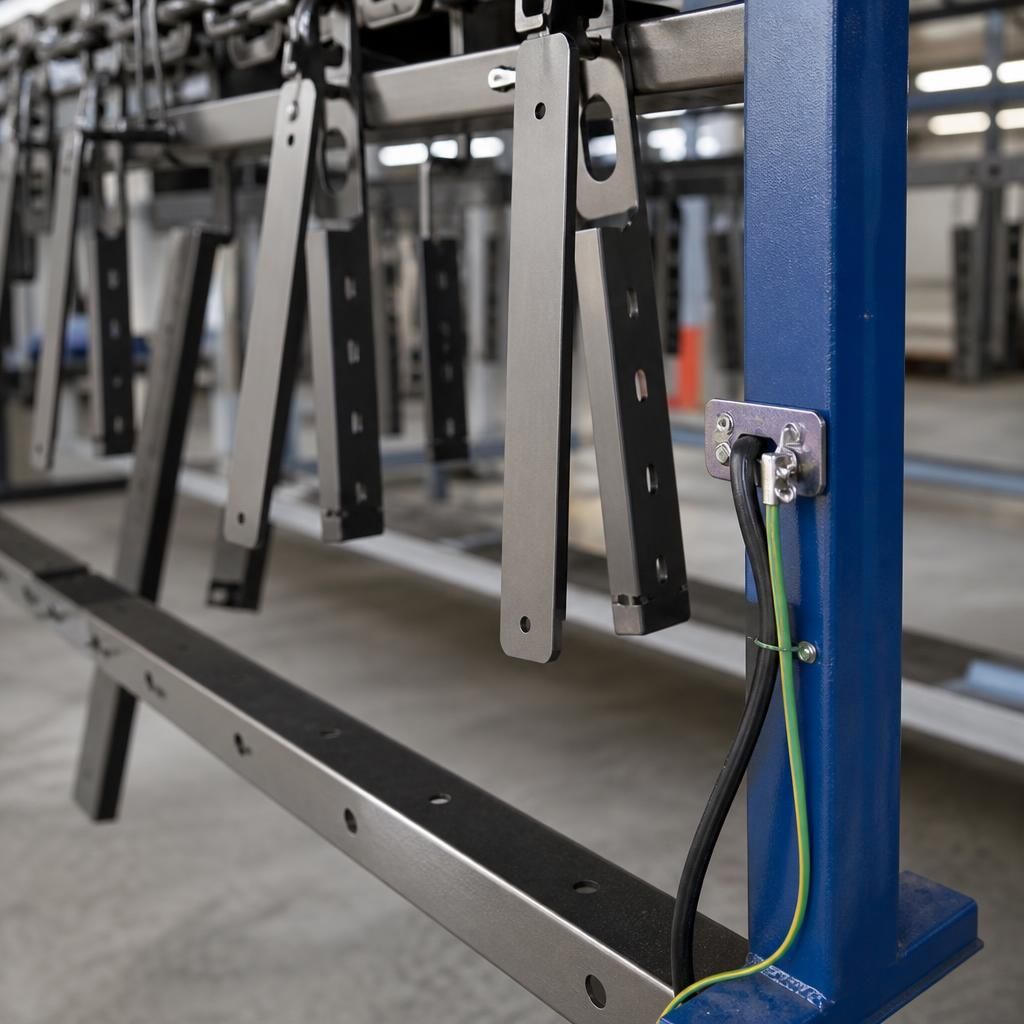
Electrical continuity is a key consideration when assessing a metal substrate for electrostatic powder coating. The component must be adequately grounded so the charged powder is attracted to its surface during application. Poor grounding, insulated contact areas or unreliable rack connections can lead to uneven deposition and areas with insufficient coverage.
Grounding points may also leave small uncoated marks where the component touches its support. These locations should be planned on non-critical faces or addressed during finishing. For complex parts, reviewing the hanging method and contact points alongside the material specification helps ensure that the selected substrate can be coated consistently.