

How do conveyor powder coating systems affect maintenance costs and downtime in industrial operations?
Conveyor powder coating systems can reduce maintenance costs and downtime by automating material handling and applying consistent finishes, which limits manual intervention and helps identify servicing needs through planned maintenance. Their effect depends on correct system configuration, disciplined cleaning and inspection, and suitable control of powder recovery and filtration.
Conveyor powder coating systems affect maintenance costs and downtime by changing where labour, wear and production risks occur. They can reduce handling-related disruption and make production more repeatable, but they also introduce service requirements for the conveyor drive, hooks, bearings, spray equipment, curing oven, booth and controls. The overall result depends on system design, component access, product mix and how well maintenance work is integrated with production planning.
Maintenance costs usually fall into four categories:
- Routine servicing: lubrication, adjustment, replacement of wear parts and inspection of moving equipment.
- Process-equipment maintenance: servicing spray guns, powder feed equipment, booth components, filters, heaters and temperature controls.
- Unplanned repair: correcting failures that stop or restrict the line, such as a drive fault, damaged hook or conveyor obstruction.
- Production impact: lost capacity, rework, delayed orders and additional labour caused by equipment being unavailable or operating below its intended rate.
A conveyor system does not remove maintenance work; it makes maintenance more structured and transfers some effort from manual part movement to the line’s mechanical and process equipment. This can be advantageous where a coating operation handles repeated batches, heavy components or a high volume of similar parts. The cost per coated component may become more predictable because the same route, loading method and curing conditions are used repeatedly.
Conveyor components are a major influence on mechanical maintenance. Chains, trolleys, bearings, sprockets, drives and hooks are exposed to continuous movement and to powder contamination. Poorly loaded parts can create imbalance, contact the booth or oven, and place additional stress on the conveyor. Excessive powder build-up can restrict movement or interfere with moving surfaces. Choosing components suitable for the load, temperature and operating environment reduces the likelihood that a small mechanical issue will develop into a line stoppage.
Hooks deserve particular attention. They provide the electrical path needed for effective charging and must also support the workpiece securely through spraying and curing. Contaminated, bent or worn hooks can cause poor transfer, unstable loading or inconsistent coating results. A planned hook-management process can include inspection, rotation, stripping or replacement, with defective hooks removed before they affect a batch. This is both a quality control measure and a way of preventing avoidable interruptions.
Access for maintenance has a direct effect on downtime. Equipment that can be reached safely without dismantling adjacent systems is generally easier to inspect and repair. Useful design features include accessible inspection points, guarded but serviceable drives, clear access around filters and guns, suitable isolation points and controls that identify faults accurately. These details may have little effect on the coating specification, but they can significantly affect how long a fault takes to diagnose and correct.
The curing oven can also influence both cost and availability. Burners or electric heating elements, fans, temperature sensors, insulation and air circulation equipment all require attention. A temperature-control fault may not stop the conveyor mechanically, but it can prevent coated parts from being released because the required cure cannot be demonstrated. Monitoring actual oven performance and checking sensors and circulation equipment helps distinguish a heating problem from a powder or application problem, reducing unnecessary adjustments elsewhere in the line.
Spray equipment creates a different maintenance consideration. Guns, nozzles, hoses, pumps and powder feed equipment can gradually lose performance through wear, contamination or incorrect adjustment. Symptoms may include uneven coverage, excessive overspray, poor edge coverage or a need to slow the line. Replacing worn items before they affect a full production run is often less disruptive than investigating coating defects after a batch has passed through the system.
Changeovers can be a significant source of downtime, particularly where the system applies different colours, powder types or coating specifications. The time involved may include removing residual powder, changing feed equipment, adjusting gun settings, checking the booth and confirming that the next product is correctly configured. A layout that separates clean and contaminated areas, provides suitable access and supports repeatable settings can make changeovers more controlled. Production planning also matters: grouping compatible work can reduce unnecessary changes without compromising customer requirements.
Downtime is not limited to complete stoppages. Reduced line speed, repeated gun adjustments, rejected parts, curing delays and waiting for maintenance support can all reduce effective capacity. A line may appear to be running while producing fewer acceptable parts than planned. For this reason, maintenance performance should be assessed alongside coating quality and throughput rather than by counting breakdowns alone.
Useful measures for an industrial operation include:
- time spent on planned servicing compared with emergency repairs;
- recurring faults by component or process stage;
- unplanned stoppage duration and the cause of each interruption;
- rework or rejection associated with equipment condition;
- changeover duration and the amount of powder or material discarded;
- availability of critical spares and the time required to obtain them; and
- the difference between scheduled production time and productive output.
These records help identify whether the main cost is mechanical wear, application instability, oven performance, poor loading practice or changeover inefficiency. They also prevent maintenance decisions being based solely on the age of the equipment. A relatively new line can experience avoidable downtime if it is overloaded, poorly configured or operated outside its intended process conditions.
Planned maintenance should be based on the whole coating route. Mechanical checks can cover chain tension, lubrication points, bearings, drives, trolleys and hooks. Process checks can cover powder feed, gun condition, earthing, booth surfaces, temperature measurement and air movement. Safety interlocks, emergency stops and guarding also need functional checks, because a control or safety fault can prevent the line from operating even when the mechanical equipment is intact.
Spare-parts planning is another way to control downtime. Items with predictable wear, such as hooks, nozzles, seals, filters and selected conveyor components, should be identified before the system is commissioned. Critical parts should be matched to the actual equipment and kept under a controlled stock process. This avoids extended disruption caused by discovering during a breakdown that a non-standard part is required.
However, a conveyor system can increase costs if it is badly matched to the application. An unsuitable load rating, insufficient clearance, poor hook design or inadequate oven capacity may create repeated restrictions. A system designed for one product range may also become inefficient if later work introduces substantially different dimensions, weights, colours or coating requirements. Assessing current and expected production conditions before installation is therefore important when comparing purchase price with whole-life maintenance and downtime costs.
For manufacturers and fabricators evaluating a conveyor powder coating system, the most useful question is not simply how often the line requires maintenance. It is whether maintenance can be planned, completed safely and isolated from productive work wherever possible. A well-configured system with accessible components, clear fault information, suitable spares and disciplined operating procedures is more likely to keep interruptions controlled than one selected on initial cost alone.
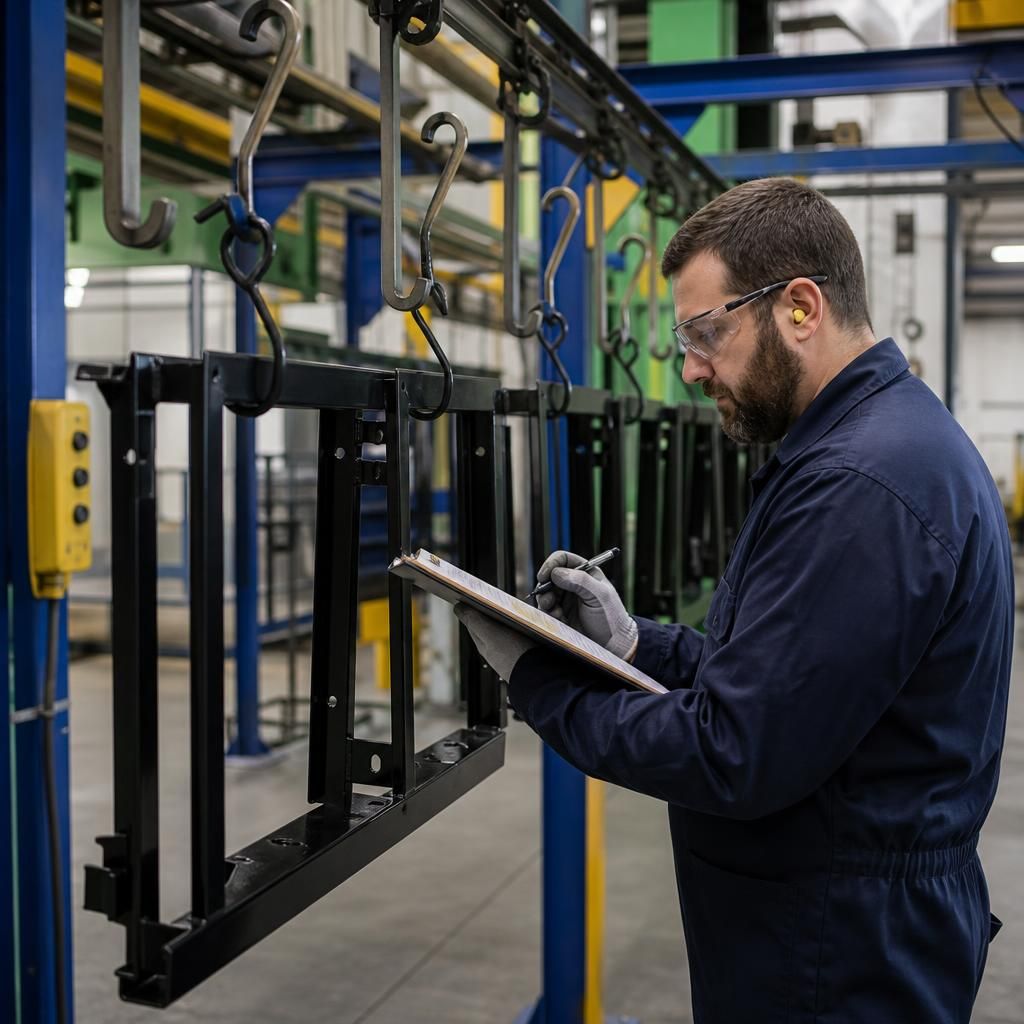
Downtime from a conveyor powder coating system includes the recovery period after a fault, not only the time spent repairing it. Once the line restarts, operators may need to remove affected parts, check booth and oven conditions, confirm powder settings and inspect the first coated components before normal production can resume.
A defined restart procedure limits the cost of these interruptions. It should identify which parts may require inspection or reprocessing, specify the checks needed after mechanical or temperature-related faults, and record approval before the batch is released. This prevents questionable components from progressing through production and helps separate a genuine equipment fault from defects caused during recovery.