

What types of abrasive media are used in metal shot blasting, and how do they impact the effectiveness of the process?
Abrasive media used in metal shot blasting include steel shot, steel grit, glass bead and aluminium oxide, with each option producing a different balance of cleaning power, surface profile and finish. Harder, angular media remove scale and coatings more aggressively, while spherical or finer media provide gentler cleaning and a smoother appearance.
Abrasive media determine how quickly metal shot blasting removes contaminants, how deeply it alters the surface and what finish remains for subsequent coating. The correct choice depends on the metal, the material being removed, the required surface profile, the component’s geometry and the coating system that will follow.
Media are selected by considering several linked characteristics:
- Hardness: harder particles cut into tough scale, corrosion products and old coatings more readily. Excessive hardness can create an unnecessarily coarse profile or damage thin sections.
- Shape: spherical particles mainly clean and peen the surface, whereas angular particles cut and abrade it. This distinction affects both removal rate and the shape of the surface key available to a primer.
- Size: larger particles deliver greater impact energy and can reach heavily contaminated areas, while smaller grades enter narrow recesses and produce a more controlled profile.
- Density: denser media transfer more energy at a given operating condition. Lower-density alternatives can be useful where a gentler action is required, but may need different pressure or blasting parameters.
- Durability: reusable media retain their working characteristics over multiple cycles, although particles gradually fracture, wear or become contaminated. Media breakdown changes the effective size distribution and can alter the finish during a production run.
Metallic media are commonly chosen where efficient removal of mill scale, weld residue, corrosion or previous coatings is required. Cast or cut metallic particles can provide a repeatable blasting action, while stainless options may be considered where ferrous contamination on corrosion-resistant substrates is a concern. The specific grade must still be matched to the substrate: a method suitable for robust structural steel may be too aggressive for thin sheet, machined faces or delicate edges.
Mineral and ceramic media provide further choices when the operator needs cutting action without relying solely on ferrous particles. Garnet, for example, is an angular mineral abrasive that can produce effective cleaning with relatively low embedded-metal risk. Ceramic media are used in controlled applications where a durable, consistent particle is preferred. Plastic media are generally associated with gentler removal of coatings from substrates that could be marked by more aggressive abrasives, although their suitability depends on the coating and the required finish.
Media selection also affects the surface profile. A profile that is too shallow may not provide enough mechanical key for the specified coating, while one that is too deep can increase coating consumption and leave peaks insufficiently covered. The target should therefore be based on the coating manufacturer’s requirements and checked using an appropriate surface-profile method rather than judged solely by appearance.
Particle shape influences the type of profile produced. Rounded media tend to create dimples and compressive effects, which can improve surface uniformity and reduce sharp cutting marks. Angular media form valleys and peaks through a cutting action, making them more suitable where a defined anchor pattern is needed. This does not mean that the most angular or hardest option is automatically best; an excessive profile can complicate coating coverage and may expose weak areas of the substrate.
The same abrasive can produce different results if the operating conditions change. Nozzle pressure, stand-off distance, angle of impact, travel speed and media flow all affect the energy reaching the component. A larger grade used at a high pressure may remove material rapidly but increase the risk of distortion or over-blasting. Lower pressure, a greater stand-off distance or a faster traverse can reduce the intensity, though these changes may also leave contamination behind. Consistency is particularly important for batches, as variations in settings can produce visible differences in texture and coating performance.
Component geometry must be assessed before choosing the media. Coarse particles may struggle to clean tight internal corners, holes or narrow channels, while fine particles can provide better access but may not remove thick deposits efficiently. Edges, threads, machined tolerances and thin sections require particular care because repeated impact can round edges, alter dimensions or leave abrasive trapped in recesses.
Cleanliness of the media is as important as its type. Oil, moisture, broken-down particles and removed coating residues can transfer contamination back to the workpiece or interfere with the blasting equipment. Reusable systems therefore require separation and replenishment controls so that fractured and contaminated media do not dominate the working mix. Dust extraction also helps maintain process control by removing fine debris rather than allowing it to remain in circulation.
For coating preparation, the final decision should link three requirements: the cleanliness standard, the required surface profile and the condition of the component. A heavily scaled steel fabrication may need an aggressive angular medium, whereas a sound component requiring light preparation may be better served by a controlled, less cutting option. Where the substrate or existing coating is uncertain, a test area can confirm whether the selected media removes the unwanted material without damaging the underlying metal.
After blasting, the surface should be inspected for remaining scale, embedded abrasive, dust, flash rust, excessive roughness and untreated areas. The result should be assessed before coating, because media choice cannot compensate for poor preparation control. In industrial work, recording the media type and grade, equipment settings, cleaning checks and profile results helps maintain repeatability across individual parts and larger batches.
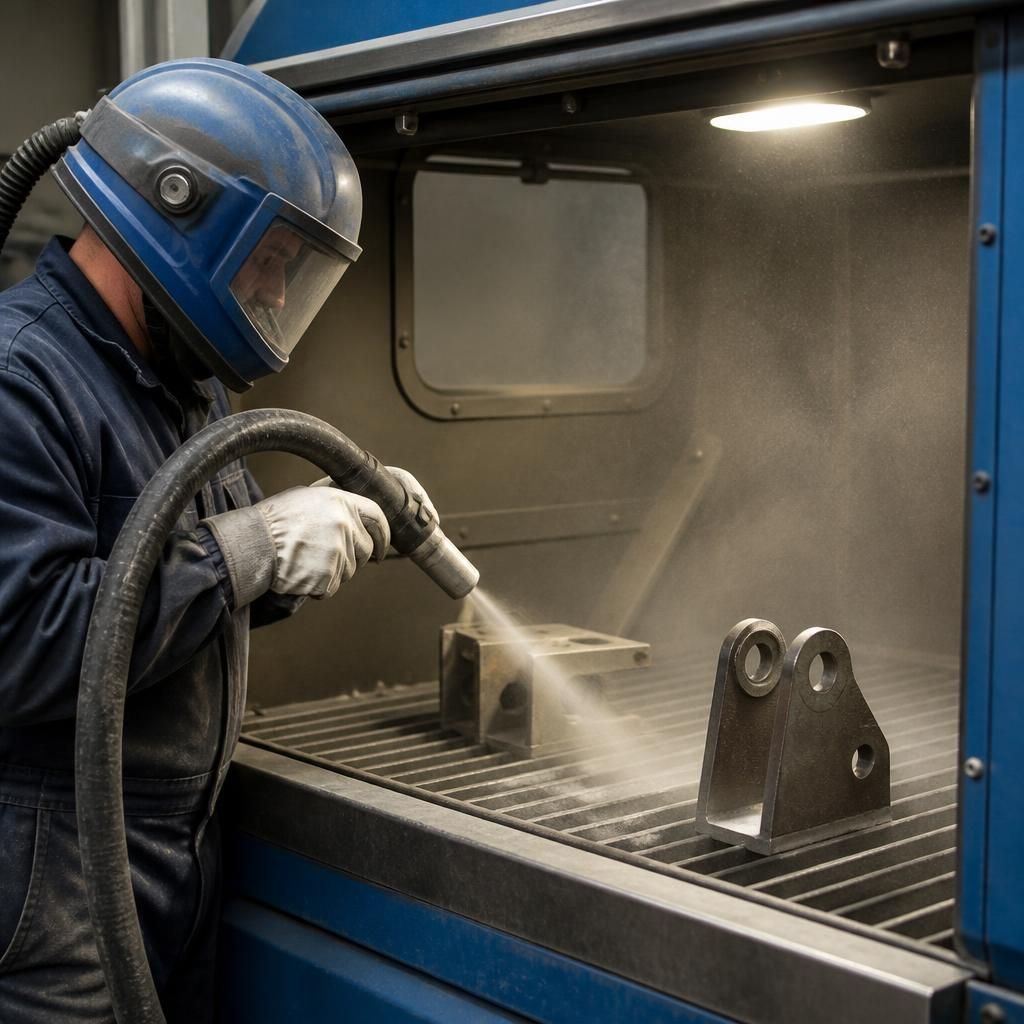
Abrasive media must also be compatible with the blasting equipment. Hard, angular particles can increase wear on nozzles, hoses, blast wheels and internal liners, while media that is too light or irregular may not feed consistently through the system. In a recirculating plant, the media must also pass through the recovery and separation equipment without excessive breakage or loss.
This equipment relationship affects process consistency as well as maintenance requirements. The selected grade should suit the machine’s metering system, recovery arrangements and operating limits, rather than being chosen solely for its cleaning performance. Confirming compatibility before production helps maintain a stable abrasive flow and reduces variation between components in the same batch.
Discuss the Right Abrasive Media for Your Metal Shot Blasting Project
If you are unsure which abrasive media is appropriate for your component, discuss the substrate, existing surface condition and intended coating with the powder-coating.co.uk team before work begins. This allows the preparation approach to be considered against the part’s requirements and the finish required.