

What types of substrates can be treated with surface preparation and blasting techniques?
Surface preparation and blasting techniques can be used on a range of metal substrates, including mild and carbon steel, stainless steel, aluminium, cast iron and other fabricated or cast components. The blasting method and abrasive are selected according to the substrate’s hardness, condition and required surface profile, with more controlled treatment used for softer or previously coated metals.
Surface preparation and blasting are suitable for most sound, heat-resistant metal components that need contamination removed and a controlled key for a subsequent coating. Suitability depends less on the component’s name than on its composition, condition, geometry and the finish required.
Commonly treatable component types include:
- Fabricated items: frames, brackets, enclosures, guards, panels, housings and welded assemblies can generally be prepared, provided weld spatter, sharp edges, trapped debris and fabrication residues are addressed.
- Machined and pressed parts: brackets, fittings, plates and formed components may be blasted to remove oil residues, light oxidation or existing coatings. Masking may be needed where dimensions, threads, bearing faces or close tolerances must be protected.
- Cast components: castings can be prepared to remove mould residue, scale and old finishes. Their surface may contain pores, pinholes or irregularities, so blasting is normally considered alongside cleaning and inspection rather than as a substitute for correcting casting defects.
- Previously coated parts: components with powder coating, paint or other firmly attached finishes can often be stripped or keyed, subject to the condition of the existing layer and the risk of exposing defects beneath it.
- Assemblies and awkward profiles: components with recesses, apertures, returns and weld lines can be treated, although access must be assessed carefully. Areas that cannot be reached by the abrasive stream may retain contamination or require a different preparation method.
Not every substrate is appropriate for conventional abrasive blasting or powder coating. Thin sections can distort under excessive impact, while soft surfaces can be marked or over-profiled. Delicate machined faces, fine threads and sharp edges may therefore require masking, reduced blasting intensity or selective treatment. Components containing bonded materials, seals, bearings, electrical parts or heat-sensitive inserts also need review before preparation, since abrasive ingress or curing temperatures may cause damage.
Non-metallic materials such as rubber, timber and many plastics are not normally suitable for a standard powder-coating process because they may not tolerate the blasting conditions or the heat used to cure the coating. Some specialist plastics and composite components can be prepared by alternative methods, but their compatibility must be established separately; a process suitable for a metal part should not be assumed to suit an insulating or heat-sensitive material.
Substrate condition is equally important. Heavy corrosion, grease, mill scale, moisture, weld residues and remnants of incompatible coatings can affect the result even when the base material is suitable. Surface preparation may expose cracks, laminations, pits or previous repairs that need attention before coating. Parts should therefore be assessed for cleanliness, damage, drainage and access, with hollow or enclosed sections designed so that abrasive and contaminants can be removed.
For mixed-material assemblies, the preparation plan should account for each exposed material rather than treating the item as a single substrate. Different surfaces may need different abrasive grades, pressures or masking arrangements, and some may need to be separated before blasting. This helps avoid uneven profiling, contamination transfer and damage to components that are not intended to receive the coating.
Before work begins, the relevant information is the base material, any existing finish, the areas to be coated, critical dimensions, masking requirements and the service conditions the finished part will face. This allows the preparation method to be matched to the substrate and prevents an aggressive treatment being used where controlled preparation is more appropriate.
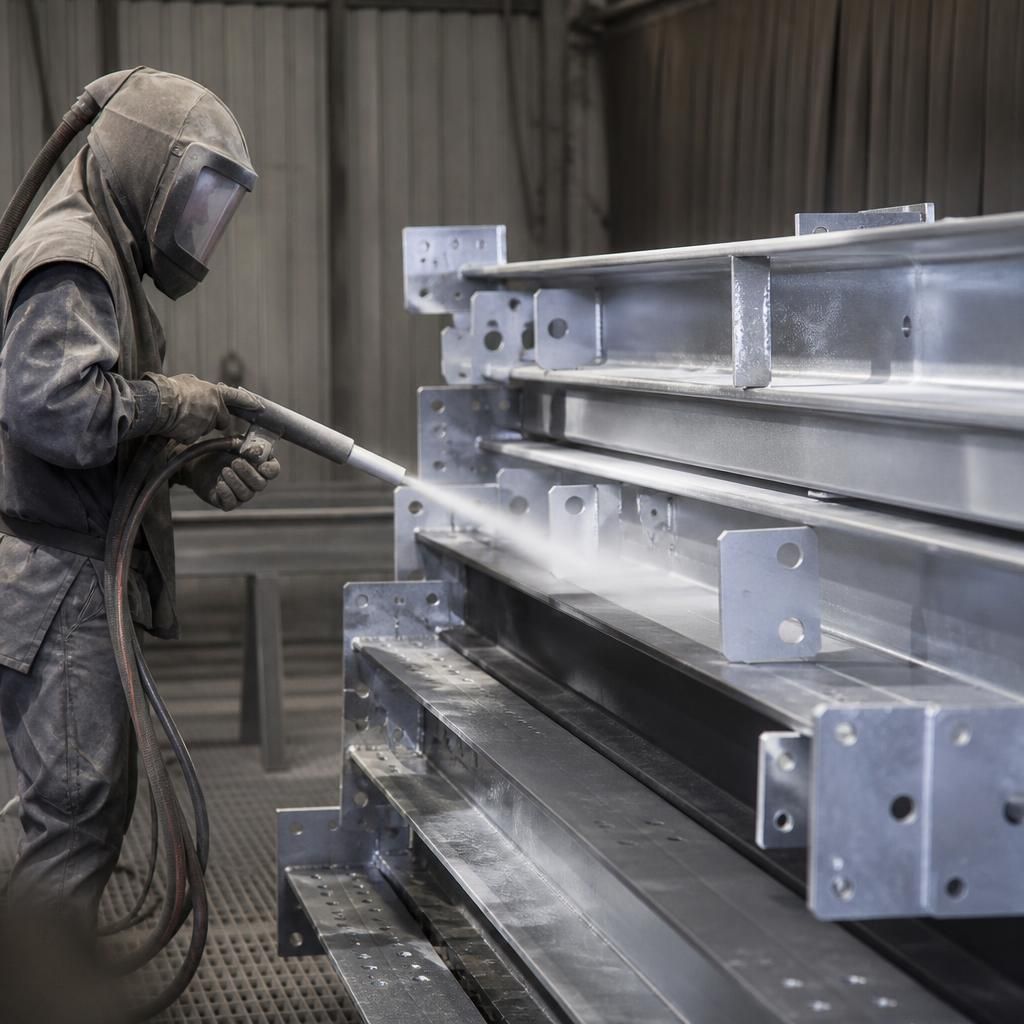
Galvanised and zinc-coated steel can also be prepared for coating, but they require a more controlled approach than uncoated carbon steel. Excessive abrasion may remove or unevenly thin the zinc layer, reducing the original corrosion protection and creating an inconsistent surface for the new finish. Preparation should therefore be matched to the condition of the zinc coating and the requirements of the intended powder-coating system.
Other specialist metal substrates, including copper-based alloys and zinc die-cast components, should be reviewed individually before work is specified. Their hardness, surface chemistry and reaction to abrasion can differ significantly from steel or aluminium. Confirming the substrate in advance helps determine whether blasting is appropriate, whether an alternative preparation method is needed, and how the resulting surface should be inspected before coating.
Discuss Your Substrate Preparation Requirements
Discuss your substrate preparation requirements with Hamilton Industrial Powder Coating to confirm the most appropriate treatment for your components. Provide details of the parts and intended finish so the preparation approach can be considered before work is specified.