

Can powder coating be applied directly over rusted steel?
No, powder coating should not normally be applied directly over rusted steel. Rust, scale and contamination must first be removed and the steel suitably prepared, because coating over unstable corrosion can lead to poor adhesion and continued corrosion beneath the finish.
Powder coating is suitable for steel only when the substrate has been converted into a clean, stable and suitably profiled surface. A powder layer is not a rust-treatment system: it forms a finish over the condition presented to it, so any remaining corrosion must be assessed and dealt with before coating begins.
When lightly oxidised steel may be recoverable
Steel with minor, superficial oxidation may be suitable for powder coating after thorough preparation. This is different from coating over rust. The oxidised material must be removed or firmly stabilised through an appropriate preparation process, leaving sound steel with a consistent surface profile. A coating applicator will normally assess whether the corrosion is superficial or whether it has caused pitting, flaking, laminations or loss of section.
Deeply pitted steel can sometimes still be coated, but powder coating will follow the existing profile rather than restore the original shape. Where corrosion has weakened a component, reduced an important edge or affected a structural or safety-critical part, coating may not be an appropriate remedy. Repair or replacement should be considered before finishing.
Why preparation determines the result
Preparation commonly includes degreasing, abrasive blasting or another approved mechanical treatment, followed by removal of dust and residues. The objective is to remove loose corrosion, mill scale, old unstable coatings and contaminants while producing a surface that allows the powder to anchor effectively. Particular attention is needed around welds, corners, holes, folded sections and joints, where rust and contamination can remain concealed.
Oil, grease, salts and moisture are especially important. They may not be obvious in photographs, yet can interfere with adhesion or contribute to corrosion beneath the finished coating. Components should therefore arrive in a condition that can be inspected and processed consistently, with trapped water and contamination removed from hollow sections where possible.
Is a rust converter enough?
A rust converter or chemical treatment is not automatically a substitute for removing corrosion. Some products leave a film or chemically modified layer that may be incompatible with powder coating, particularly if it has not fully cured or has not been approved for use beneath the chosen coating system. Its use should be based on the product manufacturer’s instructions and the coating applicator’s assessment, rather than applied as a general pre-treatment.
Where corrosion cannot be removed completely, a compatible primer may form part of a specified system. This is different from applying the final powder directly to rust. The primer, pre-treatment, curing schedule and topcoat must work together, and the complete system should be selected for the environment in which the component will be used.
Existing paint and previously coated steel
Previously painted or powder-coated steel requires the same type of assessment. Sound, compatible coating may sometimes be retained in a controlled refurbishment process, but loose or poorly bonded layers must be removed. Coating over an unknown or failing finish can conceal defects and make the new layer dependent on the old one for adhesion.
Old coatings can also affect the heating stage. Some finishes soften, release contaminants or outgas when heated, while porous corrosion products can produce pinholes or surface defects. A test preparation or small trial area may be sensible where the substrate history is uncertain, particularly for fabricated assemblies with several different materials or previous finishes.
Factors affecting the decision
- The depth, spread and stability of the corrosion.
- Whether the steel has lost material or developed structural damage.
- The presence of oil, salts, moisture, weld residue or previous coatings.
- The component’s shape, including crevices, hollow sections and drainage points.
- The intended service environment and the level of corrosion protection required.
- Whether the selected pre-treatment, primer and powder are compatible.
- Whether the component can be cleaned, dried, electrically earthed and heated evenly.
For industrial parts, the correct answer is therefore based on the condition of the individual component rather than on the presence of rust alone. A coating specialist can review photographs or inspect the steel, identify preparation requirements and advise whether the part should be stripped, repaired, primed or replaced before powder coating.
For businesses in the Midlands and surrounding areas, powder-coating.co.uk provides collection and delivery options for metal components requiring industrial finishing. Supplying details of the steel grade, previous coating, intended use and exposure conditions helps the coating team determine whether the item is suitable for preparation and powder coating.
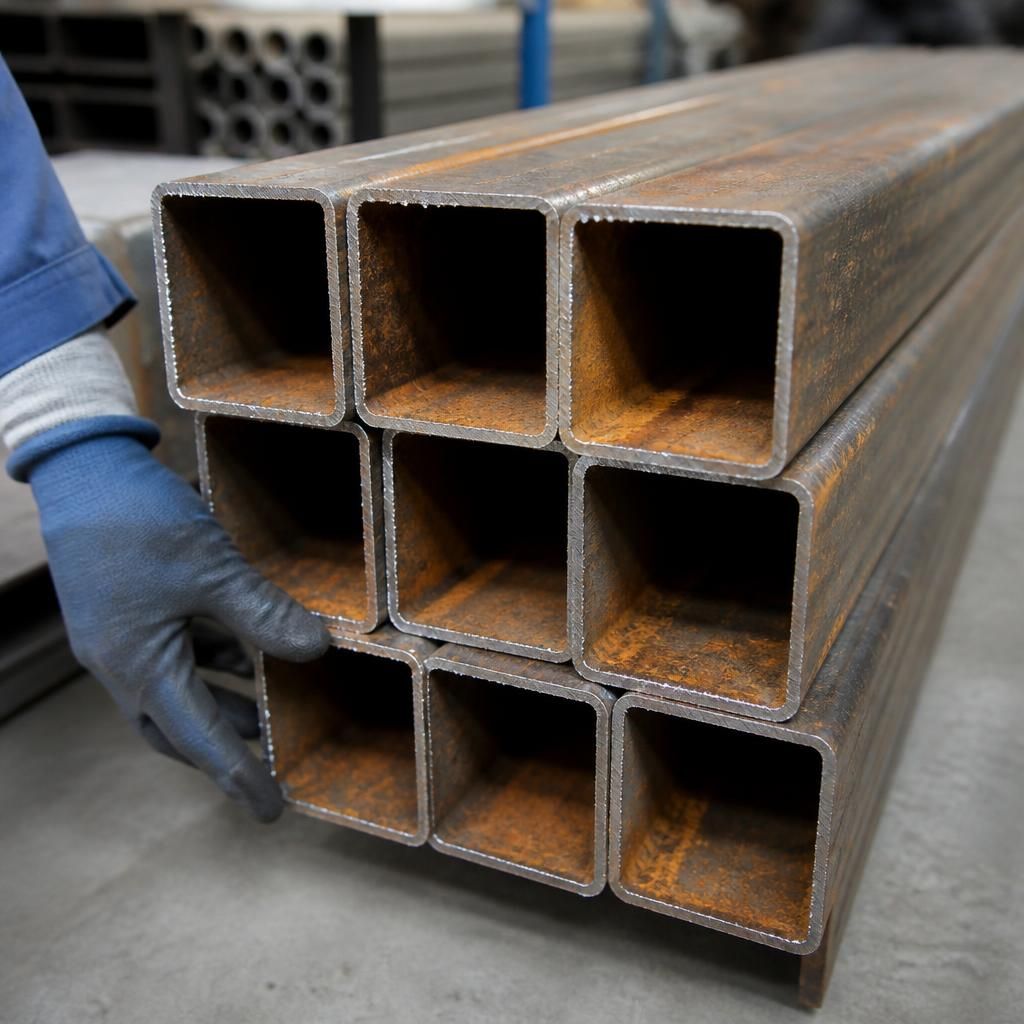
Hollow or enclosed steel sections need particular care before powder coating. Moisture, rust residue and cleaning solutions can remain inside tubes, box sections and folded assemblies, then affect the finish during curing or continue corrosion after coating. Suitable access, drainage and ventilation should therefore be considered before preparation; where a section cannot be inspected or dried properly, applying powder directly may conceal rather than resolve the underlying problem.