

What types of galvanised metal surfaces are most suitable for powder coating?
The most suitable galvanised surfaces for powder coating are sound, clean hot-dip galvanised steel components, including structural sections, fabricated frames, brackets, panels and other engineered parts. Surfaces should have a consistent zinc layer, minimal ash or excess zinc, and be suitable for specialist preparation so the powder finish can bond effectively.
The galvanised metal surfaces best suited to powder coating are durable steel components with a stable zinc coating, predictable geometry and sufficient access for cleaning, preparation and curing. Hot-dip galvanised steel is generally the most suitable substrate because it provides a continuous protective zinc layer beneath the powder finish.
Suitability depends on more than the presence of galvanising. The condition of the zinc, the way the part was manufactured and the demands placed on the finished component all affect whether powder coating is appropriate.
- Hot-dip galvanised structural steel: Columns, beams, rails, support members and other fabricated steelwork can be suitable where the zinc coating is sound and the design allows the component to be handled and cured correctly.
- Galvanised fabricated assemblies: Welded frames, guards, supports and similar assemblies are often suitable, provided weld areas, corners and joints can be prepared consistently. The design should also avoid enclosed areas that could retain pretreatment chemicals or moisture.
- Galvanised sheet and plate components: Panels, covers, trays and formed sections can accept powder coating when their surfaces are stable and their shape does not create excessive edge build-up or areas that are difficult to clean.
- Small galvanised steel components: Brackets, fixings, fittings and other smaller parts may be suitable, although threaded areas, holes and close tolerances need particular consideration because powder adds a measurable coating thickness.
- Outdoor galvanised steelwork: Components exposed to rain, sunlight, road contamination or industrial atmospheres can be considered for a powder finish where the combined zinc-and-powder system is appropriate for the service environment.
Galvanised surfaces with a lightly weathered, stable appearance can also be suitable. Natural weathering may make the zinc less chemically active, but it does not remove the need to assess contamination, corrosion products and surface condition. White rust, storage staining, oils, grease, loose deposits and poorly bonded zinc must be dealt with before coating. A surface that appears clean may still carry residues from storage, transport or previous treatment.
Parts with a smooth, even zinc layer are usually easier to coat consistently than heavily textured or irregularly galvanised items. Excess zinc runs, sharp projections and localised build-up can affect the final appearance and may need remedial treatment. These features can also alter coating thickness at edges and recesses, so they should be identified before the coating specification is agreed.
Component design is another important factor. The most suitable parts have accessible faces, practical hanging points and drainage routes for any cleaning or pretreatment stages. Hollow sections require correctly positioned vent and drain holes; without them, trapped air, moisture or treatment fluid can create defects during heating. Deep recesses, narrow gaps and overlapping joints can also make it difficult to obtain an even finish.
Galvanised steel that has been chemically passivated, sealed or contaminated with an incompatible treatment may require additional investigation before powder coating. The same applies to steel that has been repaired, partly stripped or combined with ungalvanised areas. Mixed substrates can respond differently during preparation and curing, which may affect appearance and long-term coating performance.
Electrogalvanised sheet can sometimes be powder coated, particularly where its thinner and more uniform zinc layer is intact. However, it should not automatically be treated in the same way as hot-dip galvanised steel. The coating specification and preparation method need to reflect the substrate, forming history and any oils or protective films left from manufacture.
Components are less suitable when the zinc layer is loose, severely damaged or contaminated beyond practical preparation, or when their geometry prevents proper cleaning, outgassing or curing. Parts with concealed moisture traps, inaccessible internal surfaces or very tight mating tolerances may need design changes or a different finishing approach.
Before production coating, the coater should review drawings or sample parts, identify the galvanising method, check the condition of the zinc and confirm the required appearance and service environment. This assessment is particularly important for large fabricated items and batch work, where variation between components can affect preparation and finish consistency. Midlands businesses supplying galvanised steel components for industrial, construction, manufacturing or automotive use can discuss the substrate and design requirements with a specialist powder coating service before committing a full batch.
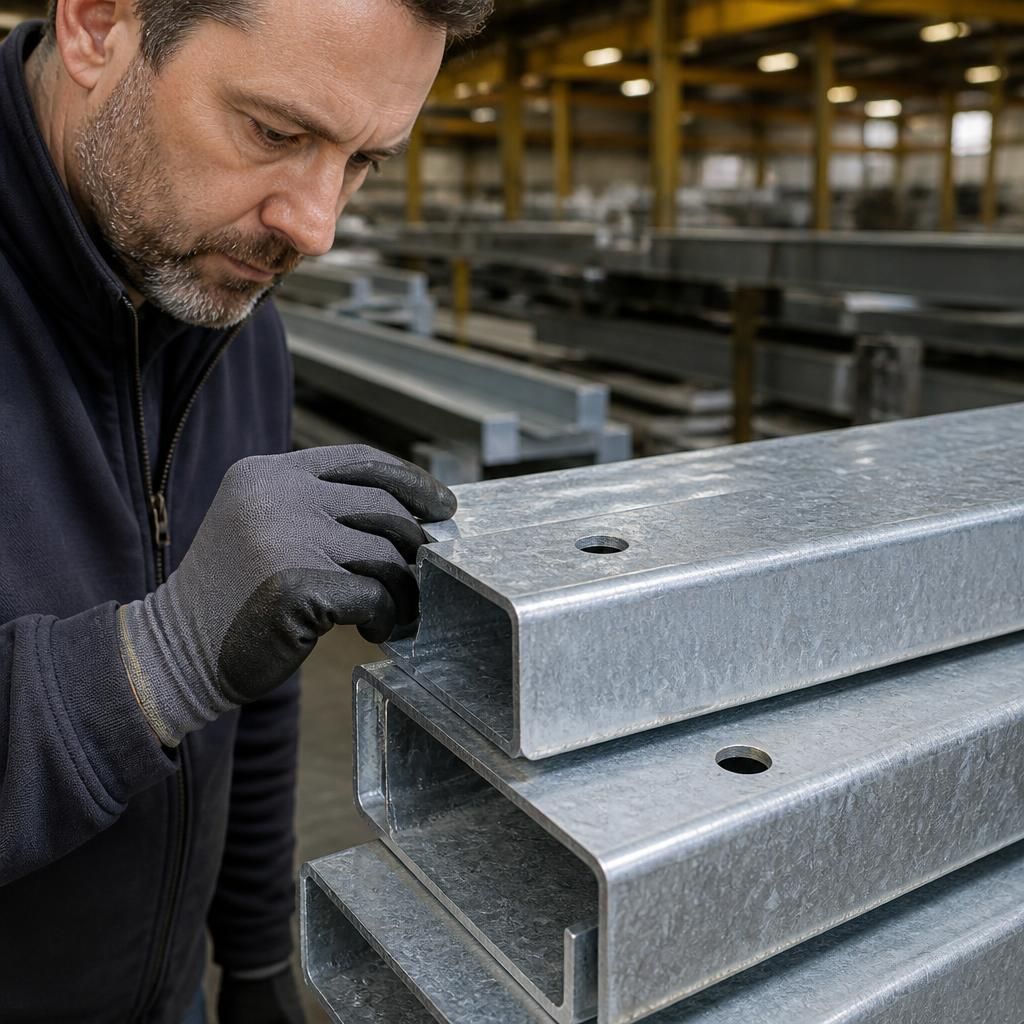
Steel chemistry can affect how suitable a hot-dip galvanised surface is for powder coating. Certain steel compositions react more strongly with molten zinc, producing a thicker or more textured galvanised layer than expected. This does not automatically prevent powder coating, but it can influence the final smoothness, edge definition and visual consistency of the finish.
For components where appearance is important, the galvanised surface should therefore be assessed against the required finish before the full batch is processed. A surface that is structurally sound may still need a coating specification that allows for its zinc profile, particularly on visible architectural or fabricated steelwork.